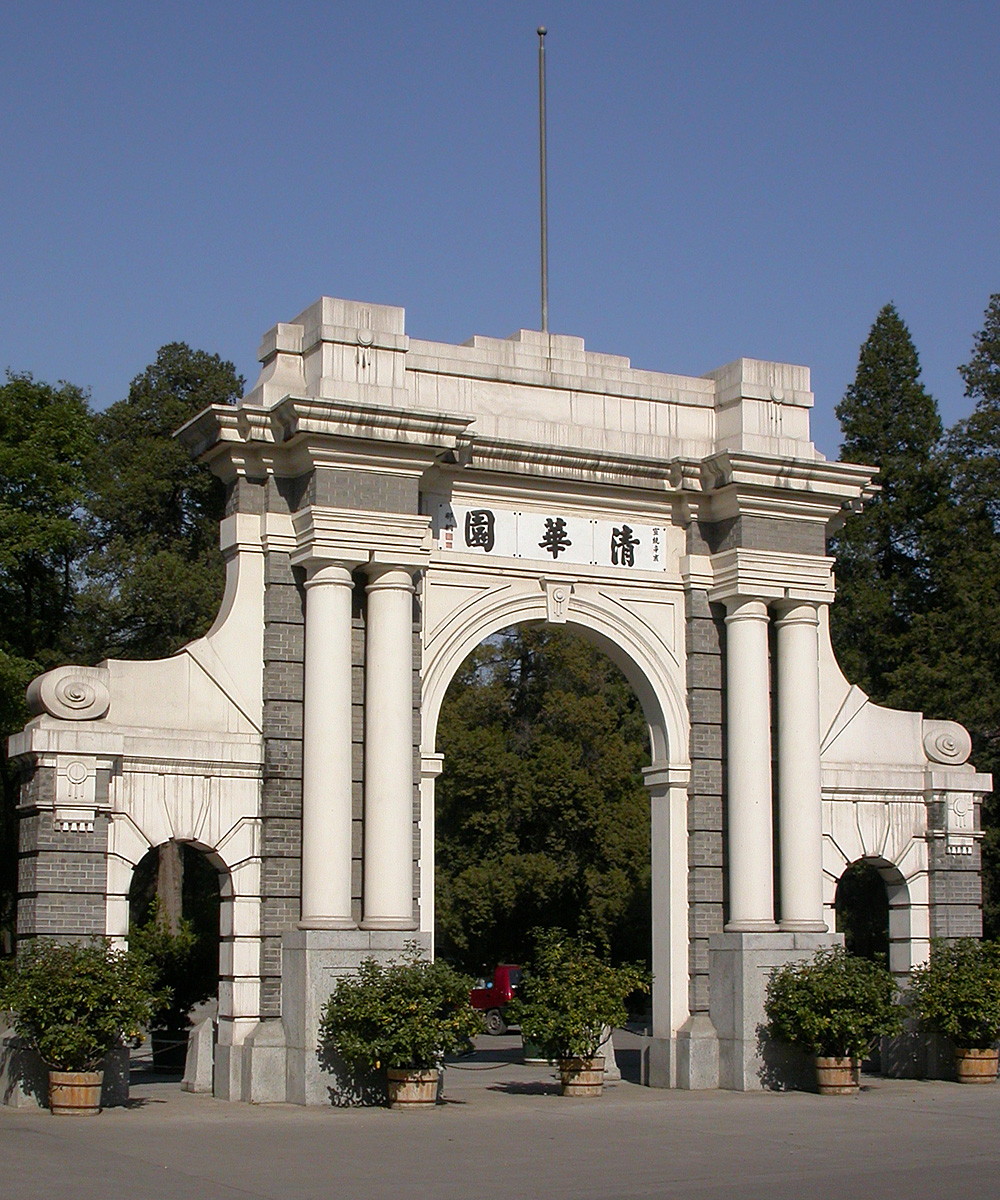
Tsinghua University
 Taiwan
"Self-Discipline and Social Commitment"
About
Tsinghua University, known in Chinese as 清华大学 (Qīnghuá Dàxué), stands as one of China's most prestigious institutions of higher learning. Located in the Haidian district of northwestern Beijing, the university occupies a historic site that once housed the imperial gardens of the Qing dynasty. It operates as a public research university, affiliated with and funded by China's Ministry of Education, and holds membership in the C9 League, an alliance of the country's top universities.
The university has long been a cornerstone of China's academic ambitions. It participates in the Double First-Class Construction initiative, the government's current framework for developing world-class universities and disciplines, and previously benefited from the Project 211 and Project 985 programs. These initiatives have funneled substantial resources into Tsinghua, enabling it to compete on a global stage.
Tsinghua's reputation extends far beyond its funding. It consistently ranks among the top universities in Asia and the world, drawing students and researchers from across the globe. The campus itself blends traditional Chinese architecture with modern facilities, a fitting symbol of a university that bridges centuries of history with cutting-edge research. Its alumni include numerous political leaders, scientists, and entrepreneurs who have shaped modern China.
Mission
Tsinghua University is committed to advancing higher education, scientific research, and the cultivation of talent to serve China's national development and global academic excellence. The university aims to foster innovative thinkers and leaders who can address complex challenges facing society, while promoting international collaboration and cultural exchange.
History
Tsinghua University traces its roots to 1911, when it was founded as Tsinghua Xuetang, a preparatory school for Chinese students bound for American universities. The institution emerged from the Boxer Indemnity Scholarship Program, which used funds returned by the United States to support Chinese education. The campus was built on the site of former imperial gardens, lending the university its name, which means "Clear and Bright."
By the 1920s, Tsinghua had evolved into a full university, expanding its curriculum beyond preparatory studies. Over the following decades, it weathered the Sino-Japanese War and the Cultural Revolution, periods that tested its resilience. After China's reform and opening-up in the late 1970s, Tsinghua grew rapidly, benefiting from national initiatives like Project 211 and Project 985, which poured resources into building world-class universities.
In recent years, Tsinghua has strengthened its international presence. It launched the UNU Hub on Ethical and Responsible AI Development with the United Nations University in 2026, and partnered with the WHO to enhance global health emergency preparedness. The university's board of the School of Economics and Management has also become more internationally diverse, reflecting its broader global engagement.
Subdivisions
School of Economics and Management
One of Tsinghua's leading schools, known for its strong business programs and global connections.
Vanke School of Public Health
Focuses on public health education and research, collaborating with international organizations like the WHO.
Technology Center for Protein Sciences
Houses advanced facilities including the Genome Sequencing and Analysis Facility, supporting multiomics research.
Notable People
Omar M. Yaghi
Chair Professor · 2025-present
Nobel Laureate in Chemistry (2025), joined Tsinghua full-time.
Tang Jie
Professor · Unknown
Led a comprehensive study on large model memory in AI research.
Yuan Yang
Associate Professor · Unknown
Editor for the new English-language journal iFuture.
Milestones
1911
Founded as Tsinghua Xuetang, a preparatory school for students studying in the U.S.
1920s
Evolved into a full university, expanding academic programs.
1952
Reorganized as a polytechnic institution under the new socialist system.
1995
Joined Project 211, receiving significant government funding.
1999
Included in Project 985, further boosting research capacity.
2015
Established the Vanke School of Public Health.
2026
Launched the UNU Hub on Ethical and Responsible AI Development with the United Nations University.
2026
Collaborated with WHO to strengthen global health emergency preparedness.
Departments
Sources
Organization Info
- Founded
- 1911-03-30
- Headquarters
- Beijing
- Country
- People's Republic of China
- Chairman
- Qiu Yong
- Parent
- Ministry of Education of the People's Republic of China
- Type
- University
- President
- Wang Xiqin
- Motto
- Self-Discipline and Social Commitment
- Students
- Over 50,000
Official Website
www.tsinghua.edu.cn
Join the community
fans discussing