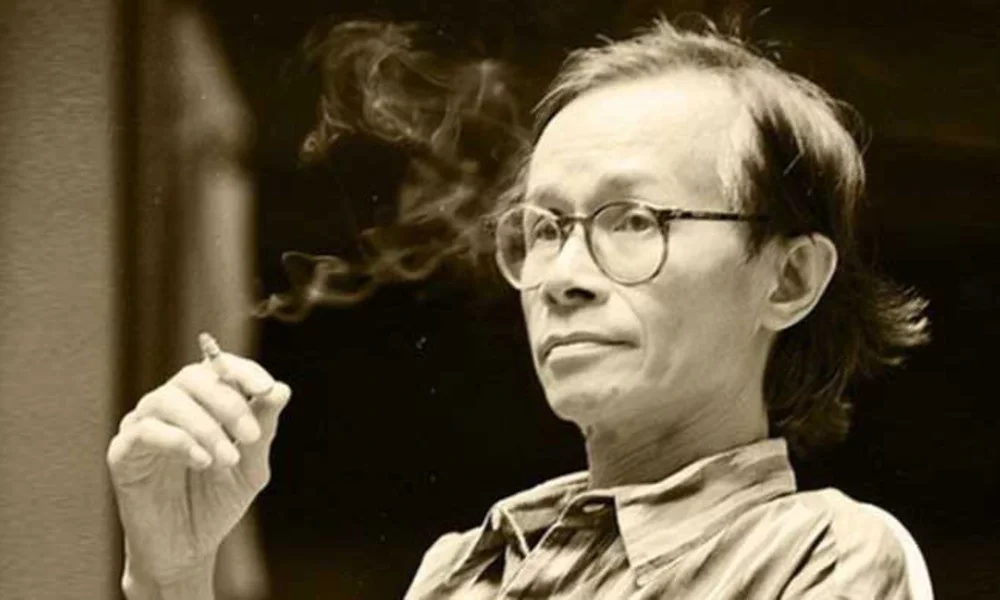
Trịnh Công Sơn
 Vietnam
composer•songwriter•painter•poet
Also known as: The Bob Dylan of Vietnam, Nhạc sĩ Trịnh Công Sơn
Birthday
February 28, 1939
Birth Sign
Pisces
Birthplace
Buôn Ma Thuột, Vietnam
Age
Died at 62
About
Trịnh Công Sơn was a Vietnamese composer, songwriter, painter, and poet, widely regarded as the greatest songwriter in Vietnamese music history. His work, known as Nhạc Trịnh (Trịnh music), is a genre in its own right, characterized by melancholic melodies and poetic lyrics about love, loss, and human fate. His songs have captured the soul of Vietnam during war and peace, and his legacy remains deeply woven into Vietnamese cultural identity.
His music has been performed by generations of singers, from Khánh Ly in the 1960s to Hồng Nhung and Trinh Vinh Trinh, and continues to reach new audiences through reinterpretations in jazz and tribute concerts. International media have compared him to Bob Dylan, calling him "The Bob Dylan of Vietnam." His influence extends beyond music into painting and poetry, making him a multifaceted cultural icon. His songs are considered timeless and immortal, and his status as a national treasure is celebrated annually around the anniversary of his passing. His work remains a touchstone for Vietnamese identity both at home and among the diaspora.
Early Life & Background
Trịnh Công Sơn was born in Lạc Giao, a quiet corner of Buôn Ma Thuột on Vietnam's central highlands, on February 28, 1939. His family later moved to the imperial city of Huế, where he spent his formative years. Huế's poetic atmosphere, with its ancient citadel and Perfume River, left an imprint on his sensibility that would later emerge in his music.
He studied philosophy at Chasseloup-Laubat school, later known as Quốc Học, where he developed the introspective and contemplative worldview that defines his lyrics. Sơn was entirely self-taught as a musician. In 1958, at age 19, he composed his first song, "Ướt Mi" (Wet Eyelashes), marking the start of a prolific creative journey. The political and social upheavals of the 1950s and 1960s provided the backdrop for his emerging voice, as he began to channel his philosophical musings into song. His birth sign is often mistakenly listed as Sagittarius, but his February birth date actually makes him a Pisces.
Career Growth
Trịnh Công Sơn's breakthrough came when singer Khánh Ly began performing his songs in the early 1960s. Her voice, combined with his poetic lyrics, created a sensation that spread across South Vietnam. Songs like "Diễm Xưa" and "Nối Vòng Tay Lớn" became anthems of a generation. His anti-war songs, such as "Đại Bác Ru Đêm" and "Gia Tài Của Mẹ," were powerful and controversial, leading to censorship by both the Republic of Vietnam and later the Socialist Republic of Vietnam.
Despite censorship, his music circulated widely through underground channels and overseas Vietnamese communities. After 1975, he remained in Vietnam, continuing to compose. In the post-war era, his songs were reintroduced to the public through singers like Hồng Nhung, whose 1990s interpretations brought Nhạc Trịnh to new audiences. His catalog of over 600 songs has been recorded by countless artists, including Tuấn Ngọc, Lệ Quyên, Lệ Thu, and Ngọc Lan. In recent years, jazz arrangements of his work have gained attention, keeping his music alive for younger listeners. Tribute concerts in 2026 across Huế, Hà Tĩnh, and Quảng Trị demonstrate his enduring relevance. Notable events include the "Huyền thoại Mẹ" concert at the Festival for Peace in Quảng Trị, and a tribute night in Hà Tĩnh featuring famous singers.
Career Timeline
Public Image & Style
Trịnh Công Sơn's public image is that of a contemplative, melancholic artist whose music captured the soul of Vietnam during its most turbulent period. He was often seen with a cigarette and a distant gaze, embodying the brooding poet. His songs, characterized by introspective lyrics exploring love, loss, and the futility of war, have made him a cultural icon. The media portrays him as a national treasure, with his music described as "timeless" and "immortal." Fans of Nhạc Trịnh form a devoted community that spans generations, from those who lived through the war era to younger listeners discovering his work through new interpretations. Annual tribute concerts, particularly around the anniversary of his death on April 1, keep his spirit alive. The 20th anniversary in 2021 was marked by widespread tributes, and a 2026 article reflected on growing up with his music.
Fame & Fandom (iFAMOUS Rankings)
The legacy of Trịnh Công Sơn lives not through organized fan clubs or social media campaigns, but through a diffuse, intergenerational devotion often called the 'world of Trịnh.' Fans identify simply as listeners who treat his music as a spiritual cleansing, gathering organically for tribute concerts and charity drives rather than chasing chart positions. This cultural phenomenon spans decades, with generations from the 1960s to today finding solace in his melodies about war, loss, and fate. Within this vast tapestry of admirers, his global standing is firmly established by the iFANN Global Fame Rankings. He holds the position of the 81st most famous person from Vietnam, a rank he has maintained steadily from the previous cycle, reflecting a consistent presence across global media coverage and consumption signals worldwide. His influence extends beyond borders, cementing his status as a figure whose work resonates universally. The ranking data confirms that while he lacks a formalized fandom name like those seen in modern pop culture, his impact is measured by the enduring reverence of his audience and the sheer volume of reinterpretations by artists ranging from Khánh Ly to contemporary stars. These placements underscore how his art transcends its origins to become a shared human experience, recognized globally without the need for active promotion.
Interesting Facts and Legends
Beyond his musical output, Trịnh Công Sơn was also a painter and poet, though he kept these pursuits largely private. He studied philosophy, which deeply influenced his lyrical approach. His anti-war music was censored by both sides of the Vietnam conflict, a rare distinction that underscores the power of his message. He composed his first song in 1958 and went on to create over 600 works. The comparison to Bob Dylan in international media highlights his global significance as a protest songwriter. His music has been described as a genre unto itself, with "Nhạc Trịnh" becoming a recognized category in Vietnamese music. Additionally, his music maintains a significant digital presence on platforms like YouTube, with channels such as "Nhạc Trịnh Công Sơn" and Mộc San's official channel regularly featuring his compositions. A 2026 feature explored jazz adaptations of his work, further cementing his relevance in contemporary music. A widely told legend involves his primary muse, Khánh Ly, whose partnership with him ended in tragic separation when political pressures forced her into exile in France. Another iconic moment occurred in 1974 during his concerts in Huế, where the emotional intensity was so profound that the city seemed to pause, creating a lasting cultural memory of unity through sorrow.
Notable Quotes
“Hôm nay ngày 01/04, tròn 20 năm ngày Trịnh Công Sơn mất, tôi lại mở nhạc Trịnh, và nghĩ suy.”
“Nhạc của tôi là những giọt nước mắt của thời đại.”
“Tôi viết nhạc như một cách để tự vấn mình và thế giới.”
Family & Personal Life
Trịnh Công Sơn never married and had no children. His family included his younger sister, Trinh Vinh Trinh, who became a singer and one of the early interpreters of his songs. She remains active in preserving his legacy, attending cultural events such as the "Tinh hà say hi" show in July 2026. Photographer Dương Minh Long, who lived in the same house with Sơn for four years and followed him for 11 years, documented his daily life, capturing intimate moments with Khánh Ly and Hồng Nhung. These photographs, published in December 2025, offer a rare glimpse into the composer's personal world. A street in Đà Nẵng named after him (số 10 Trịnh Công Sơn) indicates the level of institutional recognition his legacy commands.
Notable Connections
Trịnh Công Sơn's music was brought to life by a remarkable circle of singers. Khánh Ly was his most iconic interpreter, their partnership defining Vietnamese music in the 1960s–70s. Hồng Nhung became a prominent post-war interpreter, and his sister Trinh Vinh Trinh also sang his compositions. Overseas artists like Tuấn Ngọc, Lệ Quyên, Lệ Thu, and Ngọc Lan popularized his work internationally. Photographer Dương Minh Long documented his life for 11 years, and singer Ánh Tuyết's career was closely tied to his songs.
Relationships & Dating History
Trịnh Công Sơn never married, but his life was intertwined with the women who sang his songs. His most significant relationship was with Khánh Ly, the iconic singer whose voice became inseparable from his compositions. They met in the early 1960s and developed a lifelong artistic and personal partnership, though they never married. Photographer Dương Minh Long, who lived with them, captured their intimate bond in photographs published in 2025.
He also had a close working relationship with Hồng Nhung, who became one of the most prominent interpreters of his work in the post-war era. Their connection was more professional but deeply respectful. His sister, Trinh Vinh Trinh, was also a notable interpreter of his songs. As of his death in 2001, Sơn was unmarried and had no reported spouse or children. Singer Ánh Tuyết, whose career is closely tied to his works, publicly recounted her final moments with the composer in August 2026, offering a poignant glimpse into his personal connections.
- DatedKhánh Ly1962 - 2001Lifelong artistic and personal partnership; never married.
- DatedHồng Nhung1985 - 1995Close working relationship; she became a prominent interpreter of his music.
Death & Aftermath
Died
April 1, 2001 (aged 62)
Death Place
Ho Chi Minh City, Vietnam
Cause of Death
Heart failure from lung cancer complications
Trịnh Công Sơn spent his final days under medical care in Ho Chi Minh City, largely withdrawn from the public eye as his health deteriorated following a prolonged battle with lung cancer. On April 1, 2001, the renowned composer passed away at the age of 62 due to heart failure, a condition attributed to complications from his illness. The Vietnamese government immediately declared a period of mourning, transforming his funeral on April 2 into one of the largest public gatherings in the nation's modern history. Thousands of mourners, including high-ranking officials and fellow artists, filled the streets to pay their respects, while fans in Huế and Ho Chi Minh City organized spontaneous vigils where they sang his songs aloud. Following the service, he was cremated in accordance with Buddhist traditions, and his ashes were scattered privately to maintain sanctity.
His legacy has flourished in the decades since his passing, marked by significant cultural recognition and institutional support. The World Peace Music Award was posthumously bestowed upon him in 2004 to honor his lifelong advocacy for peace, and Google honored the artist with a Doodle on his 80th birthday in 2019. His sister, Trinh Vinh Trinh, played a pivotal role in organizing the funeral proceedings and continues to manage the estate alongside the Trịnh Công Sơn Foundation, which preserves his musical heritage through scholarships and grants. Documentaries like "Trinh Cong Son: A Songwriter's Journey" and numerous books have explored his life, while landmarks featuring murals and statues stand in Buon Ma Thuot and Huế.
Net Worth (Estate Value)
$10 Million
iFANN Editorial Team estimate
iFANN currently estimates the estate of Trịnh Công Sơn at $10 million. This valuation stems from his vast catalog of over 600 songs, which continues to generate royalties through streaming platforms, tribute concerts, and licensing. His music remains commercially active on platforms like Zing MP3, YouTube, and NhacCuaTui, with millions of streams and views. The estate is managed by his family, including his sister Trinh Vinh Trinh, who remains active in preserving and promoting his legacy. As of 2026, the financial standing reflects the enduring commercial appeal of his songs. Ongoing tribute concerts, such as those held in 2026 in Huế and Quảng Trị, contribute to the estate's income through licensing fees. The continued popularity of his music, including jazz reinterpretations, ensures a steady stream of royalties. While specific figures are not publicly disclosed, the sustained interest in Nhạc Trịnh suggests the estate remains financially healthy. The release of photographer Dương Minh Long's personal photographs in December 2025 may also generate additional revenue through exhibitions or publications.
Awards Won (1)
Trịnh Công Sơn did not receive Western-style awards, but his honours came through enduring cultural recognition. He is widely regarded as Vietnam's greatest songwriter, a title conferred by popular and critical consensus. Posthumously, he has been honored with numerous tribute concerts across Vietnam, and his music has been celebrated at events like the Festival for Peace in Quảng Trị. International media have recognized him as "The Bob Dylan of Vietnam."
2001 · Lifetime Achievement
Entire musical catalog
Known For
Ướt Mi
1958 · Composer
Diễm Xưa
1962 · Composer
Nối Vòng Tay Lớn
1968 · Composer
Đại Bác Ru Đêm
1967 · Composer
Gia Tài Của Mẹ
1968 · Composer
Keywords
Sources
Quick Facts
- Profession
- composer, songwriter, painter, poet
- Born
- +1939-02-28
- Birthplace
- Buôn Ma Thuột, Vietnam
- Died
- +2001-04-01
- Death Place
- Ho Chi Minh City
- Gender
- Male
- Birth Sign
- Pisces
- Number of Songs
- Over 600
Personal Details
- Full Name
- Trịnh Công Sơn
- Education
- Baccalaureate in Philosophy, Chasseloup-Laubat school (Quốc Học), Huế
Frequently Asked Questions
Who is Trịnh Công Sơn?
Did Trịnh Công Sơn have a wife?
What year did Trịnh Công Sơn die?
How many songs did Trịnh Công Sơn compose?
What was Trịnh Công Sơn's relationship with Khánh Ly?
Social Media
Similar People
Join the community
fans discussing