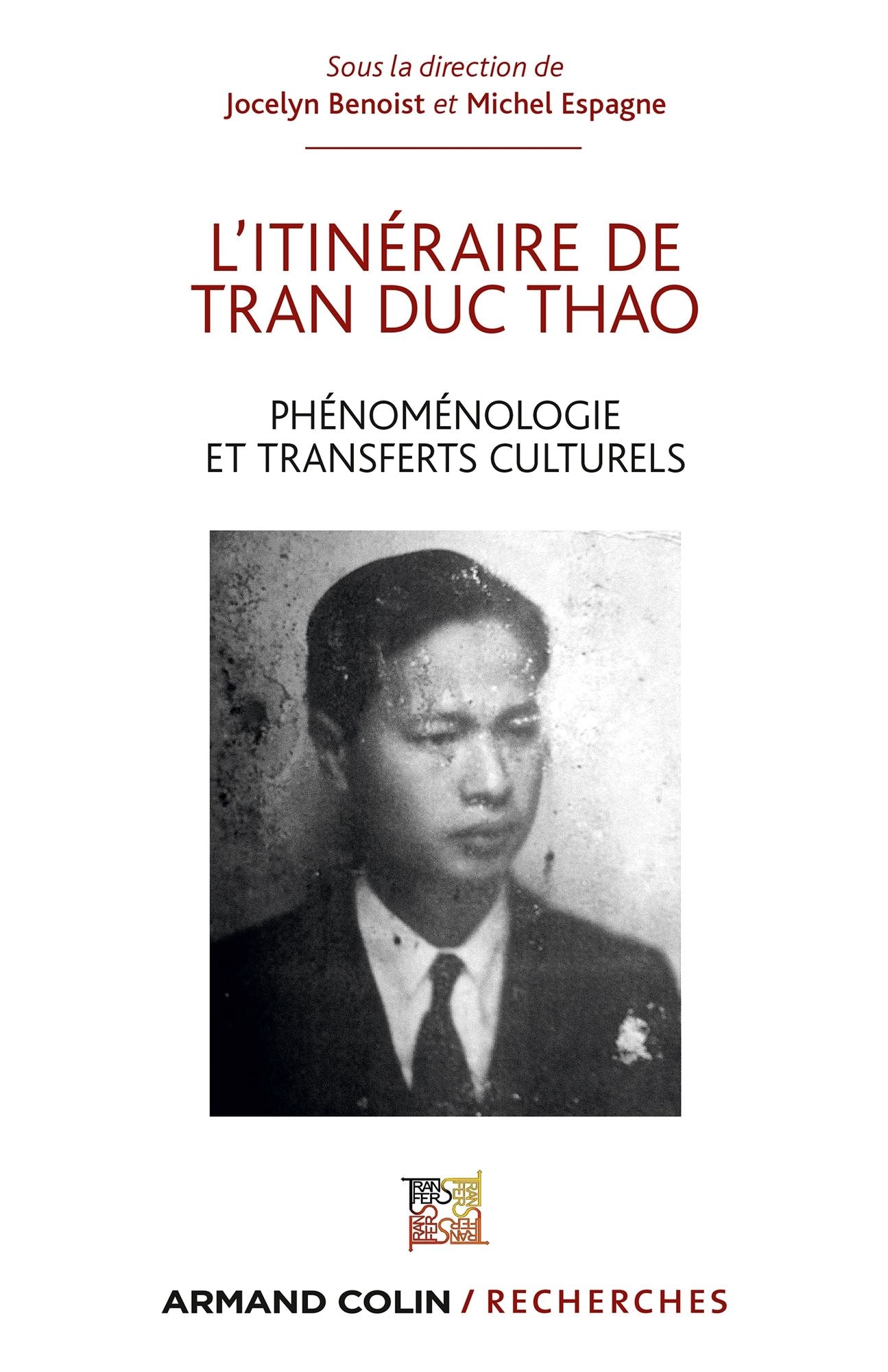
Tran Duc Thao
 Vietnam
philosopher•writer•intellectual
Birthday
September 26, 1917
Birth Sign
Libra
Birthplace
Thái Bình, North Vietnam
Age
Died at 75
About
Trần Đức Thảo was a Vietnamese philosopher, writer, and intellectual whose work centered on synthesizing phenomenology and Marxist thought. Born in Thái Bình, North Vietnam, his extensive writings, primarily in French, explored the deep connections between human consciousness, lived experience, and the material conditions of society. Thảo's original ideas gained significant attention within French philosophical circles during the mid-20th century, where he influenced thinkers like Jacques Derrida and Jean-François Lyotard. He developed an innovative Marxist theory of language and was also recognized for his early theoretical insights into the divide between colonizers and the colonized. Thảo’s distinctive approach to philosophy continues to be a subject of academic study and discussion.
Early Life & Background
Trần Đức Thảo began his life on September 26, 1917, in Thái Bình, a province located in North Vietnam. His early education took place within the French-language system prevalent in Hanoi during the colonial era. This foundational schooling, which emphasized Western intellectual traditions, was a common path for intellectually gifted Vietnamese students of the time and directly influenced his later academic trajectory. His exceptional academic promise led him to pursue higher studies in Paris, a renowned global center for philosophical thought. In 1939, he enrolled in the highly esteemed École Normale Supérieure, an institution known for cultivating many of France's leading intellectuals. This period in Paris proved to be a crucible for his philosophical development, as he immersed himself in the contemporary European philosophical landscape. It was during these formative years that Thảo began to critically engage with and formulate his unique intellectual project, aiming to reconcile the subjective insights of phenomenology with the socio-economic analyses of Marxism. His initial studies and early intellectual explorations laid the crucial groundwork for his subsequent groundbreaking theories on language and the anticolonial experience, establishing him as a significant emerging voice in philosophy even before his major works gained widespread recognition.
Career Growth
Trần Đức Thảo's significant intellectual breakthrough centered on his ambitious efforts to bridge phenomenology, particularly the rigorous analysis of Edmund Husserl, with Marxist historical materialism. His core philosophical endeavor was to meticulously understand how consciousness itself emerged from material conditions and social practice, rather than being an independent realm. During the mid-20th century, his ideas garnered considerable attention in France, attracting the notice of prominent intellectuals. He was especially noted for developing an innovative Marxist theory of language, which examined how linguistic structures are shaped by social and historical processes and how they reflect societal evolution. Beyond this, Thảo was among the first theorists to articulate the profound chasm between colonizers and the colonized, offering a philosophical framework for understanding anticolonial struggles and the subjective experience of oppression. Despite his significant theoretical contributions and influence on major French thinkers, Thảo's later life was marked by considerable hardship. After returning to Vietnam, he reportedly faced political persecution and lived in relative obscurity and poverty, a stark contrast to his earlier academic prominence. He spent his final years back in Paris, where he passed away on April 24, 1993, leaving behind a complex but enduring intellectual legacy that continues to be studied and debated.
Career Timeline
Public Image & Style
Trần Đức Thảo's public image was primarily that of a rigorous and principled philosopher, often portrayed as a tragic figure due to the persecution and poverty he endured later in his life. His intellectual style was marked by an intense dedication to synthesizing complex philosophical traditions, specifically phenomenology and Marxism. Media and academic portrayals frequently emphasized his role as a bridge-builder between these seemingly disparate schools of thought. He was seen as a thinker who dared to challenge established categories, offering fresh perspectives on consciousness, language, and the dynamics of colonialism. Despite his profound impact on certain French post-war philosophers, his public recognition in his homeland remained limited for many years, contributing to the narrative of an underappreciated intellectual giant whose work ultimately found a wider audience posthumously.
Fame & Fandom (iFAMOUS Rankings)
Trần Đức Thảo never cultivated a fanbase in the modern sense of the word. His audience consisted entirely of academics, students of philosophy, and researchers dedicated to the rigorous synthesis of phenomenology and Marxist thought. There is no formal name for his followers, nor are there organized clubs, birthday billboards, or viral campaigns celebrating his life. The "legend" surrounding him is not one of pop culture adoration but of a tragic intellectual arc: a star of French post-war philosophy who fell into obscurity and poverty after returning to Vietnam. This narrative of a brilliant mind persecuted by political forces remains the primary story told about him in scholarly circles, yet it lacks the ritualistic elements found in celebrity fandoms. His influence persists through citations in academic journals and continued debate regarding anticolonial theory rather than through mass consumption or fan-driven projects. While some might search for his work with the same fervor as a new album release, the engagement remains strictly intellectual and confined to university settings. He did not accumulate a following that demands chart positions or streaming numbers. Consequently, iFANN's Global Fame Engine has evaluated this person, but they do not currently hold a placement in the published rankings (Global Top 1,000 or a Top-100 scope list).
Interesting Facts and Legends
Trần Đức Thảo's writings were almost exclusively in French, making his work more accessible to European academic circles than to a broader Vietnamese audience during his lifetime. He was recognized in a dictionary of philosophers published by the University of Paris in 1984, long after his most influential period. Despite his intellectual prowess, he remained a relatively obscure figure in his native Vietnam for many years, with his work only gaining more widespread local attention through posthumous publications and discussions. The Vietnamese government held a workshop in 2017 dedicated to his philosophy and its impact on Vietnamese intellectual history, highlighting a growing recognition of his contributions. His name is sometimes confused with other public figures in Vietnam, such as former President Trần Đức Lương, due to the commonality of the surname and given name. A widely retold story among historians details his dramatic fall from being hailed as a "star of French post-war philosophy" to living in poverty and anonymity upon his return to Vietnam, a trajectory documented by major international outlets.
Family & Personal Life
Details about Trần Đức Thảo's family life remain largely undocumented in public records. Born in Thái Bình, North Vietnam, he came from a background that enabled him to pursue a French-language education, eventually leading him to study in Paris. However, specific information about his parents, any siblings he may have had, or his own immediate household is not widely available. His life was primarily defined by his philosophical pursuits and academic career, with little public focus on his personal or familial circumstances. He did not have any children that are publicly known. The available biographical accounts concentrate on his intellectual journey and the challenges he faced as a philosopher and anticolonial thinker, rather than his private family connections.
Notable Connections
Trần Đức Thảo's intellectual orbit included several influential French philosophers who acknowledged his impact on their own thinking. Figures like Jacques Derrida, Jean-François Lyotard, and Louis Althusser engaged with and were influenced by Thảo's unique synthesis of phenomenology and Marxism. More recently, Nguyễn Trung Kiên played a significant role in preserving and promoting Thảo's legacy by collecting and compiling his works for the 2016 book, Triết gia Trần Đức Thảo: Di cảo, khảo luận, kỷ niệm, helping to reintroduce his ideas to a new generation of scholars.
Relationships & Dating History
Public records offer no readily available information regarding Trần Đức Thảo's romantic relationships or marital status throughout his life. His biographical accounts focus almost exclusively on his academic pursuits, philosophical development, and the political challenges he faced. There is no mention of a spouse, partners, or children in the available historical and scholarly materials. His life story, as documented, suggests a singular dedication to his intellectual work, with personal relationships remaining out of the public eye. Therefore, as of 2026, his relationship status at the time of his death is understood to have been single, with no known partners or family beyond his reported origins in Thái Bình.
Death & Aftermath
Died
April 24, 1993 (aged 75)
Death Place
France
Cause of Death
Unknown
In his final years, the renowned Vietnamese Marxist phenomenologist settled in France, making a decisive choice to remain there permanently rather than return to Vietnam despite earlier hardships. On April 24, 1993, he passed away at the age of 76 while residing in the country where he had once been a central figure in philosophical circles. His passing marked the end of a life defined by a tragic arc, moving from a celebrated thinker who influenced giants like Jacques Derrida to a figure living in relative obscurity and poverty upon his return home before finally finding rest abroad.
The intellectual community responded with significant tributes that highlighted his unique attempt to synthesize phenomenology with Marxist thought. Decades later, his legacy has seen a notable resurgence, with publications in Jacobin and Aeon revisiting his work as principled and anticolonial, celebrating him as one of the first theorists to deeply analyze the divide between colonizers and the colonized. While specific details regarding funeral logistics, burial locations, or immediate family statements are not available in historical records, the academic world continues to engage with his complex contributions. Recent scholarly works published in journals such as Historical Materialism and the Journal of Intellectual History Blog have kept his theories on language and consciousness alive for new generations of researchers.
Posthumously, Tran Duc Thao's estate and writings have become subjects of renewed academic interest, ensuring his ideas continue to be debated within philosophical discourse. The narrative of his life remains a reflection of a dedicated intellect who navigated the turbulent waters of mid-20th-century philosophy and colonial history with unwavering commitment.
Net Worth (Estate Value)
$0
iFANN Editorial Team estimate
Information regarding Trần Đức Thảo's financial status reflects the circumstances of his life. Historical accounts indicate that he lived in poverty and despair during his later years, particularly after returning to Vietnam. As a philosopher and writer, his income streams would have primarily come from academic positions, publications, and potentially speaking engagements, though the extent of these earnings is not documented. Given his passing in 1993 and the reported financial struggles, there is no significant estate value or ongoing revenue streams to assess for a contemporary net worth estimate. His legacy is entirely intellectual, not financial, and he did not accumulate substantial assets or wealth during his lifetime. Per iFANN's editorial analysis, any estimated net worth for Trần Đức Thảo, as of 2026, would be considered negligible. $0
Awards & Accolades
Known For
Phénoménologie et Matérialisme Dialectique
1951 · Author
Marxist theory of language
1960 · Theorist
Anticolonial phenomenology
1960 · Theorist
Keywords
Sources
Quick Facts
- Profession
- philosopher, writer, intellectual
- Born
- September 26, 1917
- Birthplace
- Thái Bình, North Vietnam
- Died
- April 24, 1993
- Death Place
- Paris, France
- Gender
- Male
- Birth Sign
- Libra
Personal Details
- Children
- Education
Frequently Asked Questions
Who was Trần Đức Thảo?
What was Trần Đức Thảo's main philosophical contribution?
Where was Trần Đức Thảo born and where did he die?
How did Trần Đức Thảo influence other philosophers?
What is Trần Đức Thảo's legacy in 2026?
Join the community
fans discussing