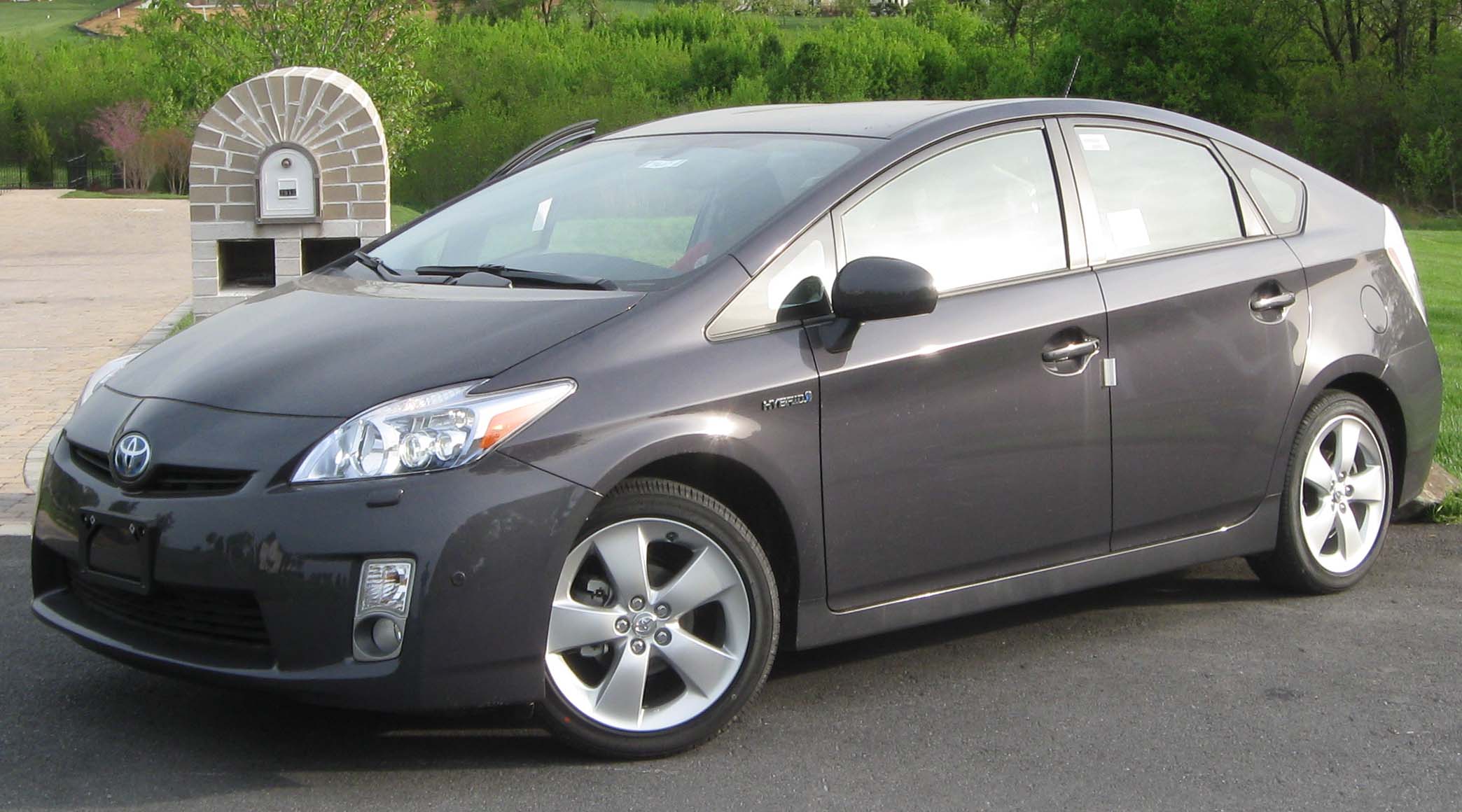
Toyota Prius (XW30)
by Toyota
"The third-generation hybrid that defined efficiency for a generation"
Rating
4.3/5
Overview
The third-generation Toyota Prius, known internally as the XW30, arrived at the 2009 North American International Auto Show and went on sale in Japan that May. It was a car that had to do more than just save gas, it had to prove that hybrid technology could be refined, practical, and even a little bit futuristic. Toyota engineers started with a clean sheet for the body, sculpting a shape that slips through air with a drag coefficient of just 0.25. That's sports-car territory. They added an underbody rear fin to keep the car stable at highway speeds, and they ditched every accessory drive belt under the hood, a first for a production engine. The result was a compact liftback that could squeeze 50 miles out of a gallon of gas in EPA testing, a number that made the Prius the undisputed fuel-economy champion of its era.
Under the skin, the XW30 rode on Toyota's New MC platform with a 1.8-liter Atkinson-cycle four-cylinder engine paired with an electric motor, together making about 134 horsepower. The transmission was Toyota's familiar e-CVT, a continuously variable unit that kept the engine humming in its sweet spot. The nickel-metal hydride battery pack, tucked behind the rear seat, gave the car a 1.3 kWh capacity, enough for brief electric-only bursts at low speeds. Inside, the dashboard was a study in space-age minimalism, with a digital instrument cluster mounted high and center, leaving the driver's view clear. The shifter was a stubby joystick that clicked into place. Seats were comfortable for four adults, and the 60/40 split rear seat folded nearly flat, making the Prius surprisingly useful for hauling cargo. The cabin was trimmed in hard plastics that critics grumbled about, but the layout was intuitive, and the available navigation system with a touchscreen felt genuinely premium for its day.
Production ran from March 2009 through 2015 in most markets, with some regions seeing the model through 2016. Toyota built the XW30 at its Tsutsumi plant in Japan, with additional assembly in Thailand and China. In the United States, the Prius family sold over 200,000 units annually during its peak years of 2012 and 2013. The XW30 also spawned a plug-in hybrid variant in 2012, which swapped the nickel-metal hydride pack for a lithium-ion unit that allowed about 11 miles of all-electric driving. A mid-cycle refresh for the 2012 model year brought sharper front and rear styling, upgraded interior materials, and new tech options. By the time the fourth-generation XW50 took over in late 2015, the third-gen Prius had sold nearly 1.7 million units globally, cementing its place as the world's most popular hybrid and a genuine cultural icon of green motoring.
Key Features
- Atkinson-cycle 1.8L engine with no accessory drive belts
- Hybrid Synergy Drive system
- Drag coefficient of 0.25 – among the lowest for its time
- Underbody rear fin for high-speed stability
- Keyless entry and push-button start
- Multi-information display with energy monitor
- Available navigation system with touchscreen
- 60/40 split-folding rear seats
- Seating for five passengers
- Available plug-in hybrid variant with 11-mile EV range
Specifications
| Engine | 1.8L Atkinson-cycle I4 (gasoline) + electric motor |
| Combined Power | 134 hp |
| Transmission | e-CVT |
| Drivetrain | Front-engine, front-wheel drive |
| Battery | 1.3 kWh nickel-metal hydride |
| Fuel Economy (EPA) | 51 city / 48 highway / 50 combined mpg (2010) |
| Drag Coefficient | 0.25 Cd |
| Wheelbase | 106.3 in |
| Length | 175.6 in |
| Width | 68.7 in |
| Height | 58.1 in |
| Curb Weight | 3,042 - 3,100 lbs |
| Platform | Toyota New MC |
Pros & Cons
Pros
- • Exceptional fuel economy – many owners report 45-50 mpg real-world
- • Spacious interior and impressive cargo capacity for a compact car
- • Excellent reliability with many examples surpassing 200,000 miles
- • Low maintenance and operating costs
- • Aerodynamic styling that became an icon
Cons
- • Uninspiring acceleration and driving dynamics
- • Road noise on highways can be intrusive
- • Cabin uses hard plastics that feel cheap
- • Polarizing exterior design, especially the rear
- • Hybrid battery replacement can cost $1,500–$3,000 after 10-15 years
Frequently Asked Questions
How much is a used Toyota Prius XW30 worth?
Is the Toyota Prius XW30 reliable?
What is the real-world MPG of the 2010-2015 Prius?
Toyota Prius XW30 vs Honda Insight (2009-2014): which is better?
When should I replace the hybrid battery on a Prius XW30?
Keywords
Sources
Product Info
- Brand
- Toyota
- Manufacturer
- Toyota Motor Corporation
- Category
- Hybrid Vehicle
- Released
- 2009-05-18
- Price
- $22,000 - $28,000 (MSRP for 2010 model year)
- Availability
- Discontinued
- Production Years
- 2009–2015 (2016 in some markets)
- Assembly Plants
- Tsutsumi, Japan; Gateway, Thailand; SFTM, China
- Predecessor
- Toyota Prius (XW20)
- Successor
- Toyota Prius (XW50)
- Global Production (by June 2013)
- ~1,688,000 units
Where to Buy
Join the community
fans discussing