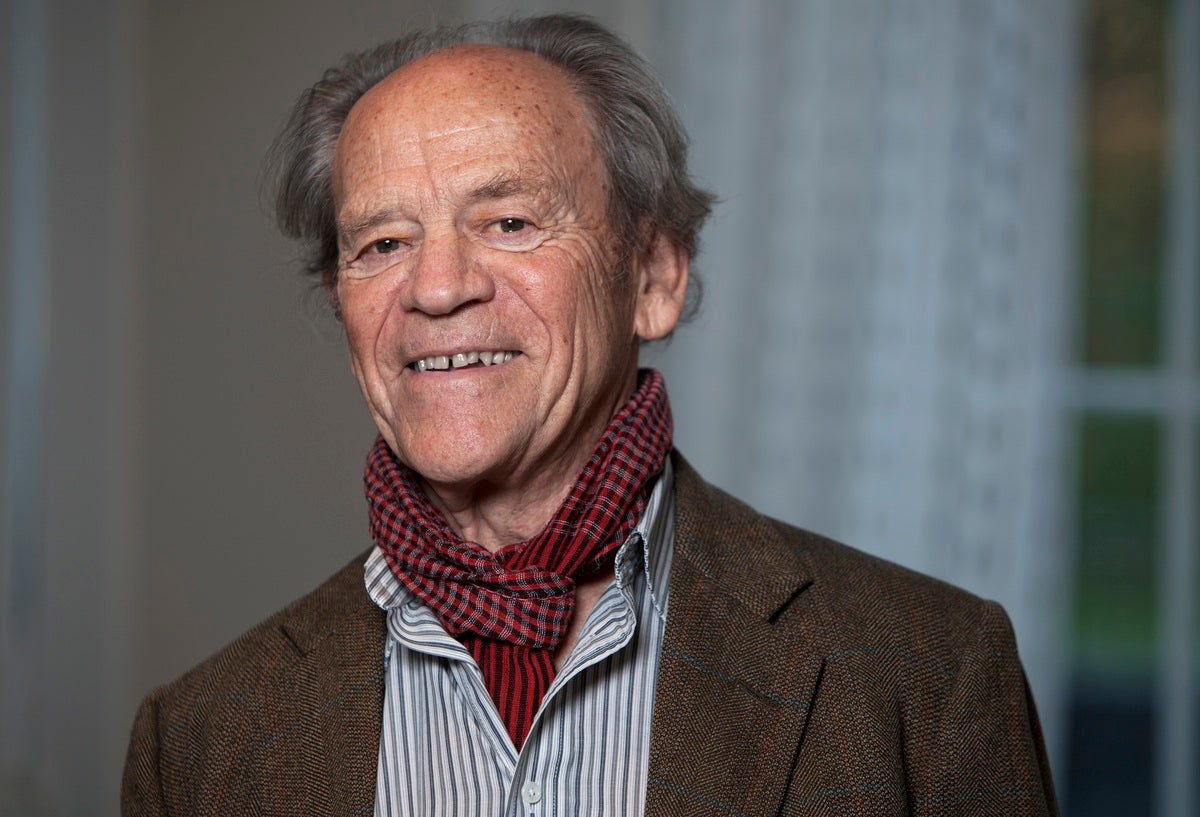
Torsten Wiesel
 Sweden
Also known as: Torsten N. Wiesel, T. N. Wiesel
Birthday
June 3, 1924
Birth Sign
Gemini
Birthplace
Uppsala, Sweden
Age
102 years old
About
Torsten Wiesel is a Swedish neurophysiologist whose meticulous research with David Hubel rewrote the textbook on how the brain sees. Together they mapped the visual cortex, showing how individual neurons respond to edges, movement, and orientation, work that earned them the 1981 Nobel Prize in Physiology or Medicine. Their discoveries didn't just explain vision; they opened the door to understanding how the brain organizes sensory information generally, influencing everything from ophthalmology to artificial intelligence.
Wiesel spent decades at Harvard and later led Rockefeller University as president, where he championed interdisciplinary science. After stepping down in 1998, he shifted his focus to global science policy, helping build institutions like the Okinawa Institute of Science and Technology. Even in his hundreds, he remains a revered figure in neuroscience, celebrated for his rigor, curiosity, and generosity in mentoring young scientists.
Early Life & Background
Torsten Nils Wiesel was born on June 3, 1924, in Uppsala, Sweden, the youngest of five children. His father, Fritz S. Wiesel, was chief psychiatrist and head of Beckomberga Hospital, a large psychiatric facility outside Stockholm. Growing up in that environment, Wiesel was exposed to the complexities of the human mind from an early age, though he later admitted he was a mischievous child who preferred play to study.
He enrolled at the Karolinska Institute in Stockholm, where he earned his medical degree in 1954. His early research focused on the retina, particularly how cat retinal ganglion cells respond to light. This work laid the foundation for his later interest in the brain's visual pathways. In the mid-1950s, he moved to the United States, a time when neuroscience was still a young field, and he joined the lab of Stephen Kuffler at Johns Hopkins University. It was there he met David Hubel, and their collaboration would change the field forever.
Career Growth
Wiesel and Hubel began their landmark collaboration in 1958, using microelectrodes to record from individual neurons in the visual cortex of anesthetized cats. Their first major finding was that neurons in the primary visual cortex respond selectively to specific orientations of lines and edges, and they mapped the columnar organization of these cells. Over the next two decades, they published a series of papers detailing how the brain processes visual information, including the critical period for visual development and the effects of visual deprivation.
This work earned them the 1981 Nobel Prize in Physiology or Medicine, shared with Roger Sperry. Wiesel went on to serve as president of Rockefeller University from 1991 to 1998, where he fostered a collaborative research environment. After retiring, he became a global advocate for science, serving as chair of the board of governors for the Okinawa Institute of Science and Technology from 2009. He has continued to receive honors, including the Golden Goose Award in 2015 and the Karolinska Institute's Jubilee Gold Medal in 2016.
Career Timeline
Public Image & Style
In the scientific community, Wiesel is revered as a meticulous experimentalist and a generous mentor. He is known for his calm demeanor and his willingness to engage with young researchers. Media portrayals often highlight his Nobel Prize and his role as a statesman for science. He has been a vocal advocate for international scientific collaboration, and his work with OIST has been particularly noted. Fans of neuroscience admire his ability to explain complex ideas simply, and he is a sought-after speaker at conferences and universities.
Fame & Fandom (iFAMOUS Rankings)
Torsten Wiesel commands a global audience defined by academic reverence rather than celebrity adoration. His influence permeates laboratories and lecture halls worldwide, yet his reach does not extend into the mass-market rankings that track pop culture icons. iFANN has evaluated his profile against current global metrics, but he currently holds no placement in the published Global Top 1,000 or any Top-100 scope list. This absence of a rank reflects his status as a foundational figure in science rather than a personality driving viral consumption. The scientific community honors him with deep respect, but this admiration manifests as professional citation and mentorship, not as a fanbase engaging in chart campaigns or birthday tributes. No formal collective moniker exists for those who study his work; there is no subreddit dedicated to his theories, nor are there organized charity drives initiated by a specific group of followers. His legacy is carried by students and peers who view his contributions to visual neuroscience as essential curriculum. While media outlets frequently highlight his Nobel Prize and his role as a statesman for science, these portrayals remain within the realm of professional biography. He remains a sought-after speaker for his ability to explain complex ideas simply, but his interactions stay strictly within the bounds of academic discourse. The lack of a documented fandom name aligns with his life's work: a quiet, meticulous dedication to understanding the brain rather than seeking public spectacle.
Interesting Facts and Legends
Wiesel and David Hubel once worked for 24 to 36 hours straight to capture data from a single neuron while showing cats slides of black dots and patterns on a screen. Their experiments revealed how individual neurons respond to edges and orientation, fundamentally rewriting textbooks on vision. Wiesel possesses a deep appreciation for art, often drawing parallels between the visual system and artistic perception. He is known for his sharp wit and storytelling, frequently entertaining audiences with tales from the lab. In 2024, he donated an ophthalmoscope to the Nobel Prize Museum, a nod to his early work in vision research. A story often retold in scientific circles involves a serendipitous observation where certain neurons fired only when a shadow or line appeared in a specific orientation. This moment illuminated how the brain constructs complex images from simple features. Their partnership lasted until the late 1970s, marked by an intensity that produced the concept of orientation tuning. Even decades after winning the 1981 Nobel Prize, Wiesel remains active in science advocacy, serving as co-director of the Shelby White and Leon Levy Center for Mind, Brain and Behavior at The Rockefeller University.
Notable Quotes
“My father, Fritz S. Wiesel, was chief psychiatrist and head of Beckomberga Hospital.”
“The brain is not a static organ; it is constantly changing and adapting.”
“Science is a collaborative endeavor, and we stand on the shoulders of those who came before us.”
Family & Personal Life
Wiesel was the youngest of five children. His father, Fritz S. Wiesel, was a prominent psychiatrist, and his mother's name is not widely recorded. He married Jean Stein, an heiress and editor, and they were together until her death in 2017. The couple had no children. Wiesel has kept his personal life private, but he has spoken fondly of his father's influence on his interest in the brain.
Notable Connections
Wiesel is most closely associated with David Hubel, his longtime collaborator and co-recipient of the Nobel Prize. He also worked with Stephen Kuffler at Johns Hopkins. His presidency at Rockefeller University connected him with a wide circle of leading scientists. He has collaborated with researchers at OIST and has been influenced by the work of Roger Sperry.
Relationships & Dating History
Torsten Wiesel married Jean Stein, an American heiress and editor, in 1971. They remained together for over four decades until her death in 2017. The couple had no children. Wiesel has not remarried and has kept his personal life out of the public eye. As of 2026, he is widowed and lives quietly, focusing on his scientific interests.
- MarriedJean Stein1971 - 2017Married until her death in 2017.
Salary, Net Worth In 2026
$5 Million
iFANN Editorial Team estimate
iFANN currently estimates Torsten Wiesel's net worth at $5 Million as of 2026. While he never amassed a fortune from his academic salary alone, his Nobel Prize came with a significant cash award that contributed to his financial standing. He has earned additional income through speaking engagements, book royalties, and various advisory roles. His groundbreaking work received funding from major grants provided by the National Institutes of Health and other organizations. After his wife's death, he may have inherited some of her estate, though details regarding these assets remain private. His financial legacy appears modest when compared to the monumental impact of his scientific discoveries.
Awards Won (3)
Wiesel's most significant honor is the 1981 Nobel Prize in Physiology or Medicine, shared with David Hubel. He has also received the Golden Goose Award (2015) and the Karolinska Institute's Jubilee Gold Medal (2016). Throughout his career, he has been elected to numerous prestigious academies, including the National Academy of Sciences.
2016 · Scientific Achievement
Lifetime contributions to neuroscience
2015 · Scientific Impact
Accidental discovery leading to Nobel Prize
Known For
Nobel Prize in Physiology or Medicine
1981 · Co-recipient
Visual cortex mapping
1959-1980s · Researcher
Keywords
Sources
Quick Facts
- Profession
- academic, lecturer, neurologist
- Born
- June 3, 1924
- Birthplace
- Uppsala, Sweden
- Gender
- Male
- Spouse
- Jean Stein
- Birth Sign
- Gemini
Personal Details
- Full Name
- Torsten Nils Wiesel
- Spouse
- Jean Stein
- Education
- Karolinska Institute, MD (1954)
Frequently Asked Questions
Who is Torsten Wiesel?
What is Torsten Wiesel's net worth in 2026?
How old is Torsten Wiesel?
Is Torsten Wiesel still alive?
What is Torsten Wiesel famous for?
Similar People
Join the community
fans discussing