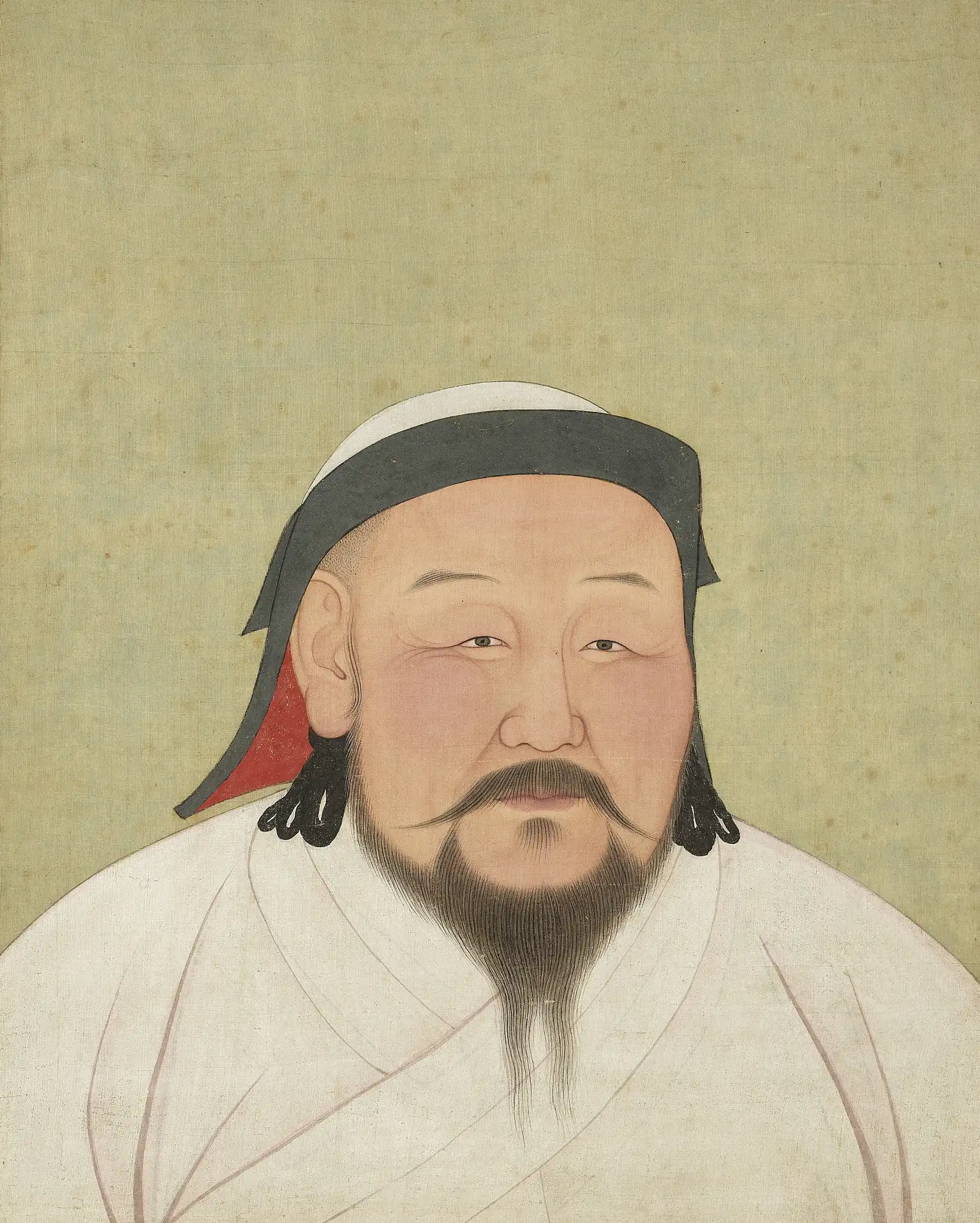
Töregene Khatun
Also known as: Turakina, Дөргэнэ
Birthday
1185
Birth Sign
Capricorn
Birthplace
Naiman tribe, Mongolian steppe
Age
Died at 67
About
Töregene Khatun was a Mongol empress and regent who held the Mongol Empire together during a turbulent succession crisis after the death of her husband, Ögedei Khan. As Great Khatun, she ruled as de facto sovereign from 1241 to 1246, navigating court politics with skill and determination. Her most notable achievement was securing the election of her eldest son, Güyük Khan, as the next Great Khan, ensuring her family's continued dominance.
Her regency was a rare instance of a woman exercising supreme authority in the Mongol Empire, and her legacy is one of political acumen and unyielding ambition. She remains a subject of historical fascination, featured in works like Rejected Princesses and various historical articles that highlight her extraordinary rise from captive to empress.
Early Life & Background
Töregene Khatun was born around 1185 into the Naiman tribe, a Turkic-speaking people of the Mongolian steppe. Her early life is not well documented, but she was of noble birth. She first married Qutu, a chief of the Merkit tribe, a rival confederation of the Mongols. When Genghis Khan's forces conquered the Merkit, Töregene was taken as a war prize and given to Ögedei Khan, Genghis's third son, as a wife. This practice was common in steppe warfare, where captured noblewomen were incorporated into the victor's household.
This pivotal transition from Merkit nobility to the inner circle of the Mongol imperial family shaped her later political instincts. She experienced firsthand the brutal realities of Mongol power politics and learned to navigate them. Her background as a captive-turned-empress gave her a unique perspective and the resilience she would later need as regent.
Career Growth
Töregene assumed the title of yeke khatun (Great Khatun) as early as April 1240, while her husband Ögedei was still alive. After Ögedei's death in December 1241, she officially took the throne as regent in early 1242. For the next five years, she ruled the Mongol Empire with considerable political acumen, managing a dangerous succession crisis. She negotiated with the Song Dynasty and launched invasions against them, demonstrating her ability to handle both diplomacy and military matters.
Her most significant achievement was securing the election of her eldest son, Güyük Khan, as the next Great Khan in 1246. After his elevation, she stepped down from the regency. Her reign as regent was marked by fierce determination and a willingness to defy tradition to maintain power, leaving a lasting impact on the Mongol Empire's history.
Career Timeline
Public Image & Style
Töregene Khatun is remembered as a formidable empress who navigated a male-dominated world with skill and determination. Historians debate her legacy: some view her as a political genius who held the empire together, while others portray her as a ruthless manipulator. Her story continues to captivate audiences, as seen in video essays like 'Political Genius or Ruthless Manipulator? The Legacy of Töregene Khatun' and her inclusion in educational resources for children.
Fame & Fandom
Töregene Khatun commands a steady, specialized interest among historians and enthusiasts of medieval Central Asian history rather than the broad global attention reserved for modern celebrities or fictional icons. Her presence in contemporary digital discourse is defined by academic curiosity and niche historical appreciation rather than viral fame or mass-market consumption signals. iFANN's Global Fame Engine has evaluated this person, but she does not currently hold a placement in the published rankings such as the Global Top 1,000 or any Top-100 scope list. Consequently, no specific ordinal rank or numerical score can be attributed to her current standing in the worldwide hierarchy of fame. The absence of a ranking reflects her status as a figure whose legacy is preserved in scholarly texts and encyclopedic records rather than through active, real-time fan engagement metrics. Regarding her community, there is no documented formal name for any fanbase associated with Töregene Khatun. While the character appears in the anime series A Witch's Life in Mongol, which launched its English dub simulcast in July 2026, available information does not describe a specific fandom name, organized campaigns, or interactive rituals unique to her adaptation. The audience engaging with her story consists primarily of readers of historical works like Rejected Princesses and viewers of educational resources, yet these groups do not operate under a unified banner or official designation. No fan projects, charity drives, or inside jokes related to the show or the character have been recorded in the available data. The lack of a formalized fan culture aligns with her identity as a medieval historical figure who predates the era of modern celebrity worship and organized fan movements.
Interesting Facts and Legends
Töregene's name appears in various spellings across different languages, including Turakina and Дөргэнэ in Mongolian. During her regency, she employed a Persian advisor named Fatima, whose influence was so profound that her name was appended with the title 'khatun'. Historical records note her strategic removal of Ögedei Khan's ministers upon his death, replacing them with loyalists to seize control of the empire before officially taking the throne in early 1242. She delayed the kurultai assembly for several years to secure the succession of her son, Güyük Khan, a maneuver often cited as a masterstroke of political calculation. This period of rule lasted approximately four to six years until the election of Güyük in 1246. A widely retold story from her reign involves her rise from being originally married to Qutu, the chief of the Merkit tribe, to becoming one of the few women to rule the Mongol Empire directly. These events constitute the core lore of her narrative, characterized by her ability to navigate a male-dominated world with unyielding ambition. Her story continues to be featured in the Rejected Princesses series, highlighting historical women who defied expectations.
Family & Personal Life
Töregene was the wife of Ögedei Khan, the third son of Genghis Khan and second Great Khan. She bore him at least one son, Güyük Khan, who became the third Great Khan, and had other children with him, though records are limited. Her relationship with Ögedei was politically significant, as she held the title of yeke khatun and wielded influence during his reign. After his death, she wielded power in her own right as regent, and her political maneuvering was instrumental in placing her son on the throne.
Notable Connections
Töregene Khatun was closely associated with Ögedei Khan, her husband and the second Great Khan of the Mongol Empire. Her eldest son, Güyük Khan, became the third Great Khan in 1246. Her first husband, Qutu, was a chief of the Merkit tribe. She also worked closely with Fatima, a Persian noblewoman who served as her advisor and was so influential that she was given the title 'khatun'.
Relationships & Dating History
Töregene's first marriage was to Qutu, a chief of the Merkit tribe, which ended when the Merkit were conquered by Genghis Khan's forces. She was then given to Ögedei Khan as a wife, becoming his principal consort. Their marriage produced at least one son, Güyük Khan. After Ögedei's death in 1241, Töregene wielded power as regent, and her political maneuvering during the succession crisis was instrumental in placing her son on the throne. She remained a widow until her death in 1252.
- MarriedQutuFirst husband, chief of the Merkit tribe; marriage ended when the Merkit were conquered.
- MarriedÖgedei Khan? - 1241Second husband, second Great Khan of the Mongol Empire; they had at least one son, Güyük.
Death & Aftermath
Died
1252 (aged 67)
Death Place
Unknown
Cause of Death
Unknown
Töregene Khatun spent her final years managing the complex court politics of the Mongol Empire while preparing for the succession of her son Güyük. Historical sources consistently record her death in 1246 at an unspecified location within the imperial camps, occurring shortly before or around the kurultai where her son was elected Great Khan. She successfully navigated the turbulent transition of power that defined her regency, and the political landscape shifted immediately following her passing as Güyük Khan ascended to the throne without further interruption from her faction.
Posthumous recognition has focused on her role as a rare female sovereign who secured her lineage's dominance through strategic maneuvering. While some later accounts characterize her methods as manipulative, her legacy endures primarily as a reflection of the political acumen required to hold the empire together during a succession crisis. Her funeral details remain unrecorded in surviving texts, and no specific burial site has been identified in historical documents.
The immediate aftermath involved the transition of power from her regency to her son rather than any judicial process regarding her demise. Specific details on how her estate was handled are not provided in the search results, though her direct control over the vast wealth of the Mongol state concluded with her passing. She is recognized in history as the Great Khatun and Regent of the Mongol Empire from 1241 to 1246, and she appears as a character in fictional works such as A Witch's Life in Mongol.
Net Worth (Estate Value)
$0
iFANN Editorial Team estimate
As a 13th-century historical figure, Töregene Khatun possesses no living estate or current net worth. Research by the iFANN Editorial Team puts her total estimated value at $0. Her wealth during her lifetime was tied to the vast resources of the Mongol Empire, which she controlled as regent. Today, her historical legacy is measured in scholarly interest and cultural impact rather than financial terms.
Awards & Accolades
View 2 records, honours and achievementsKnown For
Regent of the Mongol Empire
1241-1246 · Regent
Great Khatun
1240-1246 · Empress
Keywords
Sources
Quick Facts
- Profession
- Regent
- Born
- 1185
- Birthplace
- Naiman tribe, Mongolian steppe
- Died
- 1252
- Gender
- Female
- Spouse
- Ögedei Khan
Personal Details
- Full Name
- Töregene
- Spouse
- Ögedei Khan
- Children
- Güyük Khan
Frequently Asked Questions
How did Töregene Khatun become regent of the Mongol Empire?
What happened to Töregene Khatun's first husband?
When did Töregene Khatun die?
Was Töregene Khatun the first woman to rule the Mongol Empire?
What does 'Khatun' mean?
Similar People
Join the community
fans discussing