“Hoffman is brilliant in the dual role, bringing a depth to Dorothy that makes her more than just a joke. The film is a triumph of comedy and heart.”
Roger Ebert
Chicago Sun-Times
 United States
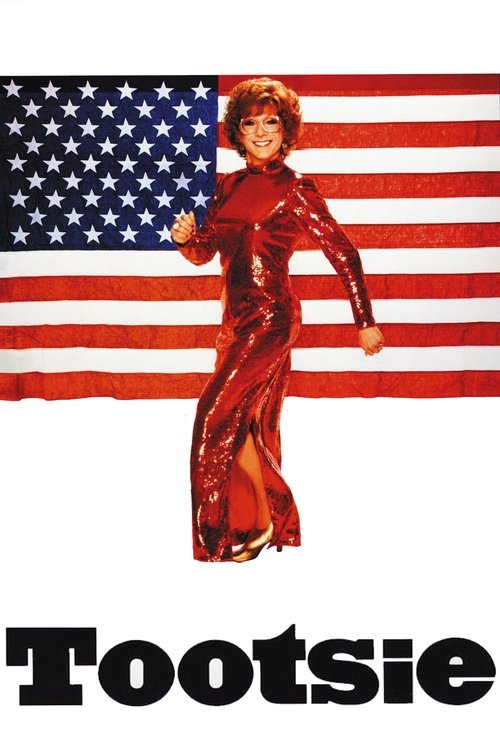
"A starving actor becomes America's hottest new actress in this hilarious cross-dressing comedy."
Michael Dorsey, a talented but difficult actor, finds himself blacklisted from the New York theater scene by early 1982. His agent George Fields tells him bluntly that his perfectionism makes him unemployable unless he changes his attitude. Facing financial ruin and unable to support his friend Jeff Slater's upcoming play, Michael hatches a plan to disguise himself as a woman named Dorothy Michaels.
The ruse works better than anyone expected. After auditioning for the soap opera Southwest General, Dorothy secures the role of Christine Canfield when the original actress falls ill. The character quickly becomes a sensation, winning over the entire cast and crew with her warmth and professional dedication while exposing the sexism and ageism women face in Hollywood.
Stream
Rent
Availability and pricing can change. Confirm on the provider's site before purchasing.
In the bustling entertainment hub of New York City during the winter of 1981, Michael Dorsey struggles to find steady work despite his obvious talent. He has been labeled impossible to work with because he refuses to compromise on his artistic vision. His agent, George Fields, delivers a harsh reality check: Michael will not get another job unless he learns to be more agreeable. Desperate to help fund his best friend Jeff Slater's experimental play, Michael decides to take matters into his own hands. He creates an elaborate persona named Dorothy Michaels, believing that the demand for female actors in daytime television is so high that no one would recognize him.
The transformation requires intense preparation. Michael studies the way women walk, talk, and carry themselves. He visits hospitals and bars to observe real-life mannerisms before stepping into the makeup chair. When he auditions for the popular soap opera Southwest General, the producers are initially skeptical about casting such a strange-looking woman. However, once Michael starts performing as Dorothy, the chemistry is undeniable. The show's director, Ron Carlisle, immediately sees potential in the performance. When the actual actress playing Christine Canfield, Julie Nichols, falls ill just days before filming begins, the network turns to Dorothy as the perfect replacement.
Dorothy's arrival on set changes everything. She brings a level of emotional depth and professionalism that the production had never seen. The cast members, including the struggling actress Julie Nichols, begin to trust and rely on her. Julie, who has spent years being typecast as nagging wives or villains, finds herself drawn to Dorothy's kindness and maturity. They become roommates, sharing an apartment where the lines between their lives blur further. Sandy Lester, a local actress who has long harbored feelings for Michael, moves into the same building and grows suspicious of the connection between Dorothy and her former flame.
As the weeks pass, the situation becomes increasingly complicated. Dorothy's fame grows, leading network executives like John Van Horn to push for spin-off movies and merchandising deals. Michael faces constant pressure to maintain his disguise while navigating complex relationships. He witnesses firsthand how women are treated differently in the industry, from being paid less to having their ideas dismissed. These experiences force him to confront his own prejudices and understand the systemic barriers women face. Meanwhile, Julie begins to fall in love with Dorothy, unaware that she is actually falling for her male best friend. The tension mounts as Sandy gets closer to uncovering the truth, and the live television broadcast approaches, threatening to expose the entire scheme in front of millions of viewers.
The narrative builds toward a breaking point where Michael must choose between protecting his friends and revealing the truth. He realizes that his deception has hurt the very people he intended to help. The film explores themes of identity, empathy, and the nature of acting itself. As the production reaches its climax, the secret threatens to unravel completely, forcing Michael to confront the consequences of his actions and decide whether to let the lie continue or risk everything to tell the truth.
Tootsie (1982) Original Trailer [FHD]
Critical Consensus
Tootsie balances farce with genuine social commentary through Dustin Hoffman's dual performance and Jessica Lange's poignant portrayal. The film remains a timeless exploration of gender roles and human connection, enhanced by sharp writing and stellar direction that keeps it relevant decades after release.
“Hoffman is brilliant in the dual role, bringing a depth to Dorothy that makes her more than just a joke. The film is a triumph of comedy and heart.”
Roger Ebert
Chicago Sun-Times
“A clever, witty, and often touching film that manages to be both a satire of Hollywood and a sincere look at the human condition.”
Vincent Canby
The New York Times
“Pollack directs with a light touch, allowing the humor to shine without overshadowing the emotional core. Hoffman and Lange deliver performances that are both hilarious and moving.”
Variety Staff
Variety
Dustin Hoffman
Michael Dorsey / Dorothy Michaels
Jessica Lange
Julie Nichols
Teri Garr
Sandy Lester
Dabney Coleman
Ron Carlisle
Charles Durning
Les Nichols
Bill Murray
Jeff Slater
Sydney Pollack
George Fields
George Gaynes
John Van Horn
Geena Davis
April
Doris Belack
Rita
Director
Sydney Pollack
Writers
Larry Gelbart, Murray Schisgal, Don McGuire
Composer
Dave Grusin
Cinematographer
Owen Roizman
Producers
Sydney Pollack, Dick Richards, Ronald L. Schwary
Academy Awards (1983)
Best Supporting Actress: Won
Academy Awards (1983)
Best Picture: Nominated
Academy Awards (1983)
Best Actor: Nominated
Golden Globe Awards (1983)
Best Motion Picture – Musical or Comedy: Won
Golden Globe Awards (1983)
Best Actor – Motion Picture Musical or Comedy: Won
Writers Guild of America (1983)
Best Comedy Written Directly for the Screen: Won
Join the community
fans discussing