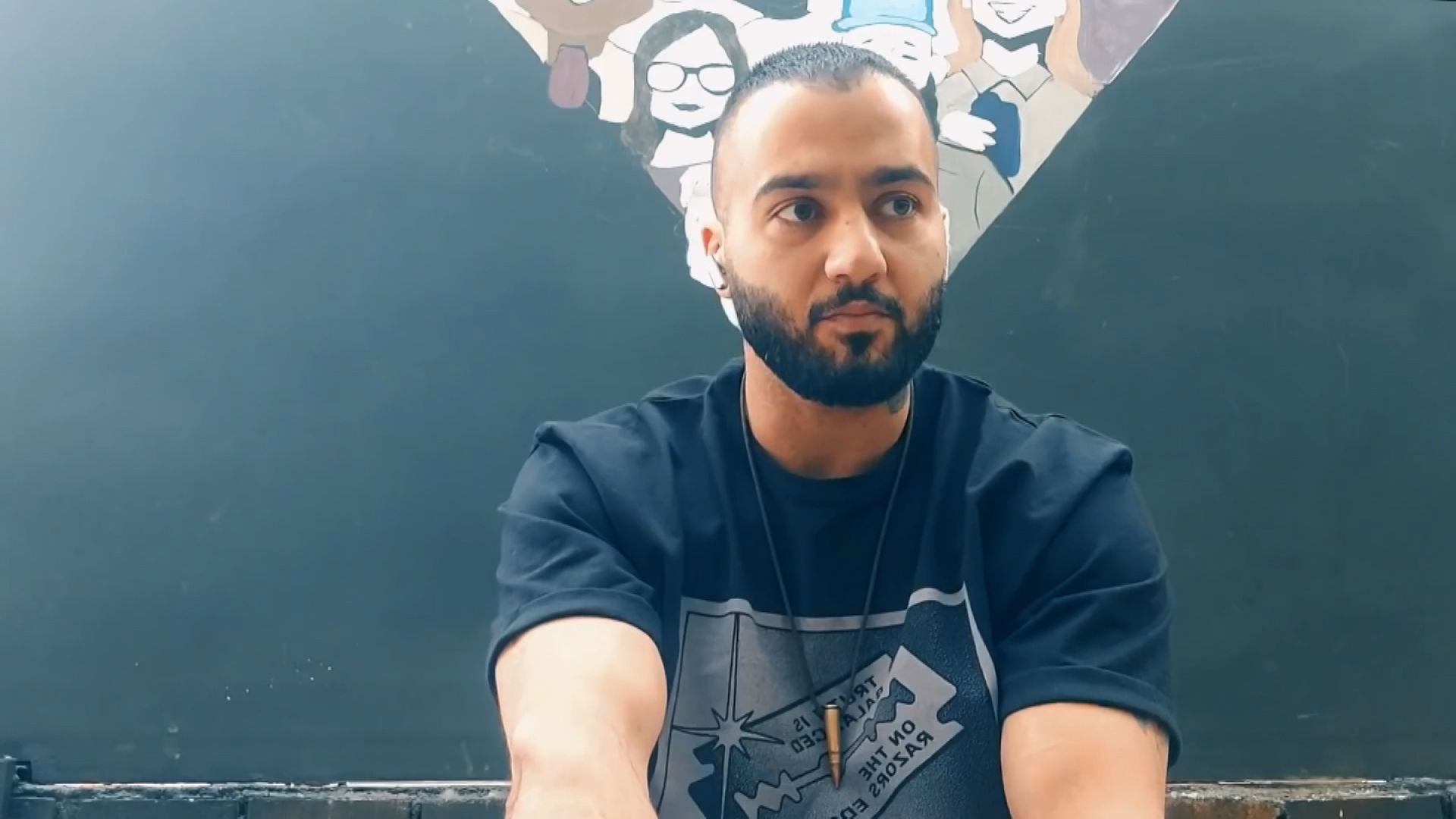
Toomaj Salehi
 Iran
IranAlso known as: Toomaj, Toumaj Salehi, Tomaj Salehi, Toomaj Salahi, Toumaj
Birthday
December 3, 1990
Birth Sign
Sagittarius
Birthplace
Gerd Bisheh, Chaharmahal and Bakhtiari, Iran
Age
35 years old
About
Toomaj Salehi is an Iranian rapper and activist whose protest songs have made him one of the most recognizable voices of dissent inside the Islamic Republic. Born in the small Bakhtiari village of Gerd Bisheh, he rose from underground rap circles to become a figurehead for a generation demanding change. His music, raw and unflinching, takes aim at state corruption, censorship, and the suppression of basic freedoms. As of 2026, he remains a powerful symbol of artistic resistance, with a social media following in the millions and a story that has drawn international attention.
Salehi's career has been defined by his willingness to speak out. His lyrics, often delivered over minimalist beats, capture the frustration and hope of ordinary Iranians. He first gained widespread notice during the 2021–2022 protests, when his songs became anthems for the streets. That prominence came at a severe cost: arrest, imprisonment, a death sentence that was later overturned, and ongoing harassment by authorities. Yet he continues to use his platform, most recently condemning death sentences in the Ekbatan case as "against humanity."
For his fans, Salehi is more than a musician. He is a witness and a voice for those who cannot speak. His willingness to sacrifice his freedom for his art has earned him admiration far beyond Iran's borders, making him a central figure in the global conversation about the power of music in the face of oppression.
Early Life & Background
Toomaj Salehi was born on December 3, 1990, in Gerd Bisheh, a village in the Chaharmahal and Bakhtiari province of western Iran. Growing up in the Zagros mountains, he was surrounded by the traditions of the Bakhtiari people, a community known for its fierce independence and rich oral poetry. That heritage would later seep into his lyrics, which blend streetwise Persian slang with the cadences of his native region.
Details about his schooling and early jobs are scarce, but it's clear that music became his outlet early on. In his late teens and twenties, he immersed himself in Iran's underground rap scene, a world that operated far from the state's gaze. He released tracks on platforms like SoundCloud, where his sharp social commentary began to attract a following. Songs like "Pulse" and "The Color of Blood" circulated through Telegram and Instagram, passed from phone to phone by young Iranians who heard their own lives in his words.
By the late 2010s, Salehi had built a reputation as one of the most fearless voices in Iranian hip-hop. He performed at small gatherings and released music that the authorities would never allow on official channels. His breakthrough came in 2021, when the protests that erupted across Iran gave his music a new urgency. His song "Blood in the Streets" became a rallying cry, and his name began to appear in international headlines. That was the moment his life changed forever.
Career Growth
Toomaj Salehi's career took a dramatic turn in 2021 when he became deeply involved in the nationwide protests that swept Iran. His music, particularly tracks like "Blood in the Streets," captured the anger and defiance of the moment, and his social media following exploded. The authorities took notice. In October 2022, he was arrested, and in July 2023, he was sentenced to six years in prison on charges related to his activism and lyrics.
The legal saga intensified in April 2024 when a court handed down a death sentence, linking his work to the Woman, Life, Freedom movement. The sentence drew international condemnation, with human rights groups and artists around the world calling for his release. In June 2024, an appeals court overturned the death sentence, and on December 2, 2024, Salehi walked free after completing his prison term. He had been released on bail in November 2023 but was rearrested just weeks later.
Since his release, Salehi has continued to use his voice. In June 2025, he was rearrested on Kish Island, but he has remained active, speaking out against state violence and supporting fellow prisoners. In May 2026, he publicly condemned the death sentences in the Ekbatan case, calling the executions "against humanity." His music remains a touchstone for activists, and his story has become a symbol of the fight for free expression in Iran.
Career Timeline
Public Image & Style
Toomaj Salehi is widely perceived as a voice of resistance, a rapper who put his life on the line for his beliefs. Media outlets frequently describe him as a "dissident rapper" and a "protest artist," labels that he has embraced through his actions and his music. His image is that of a man who refuses to be silenced, even when the cost is his freedom.
His music is characterized by its directness and its refusal to mince words. He raps about corruption, censorship, and the daily struggles of ordinary Iranians, often using metaphor and allegory to evade the censors. His delivery is intense, his lyrics biting, and his beats often minimalist, letting his words take center stage.
Fans connect with Salehi because he represents something larger than music: the fight for basic human rights. His social media presence is a mix of personal updates, political commentary, and calls to action. He has become a symbol of hope for many young Iranians, who see in him a reflection of their own frustrations and aspirations. His fandom, though not formally named, is fiercely loyal, and his concerts and online releases are treated as events.
Fame & Fandom
Toomaj Salehi stands as a defiant voice where silence is mandated, his influence rippling through digital channels that bypass state censorship. In August 2026, the 86th most famous person in Iran ranking places him firmly among the nation's most recognized figures. This status reflects not just musical output but a global mobilization of attention that tracks media coverage and consumption signals worldwide. His audience defies traditional celebrity structures; there is no formal fan club name or organized merchandise empire. Instead, supporters identify loosely with the "Woman, Life, Freedom" movement or simply as fans who view him as a symbol of resistance rather than a pop star. The collective energy of this decentralized network transforms personal suffering into a unified political narrative. Fans engage in viral streaming pushes to keep songs like "Normal" accessible during internet blackouts and participate in silent protests by displaying his image with the slogan "Zan, Zendegi, Azadi." While direct interaction remains dangerous, the shared ritual of singing his lyrics in diaspora communities and underground gatherings binds them together. His impact extends beyond entertainment, serving as a catalyst for civil disobedience that has drawn international scrutiny to the Iranian regime.
Interesting Facts and Legends
Salehi's Instagram handle, @toomajofficial, has amassed over 2.7 million followers, making him one of the most followed Iranian rappers on the platform. His X (formerly Twitter) account, @OfficialToomaj, serves as another outlet for his activism. He is known for using the phrase "زن، زندگی، آزادی" (Woman, Life, Freedom) in his social media posts, aligning himself with the protest movement that bears that name. Despite his fame, Salehi has never released a full-length studio album; his work exists primarily as singles and EPs distributed online. He has been compared to other dissident artists like Shahin Najafi, but Salehi's style is distinctly his own, blending Persian poetry with modern trap beats. His music has been cited as an influence by younger Iranian rappers who see him as a trailblazer for political hip-hop in the country. A defining moment in his lore occurred after the death of Mahsa Amini, when he became one of the first artists to release songs explicitly supporting the uprising. This led to his arrest on September 13, 2023, for his song "Normal," which was deemed propaganda against the state. The most widely retold story involves his sentencing to death in April 2024 for "enmity against God," a charge that sparked global outrage and transformed him into a cause célèbre before the sentence was commuted later that year.
Family & Personal Life
Toomaj Salehi keeps his family life largely out of the public eye. He was born in Gerd Bisheh, a village in the Bakhtiari region, and his family background reflects the area's tribal and rural traditions. While specific details about his parents and siblings are not publicly documented, it is known that his upbringing in this close-knit community shaped his worldview and his music.
As of 2026, Salehi is not married and has no children. He has not publicly discussed any romantic relationships, preferring to focus attention on his activism and art. His dedication to his cause has often meant long periods of separation from his family, especially during his imprisonment.
In interviews, he has spoken about the support he received from his family during his legal battles, though he has been careful to protect their privacy. His brother has occasionally appeared in his social media posts, but little else is known about his personal household.
Notable Connections
Toomaj Salehi has been supported by numerous human rights organizations, including PEN America, which condemned his six-year prison sentence, and the Center for Human Rights in Iran, which has documented his case. His story has been covered by international media outlets such as CNN, BBC, and NBC News. He has also been mentioned by artists and activists worldwide who have called for his release, though he is not known to have collaborated with other musicians on a large scale.
Relationships & Dating History
Toomaj Salehi has kept his romantic life extremely private. There is no public record of him ever being in a relationship, and he has never been married. His focus has been almost entirely on his music and activism, and he has not spoken about dating or partnerships in interviews.
Given his imprisonment and the constant threat of arrest, it is unlikely that he has had the opportunity to maintain a serious relationship. As of 2026, he is reportedly single, with no known partner. His personal life remains a mystery to fans, who respect his decision to keep that part of his life out of the spotlight.
Salary, Net Worth In 2026
$1 Million
iFANN Editorial Team estimate
Toomaj Salehi's net worth is difficult to pin down given his underground status and the political nature of his work. As of 2026, iFANN currently estimates his total assets at $1 Million. His income has primarily come from his music releases on streaming platforms like SoundCloud and YouTube, as well as from live performances and merchandise sales. However, his career has been severely disrupted by his legal troubles. During his imprisonment, he was unable to produce new music or perform, cutting off his primary sources of revenue. Since his release in December 2024, he has gradually returned to the public eye, though his activities remain constrained by ongoing surveillance and the threat of rearrest. His financial situation is further complicated by the fact that he operates outside the official Iranian music industry, which is heavily censored. His music is distributed through unofficial channels, and he does not receive royalties in the traditional sense. Instead, he relies on direct support from fans, who have donated to his legal defense fund and helped cover his expenses during his legal battles. Looking ahead, Salehi's net worth could grow if he is able to release new music and tour internationally. However, given the political risks, his financial future remains uncertain. For now, his wealth is a fraction of what it might be if he had been free to pursue a conventional career.
Awards & Accolades
Known For
Protest songs criticizing the Iranian government
2021 · Rapper and lyricist
Keywords
Sources
Quick Facts
- Profession
- Rapper, activist
- Born
- December 3, 1990
- Birthplace
- Gerd Bisheh, Chaharmahal and Bakhtiari, Iran
- Gender
- Male
- Birth Sign
- Sagittarius
- Net Worth
- $1 Million (estimated)
- Relationship Status
- Single
Frequently Asked Questions
Who is Toomaj Salehi?
What is Toomaj Salehi's net worth in 2026?
Is Toomaj Salehi still active in 2026?
Why was Toomaj Salehi arrested?
How does Toomaj Salehi compare to other Iranian dissident rappers?
Social Media
Similar People

Join the community
fans discussing