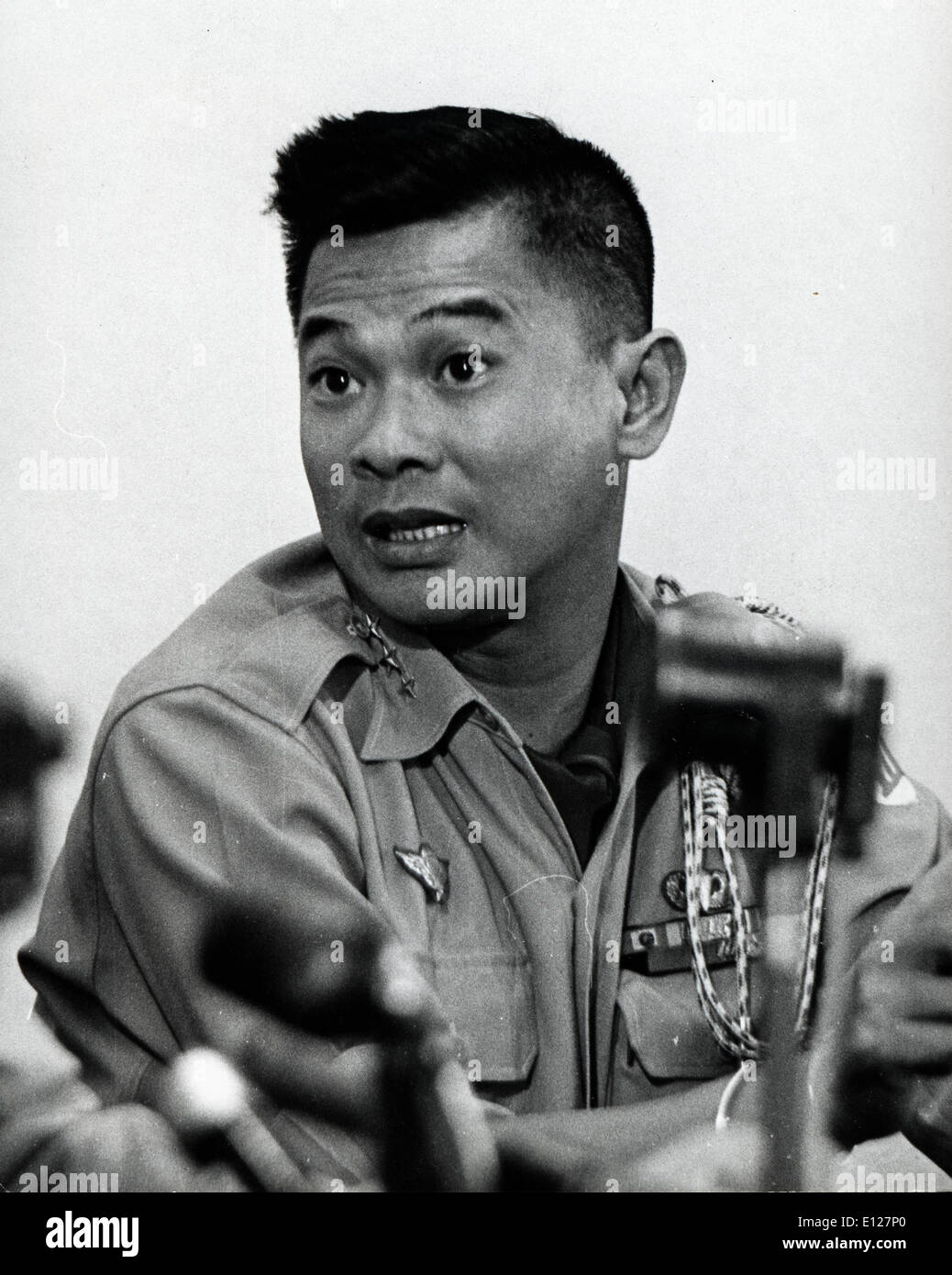
Tôn Thất Đính
 Vietnam
Birthday
November 20, 1926
Birth Sign
Scorpio
Birthplace
French Annam
Age
Died at 87
About
Lieutenant General Tôn Thất Đính was a South Vietnamese military officer and politician whose career became inseparable from the dramatic downfall of President Ngô Đình Diệm. Born on November 20, 1926, in French Annam, Đính rose quickly through the ranks of the Army of the Republic of Vietnam (ARVN), partly because he was a favorite of the ruling Ngô family. He converted to Roman Catholicism to win favor with Diệm and took charge of the military wing of the Cần Lao party, the secret Catholic organization that propped up the regime. By age 32, he had become the youngest ARVN general ever and commanded the II Corps, though his reputation was marred by egotism, impulsiveness, and a penchant for partying.
Đính's most infamous moment came in 1963. As commander of the III Corps, which protected the capital Saigon, he was essential to any coup attempt. Fellow officers recruited him by playing on his ego and turning him against Diệm. Diệm and his brother Ngô Đình Nhu suspected a plot but didn't know Đính was involved. Nhu devised a fake coup to trap his enemies, and Đính was put in charge of it, only to sabotage it. On November 1, 1963, the real coup unfolded, leading to the arrest and assassination of the Ngô brothers. Đính then served on the 12-member Military Revolutionary Council, but that lasted just three months before General Nguyễn Khánh seized power, placed Đính under house arrest, and falsely accused him of promoting neutralism. The military trial collapsed, and the generals were convicted only of "lax morality," eventually returning to service in meaningless desk jobs.
After Khánh was exiled, Đính commanded the I Corps in 1966 and was ordered to suppress the Buddhist Uprising. His conciliatory approach angered Prime Minister Nguyễn Cao Kỳ, who launched a surprise attack that forced Đính to flee. He was captured and briefly imprisoned. Following his release, Đính shifted to politics and media, winning a Senate seat in 1967. He remained in the upper house until the fall of Saigon in April 1975, when he fled Vietnam. He died on November 21, 2013, one day after his 87th birthday.
Early Life & Background
Tôn Thất Đính was born into the Tôn Thất clan, a distinguished Vietnamese family with historical ties to the Nguyễn imperial dynasty that ruled from Huế. Members of this clan traditionally held positions of prominence, and Đính's aristocratic heritage positioned him for a path of influence. His early life unfolded against the backdrop of French colonial rule and the growing nationalist movement, though specific details of his schooling and childhood are not well-documented.
His military career began during the First Indochina War (1946–1954), when he joined the Vietnamese National Army, which would later become the ARVN after the partition of Vietnam in 1954. The most consequential early decision in Đính's career was his conversion to Roman Catholicism. This was a calculated move to gain favor with President Ngô Đình Diệm, a devout Catholic who ruled South Vietnam from 1955 to 1963. Diệm's regime was widely criticized for favoring Catholics over the Buddhist majority, and Đính's conversion aligned him with the ruling elite. He also took charge of the military wing of the Cần Lao Party, the secret Catholic political organization that served as the regime's intelligence and enforcement apparatus.
Career Growth
Đính's loyalty to the Ngô family paid off spectacularly. By age 32, around 1958–1959, he had become the youngest general in the history of the ARVN and was given command of the II Corps, which controlled the Central Highlands. His reputation during this period was mixed, capable but also egotistical, impulsive, and fond of extravagant partying, traits that would later be exploited by his fellow officers.
His most critical military appointment came in 1963 when he was placed in command of the III Corps, the military region that protected Saigon. This position made him the single most important military figure for any coup attempt against Diệm. Fellow coup plotters recruited him by exploiting his ego, convincing him that he was indispensable to the nation's future. Crucially, Diệm and his brother Ngô Đình Nhu suspected a plot was brewing but did not know that Đính was part of it. Nhu devised an elaborate scheme: a fake coup designed to lure the conspirators into the open so they could be arrested. Đính was placed in charge of executing this fake coup, and instead used his position to sabotage it, ensuring the real coup could proceed. On November 1, 1963, the genuine coup unfolded. Diệm and Nhu were arrested and subsequently assassinated.
Following the coup, Đính served on the 12-member Military Revolutionary Council that took power. This period of rule lasted only three months. In January 1964, General Nguyễn Khánh seized power in a bloodless coup. Khánh placed Đính under house arrest and falsely accused him of promoting neutralism. The military trial that followed collapsed when the evidence proved insufficient. The generals were ultimately convicted only of "lax morality," a minor charge, and were eventually released and returned to service in meaningless desk jobs.
After Khánh himself was exiled in 1965, Đính returned to significant command. In 1966, he was appointed commander of the I Corps, the northernmost military region, which included the city of Huế and the former imperial capital. He was ordered to suppress the Buddhist Uprising, a major civil disobedience movement led by Buddhist leaders protesting the military government of Prime Minister Nguyễn Cao Kỳ. Đính's approach was conciliatory, he sought negotiated solutions rather than military confrontation. This angered Kỳ, who preferred a hardline crackdown. Kỳ launched a surprise attack on Đính's position, forcing Đính to flee. He was captured and briefly imprisoned before being released.
Following his release, Đính transitioned from military to political life. In 1967, he won a seat in the South Vietnamese Senate. He remained in the upper house of the National Assembly through the remainder of the Republic of Vietnam's existence. When Saigon fell to North Vietnamese forces on April 30, 1975, Đính fled Vietnam. He resettled in Santa Ana, California, which has a substantial Vietnamese-American community.
Career Timeline
Public Image & Style
In the historical record, Tôn Thất Đính is portrayed as a flamboyant and egotistical figure, a general who enjoyed the trappings of power, including parties and socializing, even as political crises mounted around him. His fellow officers reportedly exploited his vanity to recruit him into the coup plot, suggesting he was perceived as someone susceptible to flattery.
Historical accounts of Đính are generally critical, emphasizing his role in the betrayal of Diệm and the chaos that followed. However, some accounts note that his later conciliatory approach to the Buddhist crisis showed a capacity for moderation that his early career had not suggested. Historians of the Vietnam War typically treat him as a significant but flawed figure whose actions contributed to the political instability that ultimately doomed the Republic of Vietnam.
As a historical political and military figure, Đính has no organized fandom, fan names, or fan culture. Interest in him is confined to historians, Vietnam War scholars, and readers of Vietnamese history.
Fame & Fandom (iFAMOUS Rankings)
Tôn Thất Đính commands a specific, historical footprint defined by his role in the 1963 coup that toppled President Ngô Đình Diệm. He remains a subject of intense academic study and Cold War history rather than a figure of modern pop culture adoration. As of August 2026, iFANN has evaluated this person, but they do not currently hold a placement in the published rankings (Global Top 1,000 or a Top-100 scope list). His fame is anchored in the annals of military betrayal and political upheaval rather than viral celebrity metrics. The fanbase has no formal name. Historical records treat him as a serious military officer and politician whose actions reshaped South Vietnam, not as an entertainer who generates organized fan movements, birthday billboards, or ritualistic gatherings. While some online discussions exist within niche historical forums, these do not constitute an official fandom. No fan-funded projects or campaigns have emerged to celebrate or memorialize his life in the manner seen with modern icons. The audience interested in Đính consists primarily of historians, students of the Vietnam War, and readers of biographical accounts seeking to understand the complexities of the era. His legacy is one of controversy, characterized by the shift from youngest ARVN general to the man who facilitated the fall of a regime. This historical weight keeps his name relevant in textbooks and documentaries, yet it fails to generate the broad, global attention required for a current ranking spot. The lack of a fandom name reflects the reality that he was a soldier and statesman, not a cultural phenomenon. Readers encounter his story through factual narratives about the collapse of the Diệm government rather than through the lens of fan devotion.
Interesting Facts and Legends
Ngô Đình Nhu's plan to expose coup plotters through a fake coup was a remarkably sophisticated counterintelligence operation, and Đính's ability to feign participation while actually undermining it from within represents one of the more subtle acts of deception in Cold War military history. Becoming an ARVN general at 32 made Đính exceptionally young for such a senior rank in any modern military. Đính's conversion to Catholicism was widely understood as a career move rather than a spiritual awakening, reflecting the deeply politicized religious landscape of South Vietnam under Diệm. Historians continue to debate whether Đính's actions in 1963 were motivated by genuine patriotism, personal ambition, or a combination of both. His willingness to betray the regime that had elevated him suggests complex motivations. The military trial's collapse and the reduction of charges to "lax morality" was seen at the time as an embarrassment to Khánh's government and demonstrated the weakness of the evidence against the accused generals. Đính's 1966 approach to the Buddhist Uprising, seeking dialogue rather than confrontation, was notably different from the hardline tactics favored by Nguyễn Cao Kỳ, suggesting a pragmatic streak that contradicted his earlier reputation for impulsiveness. The most enduring story surrounding Đính is his pivotal decision to support the November 1963 coup led by Dương Văn Minh. This moment transformed him from a rising star into a figure labeled a traitor in Vietnamese historical narratives. Sources describe him as the commander who effectively sold out the Diệm regime, a choice he later justified by claiming he chose the country over the individual. His eventual death in Santa Ana, California, on November 20, 2013, marked the end of a life that spanned nearly nine decades of turbulent Southeast Asian history.
Family & Personal Life
Tôn Thất Đính was born into the Tôn Thất clan, a distinguished Vietnamese family with historical ties to the Nguyễn imperial dynasty. The Tôn Thất name is associated with the royal lineage of the Nguyễn emperors who ruled from Huế, and members of this clan traditionally held positions of prominence in Vietnamese society. Specific details of his parents, siblings, and childhood environment are not well-documented in available sources, but his family's aristocratic heritage positioned him for a path of influence and responsibility.
Relationships & Dating History
Specific details about Tôn Thất Đính's romantic relationships, marriages, and children are not documented in available sources. The historical record provides no information about a spouse, partners, or offspring. His personal life remains largely private, with sources focusing almost exclusively on his military and political career. Given the absence of verifiable data, no dating history can be compiled from credible sources. The historical record does not indicate whether he was married, divorced, or widowed at the time of his death in 2013.
Death & Aftermath
Died
November 21, 2013 (aged 87)
Death Place
Santa Ana, California
Cause of Death
Unknown
Tôn Thất Đính died at approximately 2:25 AM on November 21, 2013, at Kindred Hospital in Santa Ana, California. The former three-star general of the Army of the Republic of Vietnam passed away at age 87 after living in exile in the United States since the fall of South Vietnam in 1975. The Vietnamese expatriate community in Southern California gathered to honor the retired officer shortly after his passing.
A funeral service, known as tang lễ, took place in the Santa Ana area, attended by fellow veterans and members of the ARVN association who recognized his historical role as one of the youngest generals in the force's history, having reached the rank of two-star general by age 32. Online discussions within diaspora forums revisited his controversial command during the 1963 coup against President Ngô Đình Diệm, where he played a significant role in the overthrow of the regime. While no specific details regarding the burial location or private family statements are recorded in current reports, his legacy remains a subject of historical analysis and debate within Vietnamese diaspora communities and academic circles regarding his later career.
Net Worth (Estate Value)
As a deceased historical figure, no reliable information about Tôn Thất Đính's net worth at death, estate value, or posthumous earnings is available. He lived his final decades in Santa Ana, California, as a retired military officer and former senator. No estate management information, posthumous revenue sources, or licensing deals are documented. Given his status as a historical figure rather than a commercial entity, his estate's financial details are not a matter of public record.
Awards & Accolades
Known For
1963 South Vietnamese coup
1963 · Key conspirator, commander of III Corps
Senator of South Vietnam
1967 · Senator
Commander of I Corps
1966 · Commander
Keywords
Sources
Quick Facts
- Profession
- Military officer, politician
- Born
- November 20, 1926
- Birthplace
- French Annam
- Died
- November 21, 2013
- Death Place
- Santa Ana, California
- Gender
- Male
- Birth Sign
- Scorpio
Frequently Asked Questions
What did Tôn Thất Đính do in the 1963 coup?
Was Tôn Thất Đính related to the Nguyễn dynasty?
What happened to Tôn Thất Đính after the 1963 coup?
Where did Tôn Thất Đính die?
How old was Tôn Thất Đính when he became a general?
Join the community
fans discussing