 Spain
About
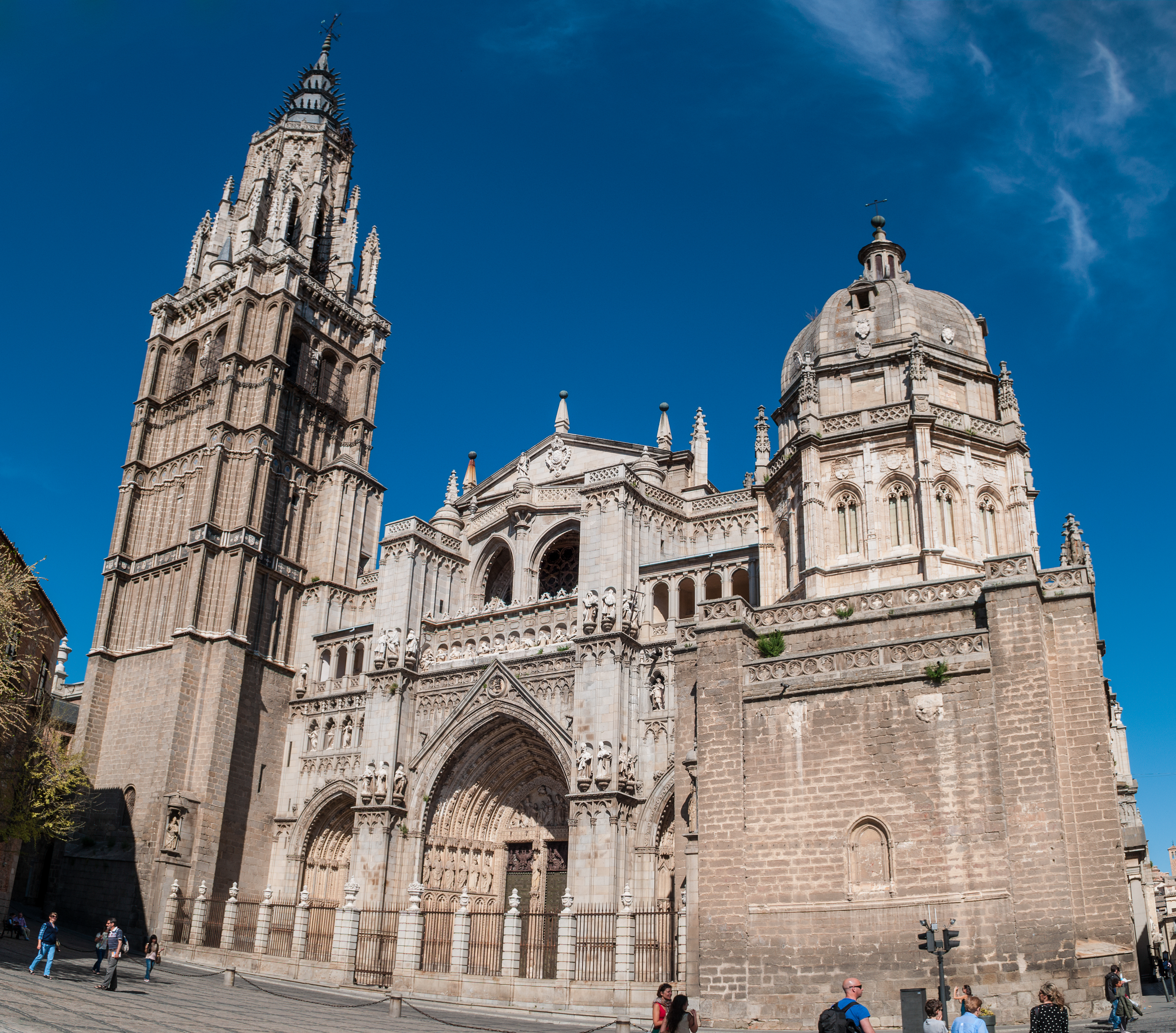
Toledo Cathedral, officially the Primatial Metropolitan Cathedral of Saint Mary of the Assumption, stands as one of the great High Gothic cathedrals of Spain, alongside those of Burgos and León. Its nickname, the Primatial, comes from a special honor granted by Pope Urban II in 1088, giving it precedence over all other churches in the Iberian Peninsula. Construction began in 1226, when King Ferdinand III and Archbishop Rodrigo Jiménez de Rada laid the first stone, and the main structure took shape over the following centuries.
The cathedral was built on the site of a former mosque, which itself had replaced a Visigothic church, layering centuries of religious history in one spot. The design blends French Gothic influences with Spanish and Mudéjar elements, creating a unique architectural character. Inside, soaring vaults, intricate choir stalls, and the famous transparente, a baroque altarpiece that floods the ambulatory with light, reward every visitor.
Beyond its religious role, the cathedral operates as a major cultural institution, housing an extensive collection of art that includes works by El Greco, Caravaggio, and Goya. It is often described as one of the most complete compendiums of Spanish art, reflecting Toledo's multicultural heritage. In 1986, the historic city of Toledo, including the cathedral, was declared a UNESCO World Heritage Site. Today, the cathedral remains a functioning place of worship and one of Spain's most visited monuments, drawing pilgrims and tourists from around the world.
Mission
Toledo Cathedral serves as the primatial church of Spain, holding ecclesiastical precedence over all other dioceses in the country. Its mission is to be a living center of Catholic worship, preserving the faith and traditions of the Archdiocese of Toledo. The cathedral also acts as a custodian of an immense artistic and historical heritage, making it accessible to the public through worship, cultural programming, and educational initiatives.
History
The story of Toledo Cathedral begins long before the first stone was laid in 1226. The site was originally a Visigothic church, later converted into a mosque during the period of Muslim rule. After the Christian reconquest of Toledo in 1085, the mosque was consecrated as a cathedral, but it was not until the 13th century that the decision was made to build a grand new Gothic structure. King Ferdinand III and Archbishop Rodrigo Jiménez de Rada initiated the project, and construction continued over the next 200 years.
Each generation of builders added their own mark. The main Gothic body was completed by the 15th century, with the famous transparente added in the 18th century, a baroque tour de force that lets light pour into the ambulatory. The cathedral's art collection grew steadily, enriched by royal patronage and the generosity of wealthy donors. By the 19th century, it had become a repository of Spanish art, with works by El Greco, Caravaggio, and Goya.
In 1986, the cathedral was included in the UNESCO World Heritage designation for the historic city of Toledo. The year 2026 marks a major milestone: the 800th anniversary of the cathedral's founding, celebrated with a major exhibition of approximately 300 works from its collections, including pieces by El Greco and Goya that have transformed scholarly understanding of Spain's past. Pope Leo XIV sent a personal letter to the faithful of Toledo expressing gratitude and hope for the cathedral's eight centuries of existence.
Subdivisions
Chapter House
The meeting place of the cathedral's chapter of canons, featuring a celebrated ceiling and portraits of all the archbishops of Toledo.
Chapel of San José
A chapel within the cathedral complex, known for its baroque altarpiece and historical significance.
Treasury
Houses a vast collection of religious art, including the famous monstrance of Enrique de Arfe and works by El Greco and Goya.
Notable People
Rodrigo Jiménez de Rada
Archbishop of Toledo · 1209–1247
Laid the first stone of the cathedral in 1226 and oversaw the early construction.
King Ferdinand III of Castile
King · 1217–1252
Co-founded the cathedral, supporting its construction during his reign.
El Greco
Artist · 1577–1614
Created several masterpieces for the cathedral, including the iconic 'Disrobing of Christ' (El Expolio).
Caravaggio
Artist · 1590s–1610
Contributed works to the cathedral's collection, adding to its artistic prestige.
Francisco Goya
Artist · 1770s–1828
Painted works housed in the cathedral, including a series of scenes from the life of Saint Joseph.
Milestones
1226
Construction begins with the laying of the first stone by King Ferdinand III and Archbishop Rodrigo Jiménez de Rada.
1493
The main Gothic structure is completed, with the final vaults and towers finished.
1732
The transparente, a baroque altarpiece designed by Narciso Tomé, is installed.
1986
The cathedral is included in the UNESCO World Heritage Site of the historic city of Toledo.
2026
The cathedral celebrates its 800th anniversary with a major exhibition and a letter from Pope Leo XIV.
Departments
Sources
Organization Info
- Founded
- 1226
- Headquarters
- Toledo, Spain
- Country
- Spain
- Type
- Religious
- UNESCO World Heritage
- 1986
- Architectural style
- High Gothic, with Mudéjar and Baroque elements
- Official name
- Primatial Metropolitan Cathedral of Saint Mary of the Assumption
Official Website
www.catedralprimada.es/
Join the community
fans discussing