“Gregory Peck gives a performance of quiet dignity and moral force as Atticus Finch... The film is a sensitive and beautiful adaptation of a great American novel.”
Bosley Crowther
The New York Times
 United States
"A father's love protects his children from a town's hatred."
User Score
2,878 votes
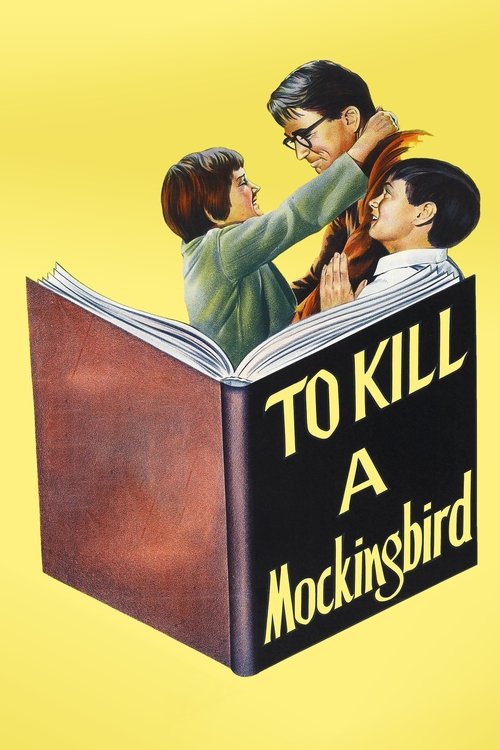
Set in the languid, sun-scorched town of Maycomb, Alabama, during the Great Depression, To Kill a Mockingbird unfolds through the eyes of six-year-old Scout Finch. She and her older brother Jem spend their summers with friend Dill Harris, spinning tales about the mysterious Boo Radley, a recluse who never leaves his dilapidated house. Their father, Atticus Finch, is a widowed lawyer of quiet integrity. When Atticus is appointed to defend Tom Robinson, a Black man falsely accused of raping a white woman, the trial exposes the town's deep-seated racism. Director Robert Mulligan, working from Horton Foote's adaptation of Harper Lee's novel, steers the drama with a gentle hand. Gregory Peck delivers an Oscar-winning performance as Atticus, a pillar of moral strength. Mary Badham and Phillip Alford bring authenticity to Scout and Jem, capturing the confusion and growth of children witnessing injustice.
Shot in black and white on a budget of $2 million, the film grossed over $13 million at the domestic box office. Its restrained tone and moral weight have made it a touchstone of American cinema. With a 93% Tomatometer score on Rotten Tomatoes and an 8.3 rating on IMDb, it remains widely admired for its honest portrayal of a community confronting prejudice. Robert Duvall made his film debut as Boo Radley, so transformed by makeup that Peck did not recognize him on set. The film was inducted into the National Film Registry in 1995.
Stream
Availability and pricing can change. Confirm on the provider's site before purchasing.
Maycomb, Alabama, 1932. Scout Finch lives with her brother Jem and their father Atticus, a respected lawyer. The children are fascinated by the Radley Place, home to the reclusive Boo Radley, who local legend claims stabbed his father with scissors. They dare each other to touch the house and act out horror stories about him. Over the summer, they find small treasures in a knothole of an oak tree on the Radley lot: chewing gum, Indian-head pennies, a pocket watch. They do not know who leaves them.
Atticus is appointed to defend Tom Robinson, a Black man accused of raping Mayella Ewell, a poor white woman. Despite knowing the town's racism, Atticus takes the case because his conscience demands it. The trial divides Maycomb. Atticus faces scorn, and his children endure taunts at school. Yet Atticus remains calm, teaching Scout that you never really understand a person until you consider things from his point of view.
The trial is the film's centerpiece. Atticus presents evidence that Mayella's injuries were on her right side, suggesting a left-handed assailant, while Tom's left arm is crippled. The only left-handed person present was Bob Ewell, Mayella's abusive father. Atticus also shows that Mayella made advances toward Tom, and her father caught them. Despite this, the all-white jury convicts Tom. The verdict shatters Jem's faith in justice, but Atticus tells him the jury's deliberation, which took hours, was a small step forward.
After the trial, Bob Ewell, humiliated by Atticus's cross-examination, vows revenge. He spits in Atticus's face, threatens his family, and tries to break into the judge's home. The story builds toward a tense Halloween night when Scout and Jem walk home from a school pageant alone.
Blu-ray Trailer
Critical Consensus
To Kill a Mockingbird is a masterful adaptation of Harper Lee's novel, anchored by Gregory Peck's Oscar-winning performance as Atticus Finch. Robert Mulligan's direction and Horton Foote's screenplay capture the novel's moral complexity and childhood innocence with remarkable sensitivity, creating a timeless meditation on racism, justice, and empathy that remains deeply moving decades later.
“Gregory Peck gives a performance of quiet dignity and moral force as Atticus Finch... The film is a sensitive and beautiful adaptation of a great American novel.”
Bosley Crowther
The New York Times
“The film is a time capsule of a lost America, a place where children played in the streets and everyone knew everyone else's business. Gregory Peck's Atticus Finch is the moral center of American cinema.”
Roger Ebert
Chicago Sun-Times
“The film is a triumph of American movie-making a work of such quiet integrity that it makes you believe in the possibility of human decency.”
Pauline Kael
The New Yorker
“Peck's performance is a beautifully modulated piece of acting, and the children Mary Badham and Phillip Alford are remarkably natural and unaffected.”
Variety Staff
Variety
“To Kill a Mockingbird remains one of the few Hollywood films that genuinely deserves its classic status a film of profound humanity and unshakeable moral clarity.”
David Thomson
The Guardian
Gregory Peck
Atticus Finch
Mary Badham
Scout Finch
Phillip Alford
Jem
John Megna
Dill Harris
Frank Overton
Sheriff Heck Tate
Brock Peters
Tom Robinson
Rosemary Murphy
Miss Maudie Atkinson
Ruth White
Mrs. Henry Lafayette Dubose
Estelle Evans
Calpurnia
Paul Fix
Judge John Taylor
Collin Wilcox Paxton
Mayella Violet Ewell
James Anderson
Bob Ewell
Robert Duvall
Arthur 'Boo' Radley
William Windom
Mr. Gilmer
Richard Hale
Nathan Radley
Alice Ghostley
Stephanie Crawford
David Crawford
Walter Cunningham Jr.
Steve Condit
Walter Cunningham Sr.
John Harmon
Mr. Stone
Kim Hamilton
Helen Robinson
Dan White
Mr. Link Deas
James O'Rear
Dr. Reynolds
Kelly Jackson
Zeebo
Director
Robert Mulligan
Writers
Horton Foote, Harper Lee
Composer
Elmer Bernstein
Cinematographer
Russell Harlan
Producers
Alan J. Pakula, Gregory Peck, Robert Mulligan
Academy Awards (1963)
Best Actor: Won
Academy Awards (1963)
Best Adapted Screenplay: Won
Academy Awards (1963)
Best Art Direction (Black-and-White): Won
Academy Awards (1963)
Best Picture: Nominated
Academy Awards (1963)
Best Director: Nominated
Academy Awards (1963)
Best Supporting Actress: Nominated
Academy Awards (1963)
Best Cinematography (Black-and-White): Nominated
Academy Awards (1963)
Best Original Score: Nominated
Golden Globe Awards (1963)
Best Actor – Motion Picture Drama: Won
BAFTA Awards (1964)
Best Foreign Actor: Won
Cannes Film Festival (1963)
Gary Cooper Award: Won
Cannes Film Festival (1963)
Best Actor: Won
Writers Guild of America (1963)
Best Written American Drama: Won
National Board of Review (1962)
Top Ten Films: Won
National Board of Review (1962)
Best Actor: Won
New York Film Critics Circle (1962)
Best Actor: Won
National Film Registry (1995)
Preserved: Inducted
Join the community
fans discussing