 United States
About
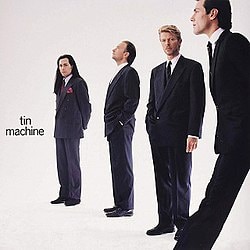
Tin Machine is a German-American rock band known for its raw, energetic sound and its collaborative approach. The group is fronted by the iconic David Bowie alongside guitarist Reeves Gabrels and the rhythm section of Tony Fox Sales and Hunt Sales. Famous for their visceral live performances and a deliberate departure from polished pop, Tin Machine released two studio albums and toured extensively in the early 1990s. The band operated as a democracy, with all members contributing equally to songwriting and vocals, a distinctive model that set them apart. Their music, characterized by its bombastic energy, has resonated with fans seeking a more aggressive and experimental side of Bowie's artistry. Despite a relatively short career, Tin Machine is credited with revitalizing Bowie's creative drive during a critical juncture.
Formation Story
David Bowie's decision to form Tin Machine in 1988 stemmed from a period of profound disillusionment. Exhausted by the extensive Glass Spider Tour and the demanding machinery of his solo career, Bowie was seriously considering quitting music altogether. It was during this pivotal time, at a Los Angeles party celebrating the tour's video release, that fate intervened. Bowie reconnected with bassist Tony Fox Sales, whom he hadn't seen since their collaboration on Iggy Pop's Lust for Life in 1977. Tony brought along his brother, drummer Hunt Sales, and an impromptu jam session quickly materialized. Simultaneously, Bowie had already been intrigued by guitarist Reeves Gabrels, whose distinctive demo tape he had heard through Gabrels' wife, Sara Terry, a staff member on Bowie's Glass Spider Tour . Gabrels soon joined Bowie and the Sales brothers in the studio, and the chemistry among the four musicians was immediate and undeniable.
From its inception in the United States, Tin Machine was conceived as a genuine band, a stark departure from Bowie's previous solo projects featuring hired backing musicians. Bowie firmly rejected the idea of 'checkbook musicians,' insisting instead on a democratic creative process where every member contributed equally to songwriting, vocals, and shared credits. This commitment to true collaboration was central to the group's identity. The name "Tin Machine" itself emerged from one of their early songs, a title Hunt Sales felt perfectly captured 'the sound of the band.' Other names considered included 'White Noise,' which Bowie vetoed as "too racist," alongside 'Leather Weasel' and 'The Emperor's New Clothes.' Tony Sales light-heartedly suggested 'The Four Divorcés' or 'Alimony Inc.,' a nod to the fact that all four members were divorced at the time.
With their unique philosophy established, Tin Machine began recording their self-titled debut album from August 1988 to mid-1989. The sessions took place across Mountain Studios in Montreux, Switzerland, and Compass Point Studios in Nassau, Bahamas. Deliberately rejecting the polished pop sound of Bowie's 1980s output, the band chased a raw, bombastic energy, recording largely live in the studio with minimal overdubs. The album was released on May 22, 1989, coinciding with their live debut at an awards show that same month. Bowie notably sported a beard for the occasion, a visual signal to audiences that this project represented a distinct creative departure. The debut single, "Under the God," introduced their new sound to the world, peaking at number 51 on the UK Singles Chart, followed by the second single "Tin Machine," which reached number 48.
Members

Former Members
Kevin Armstrong
Additional guitar, keyboards · 1989-1991
Eric Schermerhorn
Guitar · 1991-1992
Musical Style
Tin Machine played hard rock with an art-rock edge, drenched in noise and feedback. The debut album was recorded live in the studio, often in single takes, with a deliberate lack of polish. Gabrels pushed Bowie to write lyrics on the fly as the band jammed, rather than bringing in finished songs. The result was a sound that one critic described as 'hardcore', aggressive, scrappy, and unhinged. Songs like 'Tin Machine' and 'Heaven's in Here' showed a band trying to break things. The band's approach was characterized as hard rock, art rock, and noise rock, with a raw, unpolished sound achieved by recording live with minimal overdubs.
The second album, Tin Machine II, was more conventional. Rolling Stone gave it two stars, calling it bogged down with filler. The band had lost some of the anger that fueled the debut. But the core approach, loud, collaborative, and anti-commercial, remained consistent. Bowie later said the experience taught him to trust spontaneity again, which carried into his 1990s solo work.
Discography
| Title | Year |
|---|---|
| Tin Machine II | 1991 |
| Tin Machine | 1989 |
| Tin Machine Live: Oy Vey, Baby | 1992 |
| You Belong in Rock N'Roll | 1991 |
| One Shot | 1991 |
| Under the God | 1989 |
| Tin Machine | 1989 |
| Heaven's in Here | 1989 |
Tours
Tin Machine Tour
1989
It's My Life Tour
1991
Cultural Impact
Tin Machine's biggest impact was on David Bowie himself. After the band ended, Bowie said the project saved his career, it pulled him out of a creative rut and reminded him why he loved making music. He was so disgusted with his career circa 1987 that he considered walking away from music entirely. The group also marked a shift in how Bowie approached collaboration: he continued working with Gabrels for years, and the live-band ethos carried into tours like the 1990 Sound+Vision Tour.
Beyond Bowie, Tin Machine's influence was limited. The band was never a commercial force; their highest-charting single, 'You Belong in Rock N'Roll,' reached only number 33 in the UK. Critics either dismissed them as a Bowie side project or ignored them entirely. By the end of 2012, Tin Machine had sold two million albums worldwide. In hindsight, some fans and writers see Tin Machine as a necessary detour, a messy, loud reset that allowed Bowie to shed the 1980s and reinvent himself for the decades ahead.
Awards & Accolades
Milestones
Band formed
Debut album Tin Machine released
Second album Tin Machine II released
Live album Tin Machine Live: Oy Vey, Baby released
Band dissolved
Trivia
Tony and Hunt Sales are the sons of comedian Soupy Sales. Before Tin Machine, Hunt played drums in the hard rock trio Paris, formed by ex-Fleetwood Mac guitarist Bob Welch and featuring ex-Jethro Tull bassist Glenn Cornick. Hunt's first group was with his brother Tony in 'Tony and the Tigers,' which appeared on Hullabaloo in 1966 and the Detroit dance show Swingin' Time. Kevin Armstrong, who played on the first album and tour, had previously worked with Thomas Dolby on The Golden Age of Wireless and The Flat Earth. The US version of Tin Machine II's album cover featured four nude Grecian statues, with their genitals airbrushed out. The Sales brothers had previously played with Bowie and Iggy Pop during the 1977 tour for The Idiot and on Iggy Pop's album Lust for Life.
Keywords
Sources
Quick Facts
- Type
- Rock Band
- Formed
- 1988
- Origin
- United States
- Label
- EMI America Records, Victory Music
- Genres
- hard rock, art rock, noise rock
- Members
- 4
- Disbanded
- 1992
Group Info
- Formed
- 1988
- Debut
- 1989-05-22
- Debut Song
- Under the God
- Origin
- United States
- Label
- EMI America Records, Victory Music
- Status
- Disbanded (1992)
Join the community
fans discussing