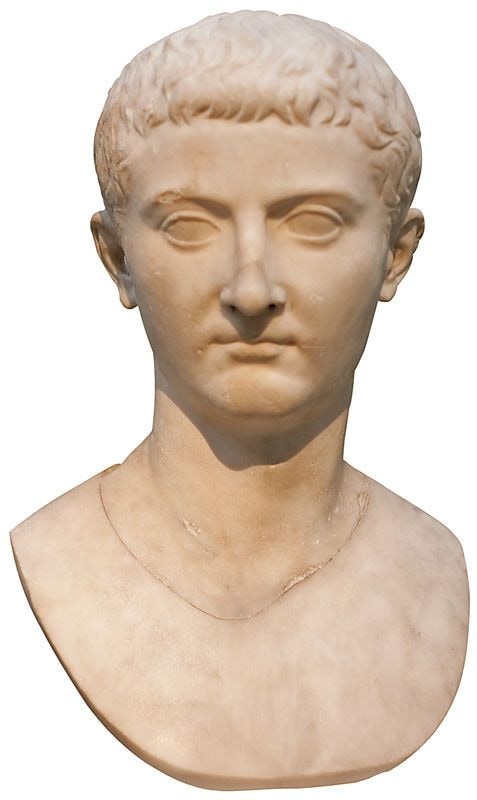
Tiberius
Roman emperor•military commander•politician
Also known as: Tiberius Julius Caesar Augustus
Birthday
November 16, 42 BC
Birth Sign
Scorpio
Birthplace
Rome, Roman Republic
Age
Died at 78
About
Tiberius was a Roman emperor, reigning from 14 until his death on March 16, 37. He is remembered as a highly capable military commander and diplomat, securing critical northern borders for the Roman Empire. While his ascent to power was complex, he maintained an effective administration throughout his reign.
Tiberius developed a reputation for being reclusive and somber, a perception that intensified after personal tragedies, leading to his eventual withdrawal from Rome. Despite this, his rule is recognized for its administrative effectiveness, leaving a significant mark on the Roman Empire's history.
Early Life & Background
Born Tiberius Claudius Nero on November 16, 42 BC, in Rome, Roman Republic, Tiberius hailed from a distinguished senatorial family. His early life was profoundly shaped by his mother Livia Drusilla's marriage to Octavian, the future Emperor Augustus, which brought him directly into the orbit of imperial power and positioned him within the most influential circles of Rome.
Tiberius embarked on a military career early on, quickly demonstrating exceptional talent as a commander and diplomat. He achieved significant successes across the empire's northern frontiers, commanding forces that secured critical regions such as Pannonia, Dalmatia, Raetia, and Germania. These campaigns not only expanded Roman influence but also showcased his considerable skill as a general and his strategic mind, solidifying his reputation as a highly capable leader.
Despite his accomplishments, Tiberius's ascent to power was not straightforward. Augustus initially favored his grandsons, Gaius and Lucius Caesar, as heirs. However, their premature deaths paved the way for Tiberius's adoption by Augustus in AD 4. This political necessity had profound personal consequences, forcing him to divorce his beloved first wife, Vipsania Agrippina, and marry Augustus's daughter, Julia the Elder. This subsequent union proved unhappy and ultimately ended with Julia's exile.
Career Growth
Upon Augustus's passing in AD 14, Tiberius ascended to the imperial throne at the age of 55, becoming the second Roman Emperor. His reign, while fiscally sound and administratively effective, was often strained by his deep suspicion of the Roman Senate. He maintained a strong focus on imperial finances and border security, continuing many of Augustus's policies.
A series of personal losses deeply affected Tiberius, notably the deaths of his nephew and adopted son, Germanicus, in AD 19, followed by his own son, Drusus, in AD 23. These tragedies contributed to his increasing reclusiveness. In AD 26, Tiberius made the significant decision to withdraw from Rome entirely, relocating to the island of Capri. He largely entrusted the day-to-day governance to his Praetorian Prefect, Sejanus, a move that would ultimately backfire. Sejanus's growing ambition led to his dramatic execution for treason in AD 31. Tiberius remained on Capri until his death in Miseno on March 16, 37 AD, at which point his grand-nephew, Caligula, succeeded him.
Career Timeline
Public Image & Style
Tiberius cultivated a public image of administrative competence and fiscal prudence, yet he was widely perceived as a reserved and suspicious figure. His demeanor was often described as somber, contributing to his enduring reputation as "the gloomiest of men." This perception was amplified by his strained relationship with the Roman Senate, where he often suspected disloyalty. His eventual withdrawal to Capri further cemented his image as a reclusive ruler, detached from the daily affairs of Rome. Despite his political effectiveness, he never quite achieved the popular charisma of his predecessor, Augustus, often appearing aloof to the general populace.
Fame & Fandom (iFAMOUS Rankings)
Tiberius commands a global audience defined by historical study rather than contemporary celebrity metrics. His recognition spans two millennia, rooted in the annals of Roman history and modern classical scholarship. iFANN has evaluated his standing within the Global Fame Engine; however, he does not currently hold a placement in the published rankings or any Top-100 scope list. This status reflects his position as a figure of antiquity rather than a subject of current viral attention. While the name Tiberius appears in modern contexts regarding aerospace contracts and musical releases, these entities lack an organized fanbase with formal rituals or campaigns. The historical figure himself is remembered for alienation rather than adoration, and no documented fandom name exists for the ancient emperor, the defense contractor, or the contemporary musician. Consequently, there are no fan-funded projects, chart pushes, or specific cultural rituals associated with this name in the present day.
Interesting Facts and Legends
Tiberius was known for his mastery of both Latin and Greek, often engaging in intellectual discussions and demonstrating a keen interest in rhetoric. He also had a notable fascination with astrology, reportedly consulting astrologers regularly throughout his life. Pliny the Elder famously described him as "the gloomiest of men," a characterization that has stayed with him through history. In his later years, particularly during his time on Capri, he gained a reputation for heavy drinking. A persistent legend portrays his retreat to the island of Capri as the start of a decadent reign marked by debauchery and political purges. Modern historians classify much of this narrative as political slander generated by successors, yet the story of his withdrawal due to grief over the deaths of Drusus and Germanicus remains a verified historical event that fueled centuries of speculation. Another enduring tale suggests he ruled from the shadows while Rome suffered under tyranny, though recent analysis indicates his administration was characterized by fiscal prudence and military competence rather than the cruelty often depicted in ancient sources.
Family & Personal Life
Tiberius Claudius Nero was born to Tiberius Claudius Nero and Livia Drusilla. His mother, Livia, later divorced his father to marry Octavian, who would become Emperor Augustus, bringing young Tiberius into the heart of the imperial family. He had a younger brother, Nero Claudius Drusus, who also distinguished himself militarily. From his first marriage to Vipsania Agrippina, Tiberius had a son, Drusus Julius Caesar, who was initially seen as a potential successor before his untimely death in AD 23.
Notable Connections
Tiberius's life was intricately linked with Augustus, who was both his stepfather and adoptive father, ultimately designating him as his successor. His mother, Livia Drusilla, played a significant role in his early life and connection to the imperial family. He had a beloved first wife, Vipsania Agrippina, and a politically motivated second marriage to Julia the Elder. Key figures during his reign included his nephew and adopted son Germanicus, his biological son Drusus, and his powerful, yet ultimately treacherous, Praetorian Prefect Sejanus. His successor was his grand-nephew, Caligula.
Relationships & Dating History
Tiberius's romantic life was largely defined by two significant marriages. His first wife was Vipsania Agrippina, whom he married around 20 BC. Historical accounts suggest this was a genuinely affectionate union, and they had a son, Drusus Julius Caesar. However, political considerations forced Tiberius to divorce Vipsania in 11 BC at Augustus's insistence, a separation he reportedly found very painful.
Following his divorce, he married Julia the Elder, Augustus's daughter, in 11 BC. This second marriage was politically expedient but deeply unhappy, largely due to Julia's alleged infidelity and her contrasting temperament to Tiberius's reserved nature. The union produced no children. Julia was eventually exiled by Augustus in 2 BC for moral misconduct, effectively ending their marriage. Historical records do not detail any further significant romantic relationships for Tiberius after Julia's exile. As of 2026, Tiberius was effectively single at the time of his death in 37 AD, having been separated from his last wife for many years.
- MarriedVipsania Agrippina-20 - -11Their marriage was reportedly affectionate, but Tiberius was forced to divorce her for political reasons.
- MarriedJulia the Elder-11 - -2A politically motivated and unhappy marriage that ended with Julia's exile for misconduct.
Death & Aftermath
Died
March 16, 37 AD (aged 78)
Death Place
Capri, Italy
Cause of Death
Starvation or strangulation (unconfirmed)
The immediate reaction to the death of Tiberius was a complex mixture of relief and fear, as the Senate and common people alike had suffered under his paranoia and strict laws for years. While the Senate initially voted to deify him in a performative gesture, this quickly shifted to attempts to erase his memory through damnatio memoriae, destroying statues and banning his name from public records due to widespread unpopularity and perceived cruelty. Modern analysis suggests that these negative reactions were significantly exaggerated by later historians like Tacitus and Suetonius, who relied on political bias rather than genuine sentiment to construct their narratives.
Tiberius died on March 16, 37 AD, at his villa in Misenum or on the island of Capri near Naples, having reached the age of 75. The exact cause of death remains a subject of historical debate with no single established fact, as ancient sources present conflicting accounts regarding the circumstances. Some traditions report that he slowly starved himself to death after becoming disillusioned with life and political intrigues involving his praetorian prefect Sejanus and his grandson Caligula, while other accounts suggest he was strangled by his chamberlain Macro to secure power for the new successor.
His funeral was a state affair held on the same day he died, attended by the Praetorian Guard and the Senate, though the tone was somber and possibly reluctant given the prevailing dislike of the emperor. He was buried in the Mausoleum of Augustus in Rome, the traditional resting place for the Julio-Claudian dynasty. His estate was immediately controlled by the new emperor Caligula, who inherited the imperial treasury and used it to fund his own accession without providing any public accounting to the populace.
Net Worth (Estate Value)
$15 Billion
iFANN Editorial Team estimate
As the second Roman Emperor, Tiberius controlled the vast resources of the Roman state, which included extensive imperial estates, taxes from provinces, and tributes. His personal wealth, therefore, was effectively intertwined with the imperial treasury. He was known for his fiscal conservatism and prudent management, which allowed the state's coffers to grow considerably during his reign. This meant he presided over an immense economic power, far exceeding what would be considered personal wealth in a modern context. Estimating the net worth of an ancient ruler in modern terms is complex, as their control over state assets differs from individual holdings today. Per iFANN's editorial analysis, if we were to translate the resources and economic power he commanded, Tiberius's net worth in 2026 would be estimated at around $15 Billion. This figure reflects the immense financial authority and control he exercised over the Roman Empire's economy, rather than a personal liquid fortune, and is a testament to his successful, albeit often grim, administration of imperial finances.
Awards & Accolades
View 1 records, honours and achievementsKnown For
Second Roman Emperor
14 · Emperor of Rome
Military Campaigns in Germania
-12 · Roman General
Keywords
Quick Facts
Personal Details
- Full Name
- Tiberius Claudius Nero
- Spouse
- Vipsania Agrippina, Julia the Elder
- Children
- Drusus Julius Caesar
Frequently Asked Questions
Who was Tiberius before he became emperor?
When did Tiberius serve as Roman Emperor?
What were some key events during Tiberius's reign?
Why did Tiberius go to Capri?
Who succeeded Tiberius as emperor in 37 AD?
Join the community
fans discussing