 Australia
“Thrash embraces its shark-disaster premise with a straightforward, snackable approach: it goes down easy, even if it never truly surprises, coasting on solid performances and a few clever, water-logged set pieces.”
LaNeysha Campbell
But Why Tho?
Part of a Collection
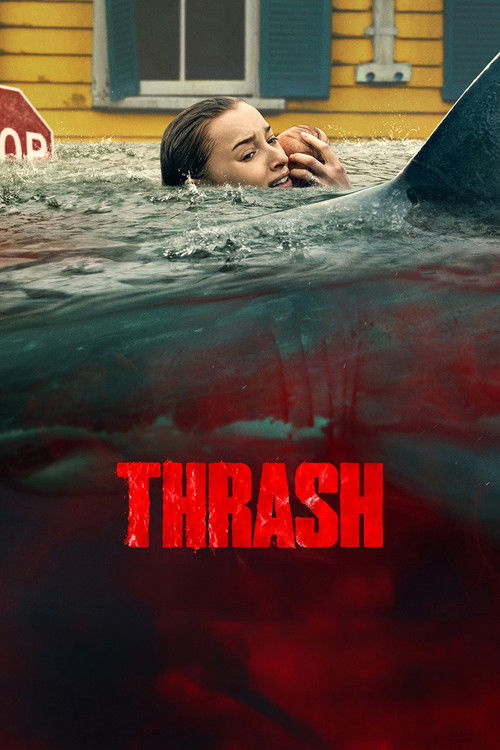
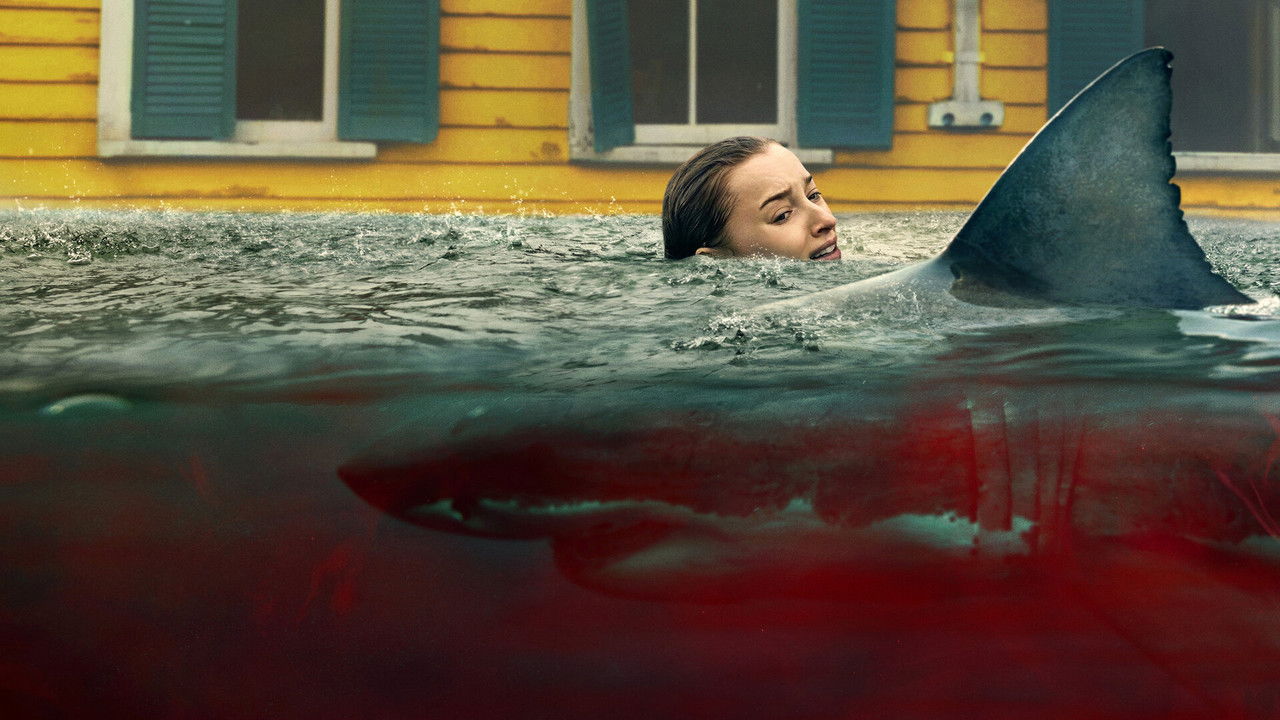
Thrash is a 2026 survival horror thriller that drops a Category 5 hurricane on a small Gulf Coast town and then unleashes ravenous sharks into the flooded streets. Directed by Tommy Wirkola, the film follows a group of scattered survivors who must navigate rising floodwaters and hidden predators to make it out alive. It's a creature feature with a disaster movie backbone, blending tense waterborne set pieces with a blunt warning about environmental neglect.
The story centers on Lisa Fields, a young woman who recently returned to her hometown of Annieville after a failed attempt at city life. She works at the local marina and knows the tides better than anyone. When the storm surge drags aggressive sharks inland, her knowledge becomes critical. Alongside a marine biologist, a guilt-ridden college student, and a handful of locals, Lisa faces a nightmare where every submerged street could be a feeding ground.
Critics have praised the film's brisk pacing and committed performances, especially from Phoebe Dynevor and Djimon Hounsou, but note that it doesn't break new ground for the genre. With a Rotten Tomatoes score of 59%, Thrash is described as a competent, occasionally tense thrill ride that delivers on its promise of shark-fueled chaos, even if it never fully transcends its B-movie roots.
Stream
Availability and pricing can change. Confirm on the provider's site before purchasing.
Set in the small Gulf Coast town of Annieville, Thrash opens with routine hurricane-season anxiety that rapidly escalates when a tropical system intensifies into a Category 5 monster faster than forecasts predicted. Some residents evacuate, but many cannot or will not leave due to lack of resources, stubbornness, or denial. This creates a cross-section of people the film will follow once the storm hits.
The primary perspective is Lisa Fields, a young woman who has recently moved back to Annieville after a failed attempt at big-city life. Lisa is intelligent and capable but emotionally stuck, having returned to care for her aging father and work a low-level job at a local marina, where she knows the waterways and tides intimately. Her knowledge of the harbor and the town's flood patterns quietly sets up her role later as someone who can read the disaster around her.
Parallel to Lisa's story is Dakota, a college-age local who initially treats the storm like another overhyped news cycle. She parties with friends and brushes off evacuation warnings, creating early tension with more cautious family members. Dakota's arc is built around being forced to confront the reality of the storm and her own tendency to run from responsibility once the situation turns deadly.
Dr. Dale Edwards is a visiting marine biologist in town to consult on coastal erosion and shark migration patterns. He is one of the first to grasp the implications of what the storm surge is doing offshore. He knows that warmer water and disrupted feeding grounds have driven aggressive shark populations closer to human communities, a concern local officials have mostly ignored. His scientific perspective frames the threat as more than a random monster attack; it's a predictable consequence of environmental and infrastructural neglect.
Around them are several smaller but key survivor groups. Billy Olson is a gruff local fisherman whose knowledge of boats and tides is matched only by his distrust of outsiders. Joe Sprinkle is a thrill-seeking local who livestreams the storm for followers, treating it as entertainment until reality turns. Dee, Ron, and Will are siblings stuck in their family home on slightly higher ground, believing they are safe until the flood rises higher than any of them imagined. Doug the Camera Guy is a videographer documenting the storm for a news outlet, whose footage occasionally gives a more panoramic view of the catastrophe. Trent is a local official trying to manage a situation that has already slipped beyond control. Harbor Master Greg Wilson is Lisa's boss at the marina, who understands port logistics and tries to implement a chaotic last-minute evacuation. Brian is connected to Lisa's past, serving as an emotional anchor and occasional skeptic of her risk-taking.
When the hurricane makes landfall, the film shifts into full disaster mode: power fails, cell towers go down, and Annieville's streets transform into dangerous canals of swirling debris and opaque, debris-filled water. Early sequences emphasize the storm itself as characters are separated from loved ones, forced into precarious shelter, or left stranded on rooftops and attics.
Soon, the central twist of the premise emerges: the storm surge has dragged in multiple sharks from offshore, disoriented but opportunistic, now swimming through the town's submerged streets, homes, and parking garages. At first, the survivors don't quite understand what they're dealing with. Strange splashes, missing people, and unexplained blood in the water are chalked up to debris or panicked misperception. Dr. Edwards, however, recognizes telltale patterns of shark attack behavior and tries to warn the others.
Lisa and a small group become trapped in and around the flooded marina and nearby neighborhood, where every attempt to move to higher ground requires crossing submerged zones that might be harboring sharks. The film uses tight spaces such as attics filling with water, half-submerged stairwells, overturned vehicles, and floating debris to create claustrophobic, suspense-driven set pieces. The sharks, often glimpsed as shadowy forms or sudden bursts of motion, force the survivors to improvise: using makeshift flotation devices, barricading stairwells, and timing movements between thunderclaps when visibility briefly improves.
The central conflict crystallizes as a race against time, tide, and predators. The storm's eye and subsequent backside winds will change water levels again, threatening to either fully submerge the last dry spots or recede too quickly, sweeping people out with the current. Survivors must decide whether to hunker down and hope for rescue or attempt a risky move toward a perceived safe zone, such as a more elevated municipal building, a hospital, or a still-afloat vessel at the marina.
Tensions within each group grow: arguments over leadership, blame for not evacuating sooner, and moral dilemmas about who to save when resources like boats, life vests, and weapons are limited. Dr. Edwards pushes for rational, measured risk; Billy advocates for bold, practical moves; Lisa tries to balance empathy with growing ruthlessness born of desperation. Dakota, guilt-ridden over earlier irresponsibility, takes increasingly dangerous risks to help others, as she and Lisa's storylines gradually converge.
By the midpoint, most survivors understand that the water itself is the enemy, not just because they might drown, but because something is hunting in it. The film escalates by forcing the characters into set-piece crossings: flooded streets where cars float like landmines, a submerged supermarket with floating shelves and hidden threats below, and a precarious rooftop-to-rooftop traversal in gale-force winds. Each sequence reveals more about the sharks' behavior, the extent of the town's destruction, and who among the group is willing to sacrifice for others.
The story builds toward a final plan to escape using limited remaining assets, such as a damaged rescue boat or emergency vehicle, while the hurricane begins to shift phases, promising both a potential break in the weather and the danger of rapidly changing water levels. The film stops short of its major twist and ending revelations by positioning the survivors for a last, high-stakes attempt at escape, with relationships tested, secrets hinted at, and the full scope of the disaster still unfolding around them.
Official Trailer
Critical Consensus
Critics view Thrash as a modestly effective shark-disaster hybrid, praised for brisk pacing and committed performances, but criticized for thin characterization and familiar genre beats. It delivers competent, occasionally tense entertainment for fans of creature features and storm-survival thrillers.
“Thrash embraces its shark-disaster premise with a straightforward, snackable approach: it goes down easy, even if it never truly surprises, coasting on solid performances and a few clever, water-logged set pieces.”
LaNeysha Campbell
But Why Tho?
“Despite a killer premise of sharks invading a flooded town, Thrash feels purposeless and surprisingly thrill-less, leaning on clichés and underdeveloped characters instead of exploiting its setting for genuine terror or tension.”
JD Duran
InSession Film
“For creature-feature devotees, Thrash offers enough blood, teeth, and storm-tossed chaos to satisfy, even if its predictable structure and CG-heavy sharks won't convert skeptics to the genre.”
Horror Film Wiki
Horror Film Wiki
Director
Tommy Wirkola
Writer
Tommy Wirkola
Composers
Dominic Lewis, Daniel Futcher
Cinematographer
Denson Baker
Producers
Adam McKay, Kevin J. Messick, Tommy Wirkola
Join the community
fans discussing