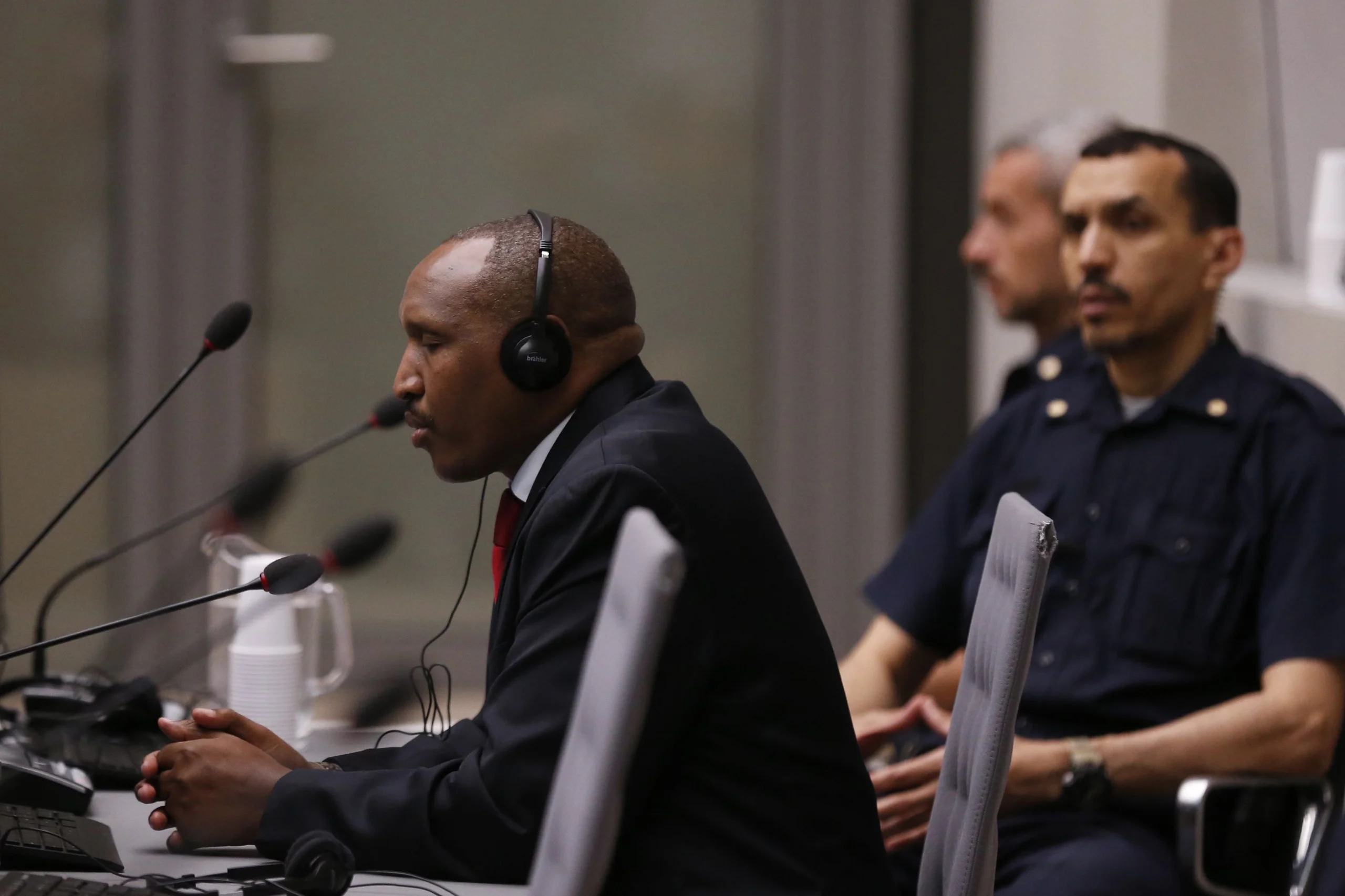
Thomas Lubanga Dyilo
 DR Congo
Also known as: Thomas Lubanga
Birthday
December 29, 1960
Birth Sign
Sagittarius
Birthplace
Djugu Territory, Democratic Republic of the Congo
Age
65 years old
About
Thomas Lubanga Dyilo is a Congolese politician and former militia leader who holds the historic distinction of being the first individual ever convicted by the International Criminal Court (ICC). Born in the Djugu Territory of the Democratic Republic of the Congo, he founded and commanded the Union of Congolese Patriots (UPC), a rebel group that played a central role in the brutal Ituri conflict from 1999 to 2007. Under his leadership, UPC forces were accused of widespread atrocities including ethnic massacres, murder, torture, rape, mutilation, and the systematic forced conscription of child soldiers.
Lubanga's path to global infamy began when he became the first person arrested under an ICC warrant in March 2006. His trial, which commenced in January 2009 at The Hague, marked the first major case for the newly established court. On March 14, 2012, Trial Chamber I found him guilty unanimously of war crimes involving the enlistment and conscription of children under fifteen and using them to participate actively in hostilities. He was sentenced to 14 years of imprisonment, with time served deducted, leaving him with six years remaining. He was released in March 2020 after serving his full sentence, but his return to prominence occurred in March 2025 when reports emerged that he announced the formation of a new rebel movement in the Ituri region.
Early Life & Background
Thomas Lubanga Dyilo was born on December 29, 1960, into the Hema ethnic group within the Djugu Territory, a region in northeastern Democratic Republic of the Congo known for its rich mineral resources and history of inter-ethnic violence. His early life unfolded during the unstable era of Mobutu Sese Seko's rule and the subsequent collapse of state authority following the First Congo War between 1996 and 1997. Before rising to military prominence, Lubanga worked as a teacher and engaged in local politics. He initially gained traction by organizing the Mouvement pour la Libération du Congo (MLC) in the Ituri region, positioning himself as a defender of Hema interests against perceived threats from the Lendu ethnic group.
The shift from local politics to armed conflict occurred in the late 1990s as tensions in Ituri escalated. In 1999, Lubanga broke away from previous factions to found the Union of Congolese Patriots (UPC) and established its armed wing, the Forces Patriotiques pour la Libération du Congo (FPLC). This move initiated a campaign to control the Ituri region, leading to brutal campaigns against Lendu communities that resulted in thousands of deaths and the displacement of hundreds of thousands of people. During this period, the UPC began systematically recruiting children under the age of 15 to serve as combatants and porters, setting the stage for the charges that would later define his legacy.
Career Growth
Lubanga's trajectory shifted permanently from local politics to international criminal justice in the late 1990s when he founded the Union of Congolese Patriots (UPC) and its armed wing, the Forces Patriotiques pour la Libération du Congo (FPLC). The UPC became a dominant force in the Ituri conflict, fighting against other militias such as the Front des Nationalistes et Intégrationnistes (FNIm) and the Patriotic Resistance Force in Ituri (FRPI). Between 2000 and 2003, his forces led brutal campaigns that resulted in thousands of deaths and the systematic recruitment of children under 15.
The legal chapter of his career opened on February 10, 2006, when the ICC issued an arrest warrant for war crimes and crimes against humanity related to the recruitment of child soldiers. On March 17, 2006, Lubanga was arrested by Ugandan authorities and transferred to the custody of the ICC, becoming the first person ever detained under an ICC warrant. His trial commenced on January 26, 2009, marking the first trial conducted by the newly established International Criminal Court. On March 14, 2012, Trial Chamber I found him guilty unanimously of war crimes involving the enlistment and conscription of children under 15. On July 10, 2012, he was sentenced to 14 years of imprisonment, with the time spent in custody since 2006 deducted, effectively reducing his remaining sentence to six years. He served his full term and was released in March 2020.
Decades after his conviction, Lubanga re-emerged in the public eye on March 31, 2025. Reports confirmed that he announced the formation of a new rebel movement in the Ituri region with the intent to topple the government. This development signaled a resurgence of his influence in eastern Congo and raised concerns about renewed instability in the region, marking a significant departure from his post-prison life.
Career Timeline
Public Image & Style
Lubanga's public image is one of a convicted war criminal. He is portrayed by the media and international institutions as a perpetrator of grave human rights violations. His name is synonymous with the tragedy of child soldiers in Africa. There is no signature style or positive aesthetic associated with him; instead, his image is linked to the brutality of the Ituri conflict and the solemnity of the ICC proceedings. Media coverage has been restricted to news outlets, legal journals, and human rights reports, focusing on his trial and the atrocities committed under his command rather than personal style or celebrity.
Fame & Fandom (iFAMOUS Rankings)
Thomas Lubanga Dyilo does not currently hold a placement in the iFANN Global Top 1,000 or any Top-100 scope list, a status confirmed by the October 2026 evaluation of his global profile. While the iFANN engine has assessed his reach, he remains unranked among the world's most famous individuals, reflecting a public perception defined by legal gravity rather than celebrity scale. The entities engaging with his name are international courts, human rights organizations, and news media outlets focused on geopolitical analysis and war crimes accountability, rather than a fanbase seeking entertainment or admiration. There is no formal or unofficial fandom associated with Thomas Lubanga Dyilo; no group identifies itself by a specific name, nor do organized campaigns, birthday tributes, or interactive rituals exist to celebrate his life. His interactions have been strictly limited to legal counsel, court officials, and victims' representatives during proceedings at The Hague. The public attention surrounding him centers exclusively on the landmark conviction for enlisting child soldiers and the subsequent resurgence of his influence in eastern Congo, topics that generate serious discourse rather than cultural devotion. Unlike figures who command stadiums or drive viral trends, Lubanga's legacy is measured in historical precedents set by the International Criminal Court and the humanitarian crises he precipitated. The absence of a named fandom underscores his role as a subject of international law and conflict studies rather than a pop culture icon. Even following reports of his release and re-emergence in 2025, the engagement with his story remains within the bounds of security concerns and political commentary, devoid of the adoration typically found in modern fame structures. He is not featured on the September 2026 iFAMOUS Rankings flagship list.
Interesting Facts and Legends
Thomas Lubanga Dyilo holds the unique distinction of being the first person ever convicted by the International Criminal Court, a milestone achieved on March 14, 2012. His conviction established a critical legal framework regarding the definition and punishment of recruiting minors, setting a precedent for future prosecutions globally. The specific charge of enlisting and conscripting children under 15 was a novel application of international law at the time. Another notable fact is the timeline of his detention; he was arrested in March 2006 and released in March 2020, serving exactly 14 years in total, though his active prison time was reduced due to credits for time served prior to sentencing. His release in 2020 was met with mixed reactions, with some viewing it as the completion of justice while others feared a power vacuum or renewed violence in Ituri. The most iconic moment in his history is not a triumph but the unanimous guilty verdict in 2012, widely retold in legal circles as the day the ICC proved its relevance. His re-emergence in 2025 to form a new militia was unexpected given his full sentence had been served.
Notable Quotes
“I am a victim of political persecution.”
Family & Personal Life
Thomas Lubanga Dyilo has maintained a notably private personal life compared to public figures in entertainment or sports. There are no credible public records detailing romantic relationships, marriages, engagements, or dating history. Unlike celebrity profiles where relationship status is a primary focus, Lubanga's interactions have been strictly limited to legal counsel, court officials, victims' representatives, and fellow militia leaders. No sources document a spouse, partner, or children. Consequently, there is no information regarding children born from any relationship, nor is there any public record of a divorce or separation. As of 2026, his marital status remains unconfirmed due to the absence of public disclosure; however, given his incarceration from 2006 to 2020 and the nature of his activities post-release, he is generally considered to be single or operating without a publicly recognized domestic partner.
Notable Connections
Fatou Bensouda (former Chief Prosecutor), Serge Brammertz (current Chief Prosecutor), Jean-Pierre Bemba (rival militia leader).
Relationships & Dating History
Thomas Lubanga Dyilo has maintained a notably private personal life compared to public figures in entertainment or sports. There are no credible public records detailing romantic relationships, marriages, engagements, or dating history. Unlike celebrity profiles where relationship status is a primary focus, Lubanga's interactions have been strictly limited to legal counsel, court officials, victims' representatives, and fellow militia leaders. No sources document a spouse, partner, or children. Consequently, there is no information regarding children born from any relationship, nor is there any public record of a divorce or separation. As of 2026, his marital status remains unconfirmed due to the absence of public disclosure; however, given his incarceration from 2006 to 2020 and the nature of his activities post-release, he is generally considered to be single or operating without a publicly recognized domestic partner.
Salary, Net Worth In 2026
$0
iFANN Editorial Team estimate
As of 2026, there is no reliable public data regarding Thomas Lubanga Dyilo's net worth. Unlike celebrities or business tycoons, his wealth is not derived from salaries, endorsements, real estate, or business ventures that are tracked by financial analysts. Research by the iFANN Editorial Team puts his fortune at around $0, as standard financial reporting cannot quantify assets held through illicit channels or frozen during legal proceedings.
His income during his active years likely came from illicit mining operations and control over resource-rich territories in Ituri, but these assets were seized or frozen during his arrest and subsequent legal proceedings. Following his release in 2020 and his re-emergence in 2025, there are no reports of significant legitimate financial holdings. Any current financial activity would be tied to the logistics of his new militia movement, which operates outside formal economic channels. Therefore, his net worth is considered negligible or unquantifiable in the context of standard financial reporting.
Awards & Accolades
View 2 records, honours and achievementsKnown For
Union of Congolese Patriots
1999 · Founder and Leader
Ituri Conflict
2000-2003 · Militia Commander
International Criminal Court Trial
2009-2012 · Defendant
Keywords
Sources
Quick Facts
- Profession
- politician, military personnel
- Born
- December 29, 1960
- Birthplace
- Djugu Territory
- Gender
- Male
- Birth Sign
- Sagittarius
Personal Details
- Full Name
- Thomas Lubanga Dyilo
- Children
Frequently Asked Questions
Who is Thomas Lubanga Dyilo?
What was Thomas Lubanga Dyilo convicted of?
Is Thomas Lubanga Dyilo still alive?
How long was Thomas Lubanga Dyilo in prison?
Did Thomas Lubanga Dyilo have any children?
Similar People
Join the community
fans discussing