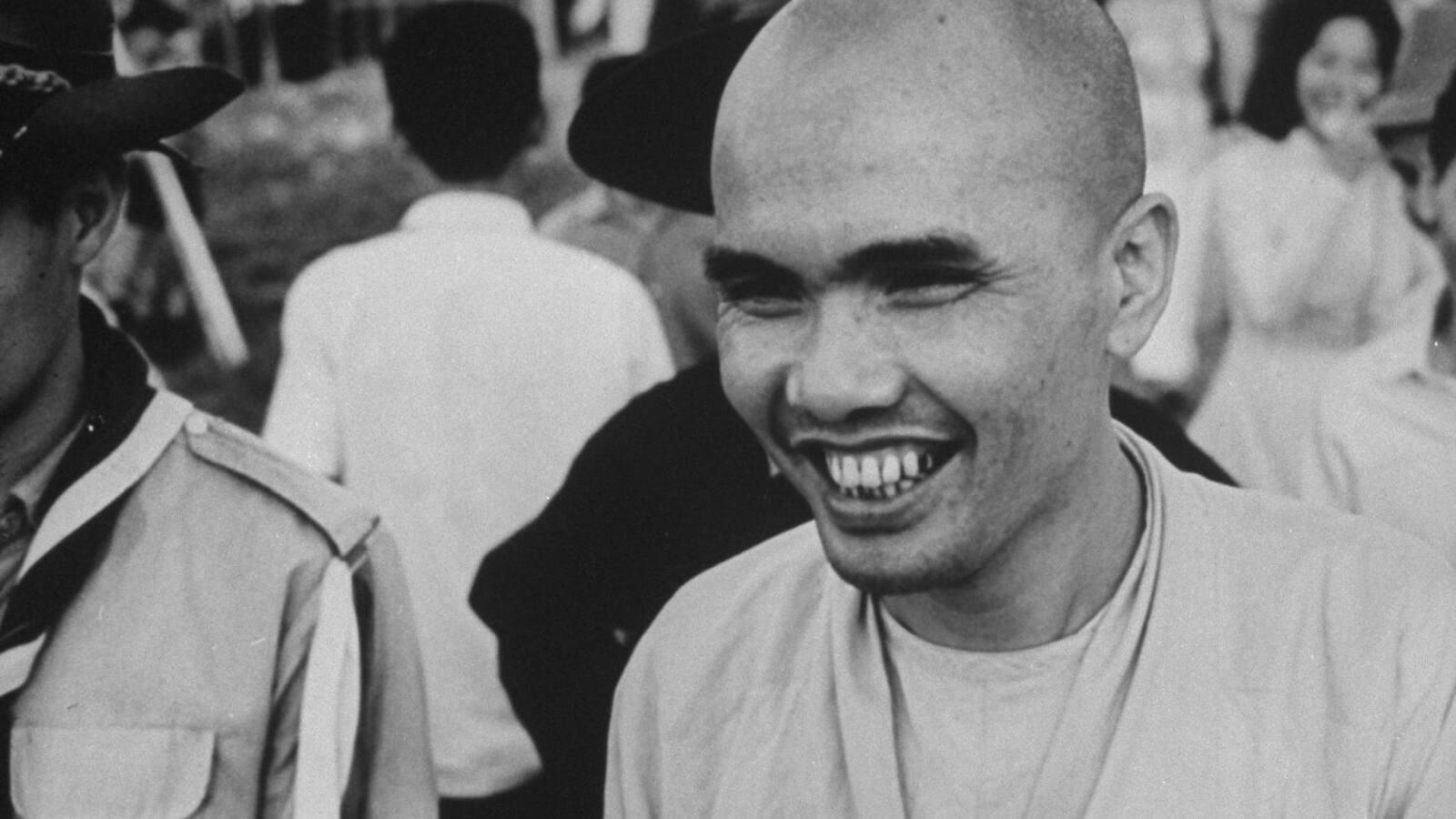
Thích Trí Quang
 Vietnam
Birthday
December 21, 1923
Birth Sign
Sagittarius
Birthplace
Đồng Hới, Quảng Bình Province, Vietnam
Age
Died at 95
About
Thích Trí Quang was a Vietnamese Mahayana Buddhist monk who became the most prominent leader of Buddhist resistance in South Vietnam during the 1960s. His activism peaked in 1963 when he led a campaign of nonviolent protest against President Ngô Đình Diệm, whose administration had restricted Buddhist practices. Drawing inspiration from Gandhi, he urged peaceful demonstrations, but the regime responded with violence, culminating in the self-immolation of monks and a US-backed coup that toppled Diệm. He continued to challenge successive military juntas, and in 1966 he led the Buddhist Uprising against Air Marshal Nguyễn Cao Kỳ, which was crushed militarily, ending Buddhist political influence. He spent the rest of his life under house arrest in Huế, writing and translating Buddhist texts. He died on 8 November 2019 at age 95, remembered as a pivotal figure in the struggle for religious freedom in Vietnam.
His legacy is commemorated through religious institutions rather than commercial enterprises. He was described by contemporaries as an orator with "eyes of a tiger" and as "Vietnam's most famous bonze". His media presence was confined to news coverage and obituaries in major international outlets, including The New York Times, The Washington Post, The Independent, and Tricycle magazine. He received no entertainment-industry awards, and no Hall of Fame inductions or honorary degrees have been documented. He is consistently ranked by historians and journalists as one of the most influential religious-political figures of the Vietnam War era.
Early Life & Background
Thích Trí Quang was born on 21 December 1923 in Đồng Hới, a town in Quảng Bình Province in central Vietnam. His birth name was Phạm Quang, though some records list Phạm Văn Quang. Growing up in a region with a strong Buddhist tradition, he entered religious life at age thirteen, a common practice for boys destined for the monkhood. He received his education within the monastic system, studying Buddhist scriptures and philosophy. At age twenty-three, in 1946, he was formally ordained as a monk. His early years as a monk were spent in central Vietnam, where he developed a reputation for scholarship and devotion. He later moved to Saigon, where he became a leading figure at the An Quang Pagoda, the headquarters of the Unified Buddhist Church of Vietnam. By the early 1960s, he had risen to a position of authority within the Buddhist hierarchy, preparing him for the political role he would soon assume. His ordination name, which he adopted upon entering the monkhood, means "Wisdom Light" in Sino-Vietnamese.
Career Growth
Thích Trí Quang's career as a political activist began in earnest in 1963. That year, he led a campaign of nonviolent resistance against President Ngô Đình Diệm, whose government had banned the flying of Buddhist flags and forced pagodas to close. The crisis escalated after a crackdown in Huế in May 1963 killed nine Buddhists, and culminated in the self-immolation of monk Thích Quảng Đức on 11 June 1963. The international outcry from that event intensified pressure on Diệm, leading to the US-backed coup in November 1963 that ended with Diệm's assassination. In 1964, he accused General Nguyễn Khánh of authoritarianism and of failing to purge Diệm loyalists. In 1966, he led protests against Air Marshal Nguyễn Cao Kỳ after the general sacked the pro-Buddhist commander Nguyễn Chánh Thi in central Vietnam. The unrest escalated into the Buddhist Uprising of 1966, which Kỳ crushed militarily. Thích Trí Quang was placed under house arrest and spent most of the rest of his life in seclusion in Huế, writing and translating Buddhist texts. He died on 8 November 2019 in Huế at age 95. He was known for his scholarship, spending his final decades translating Buddhist texts into Vietnamese.
Career Timeline
Public Image & Style
Thích Trí Quang had no fandom in the entertainment sense. His public image was that of a charismatic, ascetic, and politically potent religious leader. The media portrayed him as both "the great champion of Vietnam's Buddhist majority" and "a radical sowing political dissent". His signature style was his monk's robes and his intense oratory, described by contemporaries as having the "eyes of a tiger". There is no official fandom name or fan-culture ritual associated with him. He was described as a slender man with intense, piercing eyes. His height was not recorded in any available source.
Fame & Fandom (iFAMOUS Rankings)
Thích Trí Quang is currently evaluated by iFANN but holds no placement in the Global Top 1,000 or any Top-100 scope list. This absence of a rank reflects his status as a historical figure rather than a contemporary pop culture icon. His legacy does not rely on modern fame metrics like streaming numbers or billboard appearances, but on a profound political impact that reshaped a nation. Unlike modern celebrities who cultivate dedicated fanbases with specific names and rituals, Thích Trí Quang was revered by Buddhist devotees and political allies who viewed him as a galvanizing leader for religious freedom. The admiration he inspired was channeled through the Vietnam Buddhist Sangha and academic study rather than fan clubs or social media campaigns. There is no documented fandom name associated with him, as his supporters were citizens and monks engaged in a struggle for sovereignty, not consumers of entertainment. While search results sometimes confuse his role with the martyrdom of Thích Quảng Đức, the historical record clearly distinguishes them: Trí Quang was the strategist behind the 1963 Buddhist Crisis, an event that toppled a government and altered global perceptions of the Vietnam War. His story is one of verified historical significance, where his intense oratory and ascetic lifestyle mobilized masses against oppression. The interaction between him and his followers was strictly religious and political, devoid of the commercialized fan interactions seen in today's celebrity landscape. Even decades after his death, his influence remains anchored in the annals of history and religious institutions, proving that true historical weight often exists outside the boundaries of current fame rankings.
Interesting Facts and Legends
Thích Trí Quang took vows of poverty as a Buddhist monk, so he had no personal net worth. Following his death, there are no public records of an estate generating revenue through posthumous releases, licensing deals, merchandise, or royalties. His legacy is commemorated through religious institutions rather than commercial enterprises. No estate value has been reported. No credible sources report a personal fortune, salary, endorsements, or business ventures. Inspired by Mahatma Gandhi's philosophy of nonviolent resistance, he led a campaign that peaked in 1963 when fellow monk Thích Quảng Đức performed a self-immolation that shocked the world. He spent roughly fifty years under house arrest or in seclusion after the 1966 crackdown, during which time he translated Buddhist texts into Vietnamese. His ordination name means 'Wisdom Light' in Sino-Vietnamese. He served as a senior leader of the Unified Buddhist Church of Vietnam and held the title of Most Venerable. A central legend surrounding him involves his role as the mastermind behind the 1963 Buddhist Crisis, where his leadership directly contributed to the overthrow of President Ngô Đình Diệm. Another enduring story connects him to the iconic photograph of Thích Quảng Đức burning, an event organized under his strategic direction that turned international opinion against the regime. He passed away on November 8, 2019, at Từ Đàm Temple in Hue, marking the end of an era for the generation of monks who defined mid-20th-century Vietnamese Buddhism.
Family & Personal Life
As a Buddhist monk, Thích Trí Quang took vows of celibacy and poverty. He had no spouse, no romantic relationships, and no children. His personal life was entirely devoted to monastic discipline and political activism. His family background is not well documented, and no information about his parents or siblings is available in the sources. He was known for his ascetic lifestyle and scholarly pursuits.
Notable Connections
Relationships & Dating History
Thích Trí Quang was a Buddhist monk who took vows of celibacy. He had no spouse, no romantic relationships, and no children. His personal life was entirely devoted to monastic discipline and political activism.
Death & Aftermath
Died
November 8, 2019 (aged 95)
Death Place
Unknown
Cause of Death
Unknown
The passing of Đại lão Hòa thượng Thích Trí Quang drew a quiet but profound wave of reverence from the Vietnamese Buddhist community, with tributes focusing on his enduring role as a spiritual leader of the Unified Buddhist Church of Vietnam. While secular vigils or chart surges were not recorded, monastic circles and historical scholars alike marked the moment as the close of an era defined by his advocacy for religious freedom during the mid-twentieth century. He passed away on November 8, 2019, at the age of 95. Specific details regarding the medical cause of his death remain unreported by official channels or family members.
The available information confirms his status as a Great Senior Patriarch but offers no breakdown of confirmed versus disputed accounts regarding his immediate health decline or last public appearance before his passing. His funeral arrangements, burial or cremation details, and specific attendee lists have not been documented in public records. In the years following his death, the landscape of his legacy has remained anchored in existing archival materials rather than new posthumous releases or foundations established in his name. The distinction between him and contemporary figures like Thích Trí Quảng remains clear in historical discourse.
Net Worth (Estate Value)
$0
iFANN Editorial Team estimate
Per iFANN's editorial analysis, Thích Trí Quang is estimated to have had a net worth of $0. Taking vows of poverty as a Buddhist monk meant he possessed no personal wealth to accumulate. Following his death, there are no public records of an estate generating revenue through posthumous releases, licensing deals, merchandise, or royalties. His legacy is commemorated through religious institutions rather than commercial enterprises. No estate value has been reported.
Awards & Accolades
View 1 records, honours and achievementsKnown For
Buddhist crisis in 1963
1963 · Leader
Buddhist Uprising in 1966
1966 · Leader
Keywords
Sources
Quick Facts
- Profession
- Buddhist monk
- Born
- December 21, 1923
- Birthplace
- Đồng Hới, Quảng Bình Province, Vietnam
- Died
- November 8, 2019
- Death Place
- Huế, Vietnam
- Gender
- Male
- Birth Sign
- Sagittarius
Personal Details
- Full Name
- Phạm Quang
- Education
- Monastic training; entered religious life at age 13, formally ordained at age 23
Frequently Asked Questions
Who was Thích Trí Quang?
How did Thích Trí Quang die?
What did Thích Trí Quang do in 1963?
Was Thích Trí Quang married or did he have children?
Is Thích Trí Quang the same person as Thích Trí Quảng, the current Patriarch of the Vietnam Buddhist Sangha?
Join the community
fans discussing