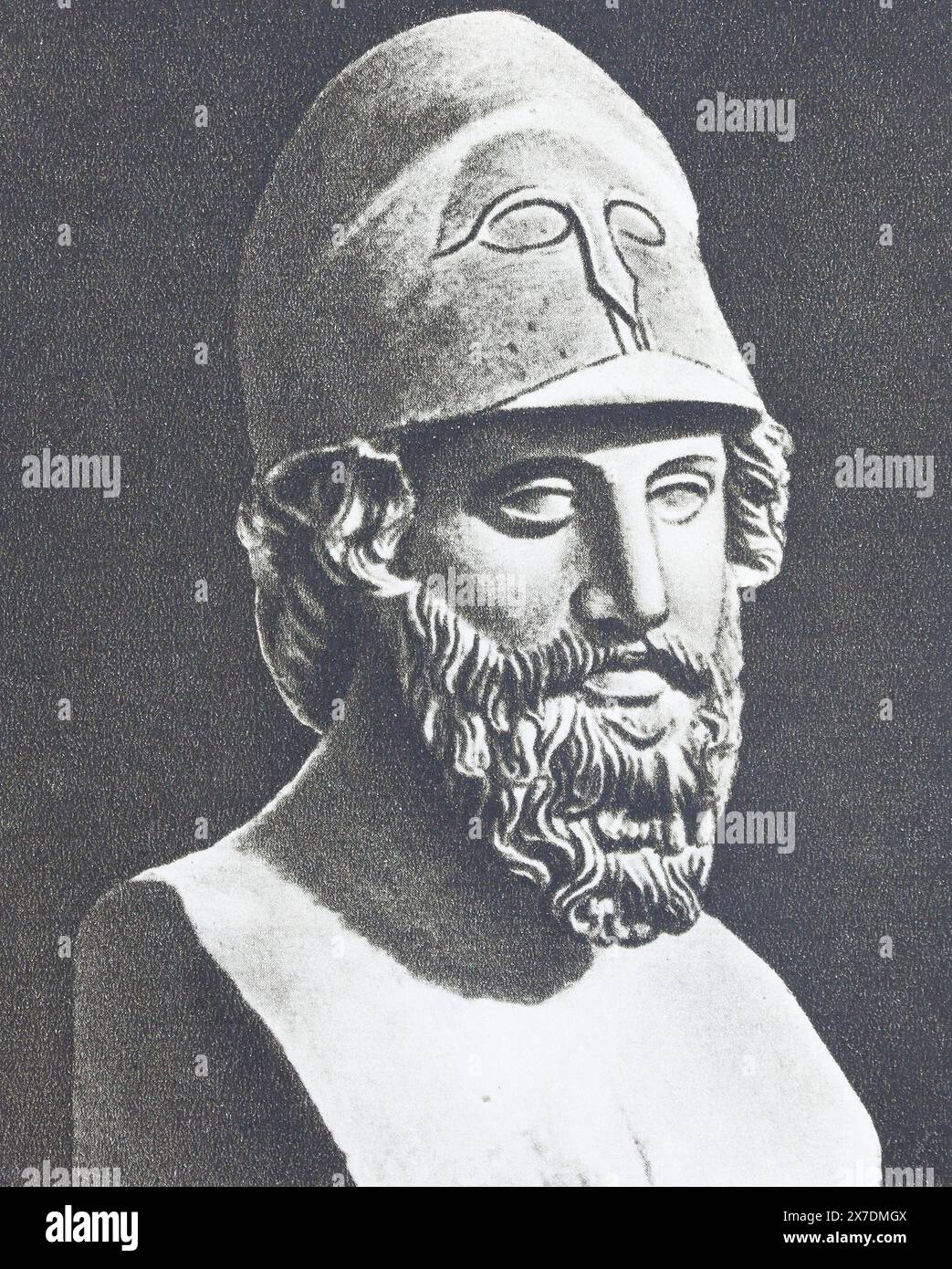
Themistocles
 Greece
Birthday
524 BC
Birth Sign
Capricorn
Birthplace
Athens, Greece
Age
Died at 65
About
Themistocles was an Athenian politician and general who reshaped the course of Greek history. Born around 524 BC, he rose from a modest aristocratic background to become the most influential leader in Athens during the Persian Wars. As a populist, he championed the lower classes and often clashed with the old noble families. His greatest achievement came in 480 BC when he commanded the Greek navy at the Battle of Salamis, luring the Persian fleet into the narrow straits and destroying it, a victory that saved Greece from conquest.
His naval policies laid the foundation for Athens' maritime empire and its golden age. Though he later fell from favor, was ostracized, and died in exile in Persia, his legacy as a brilliant strategist endures. The historian Thucydides praised him as "a man who showed the most unmistakable signs of genius," and modern military strategists still study his tactics. In 2026, his story continues to captivate, with the National Hellenic Museum releasing a theatrical reenactment of his trial.
Early Life & Background
Themistocles was born around 524 BC in Athens to Neocles, a minor noble of the Lycomid family, and a mother of non-Athenian origin, possibly from Thrace or Caria. This mixed heritage made him an outsider among the aristocracy, shaping his populist identity. He came of age during the reforms of Cleisthenes, which opened Athenian politics to non-aristocrats.
Plutarch records that he studied under the philosopher Anaxagoras, though the chronology is disputed. He neglected traditional pursuits like music and athletics, instead focusing on rhetoric and statecraft. Known for his exceptional memory and persuasive oratory, he memorized legal cases and political speeches. His burning ambition was to restore his family's diminished status, and he positioned himself as a champion of the lower classes, opposing the aristocratic faction led by Miltiades.
A pivotal insight came early: he predicted that the coming conflict with Persia would be decided at sea, a strategic vision that would define his career. This foresight drove his later naval buildup, but before that, he prepared himself through rigorous study, reportedly learning the art of winning hearts and minds.
Career Growth
Themistocles' political career began with his election as archon in 493 BC, from which he started fortifying the Piraeus harbor. At the Battle of Marathon in 490 BC, he served as one of the ten Athenian generals. In 483 BC, he persuaded the assembly to use silver mine revenues to build a fleet of 200 triremes, a decision that proved decisive.
During the second Persian invasion in 480 BC, he commanded the Greek navy at Artemisium and then at Salamis, where his ruse lured Xerxes' fleet into the narrow straits, leading to a crushing Greek victory. After the war, he oversaw the rebuilding of Athens' walls and helped establish the Delian League, which became the Athenian Empire.
His arrogance and rivalry with Cimon led to his ostracism in 472 or 471 BC. He went to Argos, but when accused of complicity in Pausanias' treason, he fled to Persia. King Artaxerxes I appointed him governor of Magnesia, where he lived in luxury until his death around 459 BC.
Career Timeline
Public Image & Style
Themistocles is portrayed in modern media as the archetypal populist genius: a brilliant strategist who rose from outsider status to save his nation, only to be destroyed by the democracy he helped create. His story is often framed as a cautionary tale about the fickleness of democratic politics.
In historical dramas, he is depicted as cunning, ambitious, and charismatic. The 2014 film 300: Rise of an Empire portrayed him heroically, though with significant liberties. His underdog narrative, a man of mixed heritage who outmaneuvered both Persian kings and Athenian aristocrats through sheer intelligence, resonates with modern audiences. The National Hellenic Museum's 2026 trial reenactment explores whether he was a patriot or traitor, a question that remains genuinely contested.
Fame & Fandom
Themistocles of Athens commands a legacy that transcends the boundaries of time, standing as a foundational figure in naval strategy and democratic history rather than a modern celebrity with a living fanbase. While no organized fandom exists to rally around his name today, no social media following, no ritualistic gatherings, and no formal fan clubs dedicated to his memory, the ancient statesman remains a permanent fixture in the collective consciousness of Western civilization. His story is studied by historians and military strategists who revere his tactical genius at Salamis and his populist rise from modest origins. The National Hellenic Museum's 2025 reenactment, *The Trial of Themistocles*, highlighted this enduring academic engagement, yet it remained an educational event rather than a manifestation of a modern cult following. There is no documented fandom name for him; the audience for his life is simply those who study the classical world. He does not appear in contemporary pop culture rankings or viral trends, nor do any specific campaigns or hashtags bear his name. In August 2026, the iFANN Global Fame Engine evaluated his current standing among global figures. Themistocles is currently evaluated as unranked in the published Global Top 1,000 or any Top-100 scope list. This neutral placement reflects his status as a historical icon rather than a contemporary personality subject to real-time fame metrics.
Interesting Facts and Legends
Plutarch records that Themistocles learned Persian within a year of arriving in the empire, a reflection of his linguistic skill. When asked what he most wanted to learn, he replied, "the art of winning the hearts of men." His daughters bore unusual names: Asia, Italia, and Sybaris, reflecting his later Persian connections. He was known for his phenomenal memory, reportedly able to recall the names of thousands of Athenian citizens. The story of his suicide by drinking bull's blood is now considered apocryphal; most historians believe he died of natural causes. He was effectively ostracized twice, fleeing rather than facing a second trial, and was condemned to death in absentia. Beyond these recorded facts, legends persist regarding his strategic deception at Salamis, where he allegedly sent a false message to Xerxes claiming to be on the Greek side to lure the Persian fleet into the narrow straits. Another enduring tale describes his final days in Magnesia, where he supposedly refused to reveal the location of hidden treasures to his hosts, maintaining his dignity until the end. These stories, while sometimes debated by scholars, remain central to how he is remembered as a man of cunning and survival.
Notable Quotes
“I cannot play the flute, but I can take a small city and make it great.”
“Would you rather I had been Achilles, who found a Homer to praise him, or Homer, who praised Achilles?”
“He is the most learned man in Greece, for he understands Persian customs.”
Family & Personal Life
Themistocles married Archippe, daughter of Lysander of Alopece, an Athenian noblewoman. They had several children: sons Archeptolis, Polyeuctus, and Cleophantus, and daughters Asia, Italia, and Sybaris. When his son Cleophantus became skilled in horsemanship, Themistocles wryly remarked, "He is the most learned man in Greece, for he understands Persian customs."
His descendants continued to live in Magnesia for generations, where they were honored with privileges. Archippe likely remained in Athens during his exile, as was customary. The family's mixed heritage and later Persian connections made them a subject of curiosity in the ancient world.
Notable Connections
Themistocles was closely associated with several key figures of his era. His political rivals included Miltiades, the hero of Marathon, and Aristides, who was also ostracized. Cimon, the aristocratic leader, succeeded him in influence. On the Persian side, he faced Xerxes I at Salamis and later served under Artaxerxes I. The historians Thucydides and Plutarch both chronicled his life, and he reportedly studied under the philosopher Anaxagoras, though the chronology is disputed.
Relationships & Dating History
Ancient sources document only one relationship for Themistocles: his marriage to Archippe, daughter of Lysander of Alopece. They married around 490 BC, and she remained his wife until his death. While he was in exile in Persia, Archippe likely stayed in Athens, as was customary.
There are no recorded affairs, divorces, or second marriages. As a figure from antiquity, no modern relationship status applies, but at the time of his death around 459 BC, he was married to Archippe.
- MarriedArchippec. 490 BC - c. 459 BCMarried around 490 BC; she remained his wife until his death.
Death & Aftermath
Died
459 BC (aged 65)
Death Place
Magnesia on the Maeander, Asia Minor
Cause of Death
Suicide (traditional account)
The Athenian state maintained its condemnation of Themistocles long after his passing, treating the news from Magnesia as confirmation of a traitor's end rather than a moment for mourning. He died around 459 BC in the city of Magnesia on the Maeander, where he had found refuge under the protection of King Artaxerxes I following his ostracism from Athens. Ancient traditions, most notably those recorded by Plutarch, recount that he took his own life by drinking bull's blood to avoid capture by Spartan forces who sought to execute him, though some accounts suggest natural causes while in Persian custody.
His final days were spent in exile, far from the political rivalries with Cimon and the charges of medism that had driven him from Greece, ensuring he never faced the ultimate betrayal of leading a Persian army against his homeland. Immediate reaction in Athens was hostile, viewing him as a dangerous exile, but historical memory eventually shifted to recognize his role as the savior of Greece at Salamis. Centuries later, scholars and biographers re-evaluated his legacy, cementing his status as a key architect of the Athenian Empire. Any funeral held would have been a private affair attended by Persian officials and his household, devoid of public tributes or Greek attendees who were forbidden from associating with him.
His descendants continued to live in Magnesia for generations, honored with privileges granted by the Persian court, keeping the name alive in Asia Minor even as Athens reclaimed its narrative. Modern recognition remains limited to academic texts like Plutarch's Parallel Lives, which preserve the complex story of a man who reshaped history only to die in the shadow of the empire he helped create.
Net Worth (Estate Value)
As an ancient figure, Themistocles' wealth cannot be quantified in modern currency. However, historical sources provide context. As governor of Magnesia, he received revenues from three cities: Magnesia supplied his bread, Lampsacus his wine, and Myus his meat, a substantial income that allowed him to live in considerable luxury.
His estate in Magnesia was maintained by his descendants for generations. After his death, his family continued to be honored in the region, and his tomb and statue became pilgrimage sites. The value of his estate in today's terms is incalculable, but the income streams from these cities would have made him one of the wealthiest Greeks of his time.
Awards Won (2)
In the ancient world, formal awards did not exist, but Themistocles received significant honors. The people of Magnesia erected a statue in his honor and placed his tomb prominently in their marketplace. At Olympia, the Greeks dedicated a statue to him, one of the highest honors available. The historian Thucydides' praise, calling him a man of "most unmistakable signs of genius," remains a lasting literary honor.
c. 459 BC · Civic Honor
Lifetime achievements
c. 450 BC · Panhellenic Honor
Victory at Salamis
Known For
Battle of Salamis
480 BC · Commander of the Greek fleet
Naval buildup of Athens
483 BC · Architect of the 200-trireme fleet
Rebuilding of Athens' walls
478 BC · Overseer
Keywords
Sources
Quick Facts
- Profession
- politician, soldier
- Born
- c. 524 BC
- Birthplace
- Athens, Greece
- Died
- c. 459 BC
- Death Place
- Magnesia on the Maeander
- Gender
- Male
- Spouse
- Archippe
- Birth Sign
- Capricorn
Personal Details
- Spouse
- Archippe
- Children
- Archeptolis, Polyeuctus, Cleophantus, Asia, Italia, Sybaris
- Education
- Studied rhetoric and natural philosophy under Anaxagoras and Melissus (chronology disputed)
Frequently Asked Questions
Was Themistocles a traitor?
Who was Themistocles' wife?
How did Themistocles die?
What was Themistocles' greatest achievement?
Why was Themistocles ostracized?
Similar People
Join the community
fans discussing