 United States
“The Young Turks have built a genuine media business by being aggressively, unapologetically liberal, proving there's a substantial audience for news that doesn't pretend to be objective.”
David Carr
The New York Times
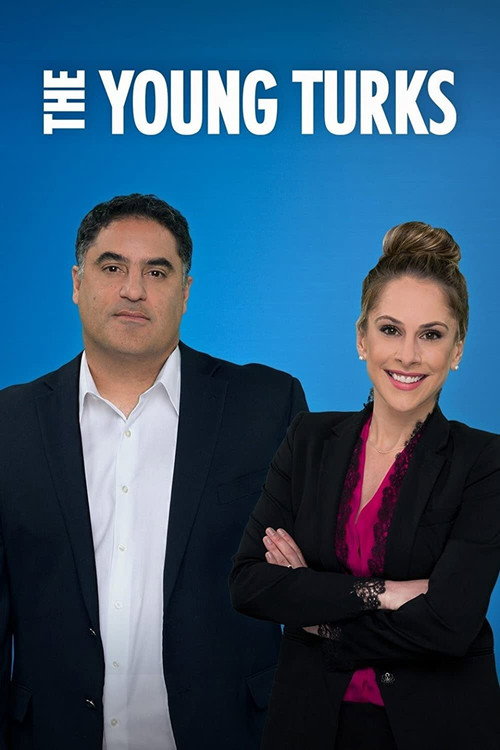
The Young Turks kicked off in 2005 as one of the first major political talk shows on YouTube, back when the platform was still mostly cat videos and vlogs. Cenk Uygur and Ben Mankiewicz started the show as an extension of Uygur's Sirius Satellite Radio program, filming in his living room with a single camera. What began as a scrappy operation quickly grew into a multi-platform media powerhouse, now spanning YouTube, a dedicated streaming service, and free ad-supported TV channels.
Hosted primarily by Uygur and Ana Kasparian, with John Iadarola as a regular contributor, the show delivers two hours of live, unscripted news analysis every weekday. The tone is energetic and unapologetically progressive, blending policy deep dives with sharp humor. Uygur's signature monologues often build to a crescendo of righteous indignation, while Kasparian excels at dismantling conservative arguments with precision. The show has covered every major political event of the last two decades, from the Iraq War to the 2024 election, and has built a loyal audience that values its independence from corporate media.
With 21 seasons and over 580 episodes, The Young Turks has maintained a steady presence for nearly two decades. Its influence extends beyond its own viewership: the show pioneered the audience-funded progressive media model that later inspired outlets like The Hill's Rising and Breaking Points. While mainstream ratings on platforms like IMDb sit at a modest 6.1 out of 10, the show's cultural impact is undeniable, having helped popularize Bernie Sanders' 2016 campaign among younger voters and normalizing opinionated, partisan news analysis on digital platforms.
Free with ads
Availability and pricing can change. Confirm on the provider's site before purchasing.
At its core, The Young Turks is a daily news commentary program that dissects the most pressing political developments, social justice issues, and cultural controversies through a progressive lens. The show operates without the corporate constraints of traditional television news, allowing hosts to express genuine outrage, humor, and ideological conviction in real-time. Each episode typically opens with a monologue from Cenk Uygur, who delivers extended commentary on a major story, followed by panel discussions with co-hosts and guests, and closes with viewer questions and rapid-fire news items.
The world of the show is the chaotic 24-hour news cycle of American politics and global affairs, filtered through a worldview that champions economic populism, criminal justice reform, universal healthcare, and aggressive scrutiny of corporate power. The central conflict is the ongoing battle between progressive values and what the hosts characterize as corrupt establishment politics, media misinformation, and right-wing extremism. This manifests in daily segments that deconstruct political spin, fact-check public figures, and advocate for systemic change.
The main characters anchor the program with distinct personalities. Cenk Uygur serves as the fiery, impassioned moral center, known for his extended monologues on political corruption and media malpractice. Ana Kasparian provides a sharp, analytical counterpoint who excels at holding both sides accountable. John Iadarola brings academic rigor and a more measured tone, often serving as the show's fact-checker and policy expert. Together, they create a dynamic that balances passion with precision.
The broad shape of each season follows the American political calendar, with seasons corresponding to calendar years. Early seasons (2005-2008) focused heavily on the Iraq War, the Bush administration's controversies, and the rise of the progressive movement. The 2008-2012 seasons centered on the Obama presidency, the Tea Party movement, and the financial crisis, with the show gaining substantial traction during the 2008 election cycle. The 2013-2016 seasons saw explosive growth during the rise of Bernie Sanders' presidential campaign, with TYT becoming a primary media outlet for the progressive grassroots. The 2017-2020 seasons covered the Trump presidency, the #MeToo movement, and the COVID-19 pandemic, with the show expanding its coverage to include more international affairs and criminal justice reporting. The 2021-2024 seasons have continued covering the Biden administration, the ongoing culture wars, and the 2024 election cycle.
Throughout its run, the show has maintained a consistent format while evolving its production from a bare-bones operation in Uygur's living room to a professional studio with multiple cameras, graphics packages, and a dedicated production team. The show's signature orange and blue color scheme was chosen for its high contrast on early YouTube compression algorithms, and its name derives from the Young Turk Revolution of 1908, evoking youthful rebellion against established power structures.
Welcome To TYT (w/ Oliver Stone & Danny Trejo)
Critical Consensus
The Young Turks is a pioneering progressive news commentary show that has built a dedicated audience through passionate, unapologetic left-wing analysis. Critics acknowledge its influence in digital media but note its polarizing nature, with detractors citing bias and supporters praising its independence from corporate media constraints. The show's raw, emotional style resonates with viewers seeking an alternative to mainstream news.
“The Young Turks have built a genuine media business by being aggressively, unapologetically liberal, proving there's a substantial audience for news that doesn't pretend to be objective.”
David Carr
The New York Times
“Cenk Uygur and his team have created something rare in modern media: a news organization that grew from nothing, built by audience trust and a willingness to say what others won't.”
Brian Stelter
CNN/New York Times
“The Young Turks represent a new kind of journalism that's raw, emotional, and deeply committed to progressive values, even if it sometimes sacrifices nuance for impact.”
Jesse Berney
The Guardian
“Uygur's show has become the de facto news network for the left, filling a void that MSNBC and other cable outlets have left open.”
Jason Zengerle
The New Republic
“The Young Turks have outlasted and outgrown many of their cable competitors by understanding that authenticity, even when messy, beats polished neutrality in the digital age.”
Felix Gillette
Bloomberg Businessweek
Webby Awards (2010)
Online Film & Video - News & Politics: Nominated
Shorty Awards (2012)
Best in News: Nominated
Streamy Awards (2016)
News and Politics: Nominated
Join the community
fans discussing