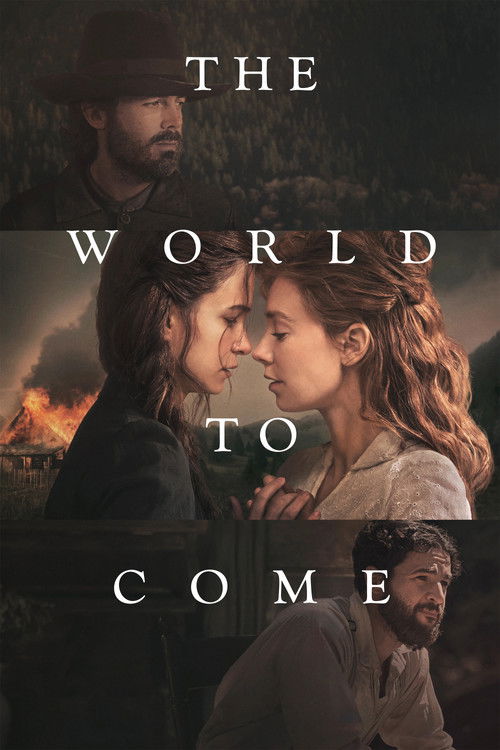
Mona Fastvold's directorial debut, The World to Come, is a stark and lyrical period drama set in the harsh frontier of upstate New York in 1856. The film follows Abigail (Katherine Waterston), a farmer's wife suffocating under grief and domestic drudgery, whose life is upended by the arrival of Tallie (Vanessa Kirby), a free-spirited new neighbor. Their connection is immediate and electric, blossoming into a passionate affair that defies the era's constraints.
Adapted from Jim Shepard's 2017 short story, the screenplay was co-written by Shepard and Ron Hansen. The production was a multinational effort, shot in Romania standing in for the American wilderness, with cinematographer André Chemetoff capturing the brutal beauty of the landscape. Casey Affleck and Christopher Abbott co-star as the husbands, Dyer and Finney, whose presence looms over the women's secret world.
The film premiered at the 77th Venice International Film Festival, where it won the Queer Lion award, and later received a limited theatrical release in February 2021. Critics praised the performances of Waterston and Kirby, though some found the pacing languid and the ending controversial. With a runtime of 98 minutes, The World to Come is a meditation on love, loss, and the impossible yearning for a world that might allow such a love to exist.
Availability and pricing can change. Confirm on the provider's site before purchasing.
PlotSpoiler-free
On the first day of 1856, Abigail begins a journal entry, her voice carrying the weight of a life constricted by loss. She and her husband Dyer are farmers in the remote hills of Schoharie County, still raw from the death of their young daughter Nellie to diphtheria. Dyer buries his grief in labor, while Abigail moves through her chores with a hollowed-out resignation. Their marriage is a quiet arrangement, broken only by rare moments of shared vulnerability, like the night Dyer confesses a childhood terror during an earthquake, briefly rekindling their physical intimacy.
Everything shifts when a wagon appears on the horizon, carrying Tallie and her husband Finney to the neighboring farm. Tallie is flame-haired, outspoken, and intellectually curious, a stark contrast to Abigail's muted existence. Their first exchange of glances is charged, and soon Tallie is making regular visits, filling Abigail's kitchen with laughter and conversation. They share poetry, discuss books, and steal away to the woods, where their friendship deepens into something more profound.
As the seasons pass, the women's bond intensifies into a full-fledged affair, conducted in stolen hours and secret meetings. But their happiness is shadowed by the men in their lives. Dyer, though not cruel, remains emotionally distant, while Finney grows increasingly possessive and suspicious of Tallie's absences. The threat of discovery looms, and the women are acutely aware of the consequences should their secret be revealed.
The film unfolds across four seasons, capturing the relentless labor of frontier life and the stark beauty of the landscape. Abigail and Tallie's love is a defiant act, a small rebellion against a world that offers them no place. Yet even as they cling to each other, the weight of their circumstances presses in. Finney's control tightens, and the narrative builds toward a confrontation that feels inevitable. The title, The World to Come, hints at a future where such love might be possible, but for now, that world remains a distant dream.
The World to Come features luminous performances from Katherine Waterston and Vanessa Kirby, whose chemistry elevates a period drama that is as beautiful as it is bleak. While some found the pacing languid and the tone relentlessly somber, the film's atmospheric authenticity and emotional depth resonated with many critics.
 United States