 Brazil
“A film of such quiet grace and emotional honesty that it manages to be both a specific story about a blind boy and a universal tale of growing up.”
A.O. Scott
The New York Times
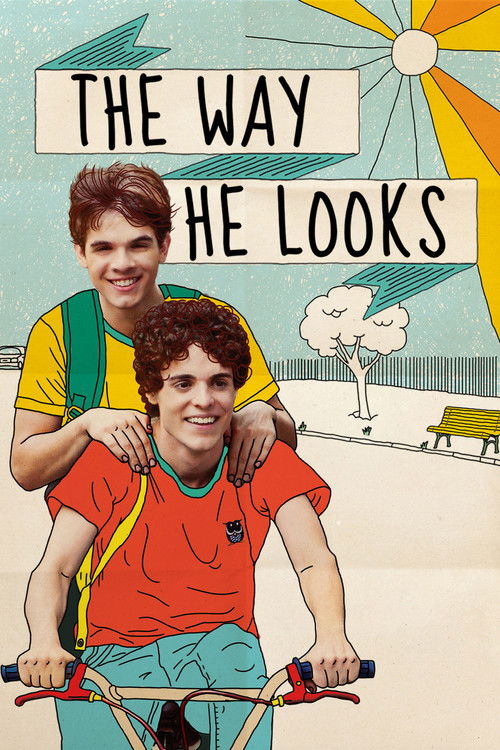
Daniel Ribeiro's feature debut expands upon his acclaimed 2010 short film I Don't Want to Go Back Alone to tell a story of quiet rebellion and first love. The narrative centers on Leonardo, a blind teenager in São Paulo who faces the dual challenges of impending adulthood and a mother determined to keep him safe within the confines of their home. While Leonardo possesses the skills to navigate the city with assistance from his best friend Giovana, he yearns for the autonomy that comes with leaving his protective shell behind.
The arrival of Gabriel disrupts this fragile equilibrium. As a new student at school, Gabriel approaches Leonardo without pity or excessive caution, sparking a romance that forces Leonardo to confront his fears about surgery and independence. Released in April 2014, the film avoids melodrama to focus on the subtle textures of adolescent life, earning critical praise for its authentic portrayal of disability and LGBTQ+ identity.
Stream
Availability and pricing can change. Confirm on the provider's site before purchasing.
Leonardo lives a structured life in São Paulo where every movement is calculated to avoid danger. His mother Laura manages his world with an intensity that borders on suffocation, refusing to let him take risks even as he approaches his eighteenth birthday. Giovana serves as his guide through the city, navigating traffic and social interactions while secretly harboring feelings for him. This unspoken tension creates a barrier between them; she loves him but fears that his growth will mean losing her place in his life.
Gabriel enters the scene as a transfer student who treats Leonardo like any other peer rather than a person defined by his blindness. He invites Leonardo to a party, an event that promises excitement but also anxiety. Their connection deepens quickly through shared conversations and moments of intimacy that feel natural rather than forced. Leonardo begins to question the boundaries set by his mother and considers the possibility of seeing again through laser eye surgery, a procedure required for his study abroad plans in Europe.
The pressure mounts as Leonardo balances his budding relationship with Gabriel against his mother's fear of the unknown. He struggles to explain his need for freedom without hurting the woman who raised him alone. Giovana watches from the sidelines, feeling increasingly isolated as Leonardo drifts toward Gabriel. The film captures small, meaningful interactions: a shared meal, a walk in the park, or the simple act of holding hands. These moments highlight the universal struggle of finding one's identity while navigating the complex dynamics of family and friendship.
As the date for departure approaches, Leonardo must make difficult choices about his future. The prospect of surgery looms large, representing both hope for physical vision and the risk of losing the unique way he currently perceives the world. The narrative builds toward a climax where Leonardo must decide what kind of life he wants to lead and who he wants to share it with. The story does not rely on grand gestures but instead focuses on the internal shifts that occur as Leonardo learns to trust himself and others.
Giovana eventually realizes that her love for Leonardo requires letting him go if he wishes to pursue his dreams. She steps back to allow him the space to grow, even though it means accepting a different role in his life. Meanwhile, Leonardo prepares for the surgery and the trip, knowing that whatever happens physically, he has already begun to see the world differently through his experiences with Gabriel. The journey toward independence becomes as much about emotional maturity as it is about physical capability.
Official US Trailer
Critical Consensus
Critics praised the film for its gentle humanistic approach to LGBTQ+ themes and disability representation. Reviewers highlighted the chemistry between leads and the ability to find profound emotion in everyday moments. It stands out as a refreshing coming-of-age story that resonates across cultural boundaries without relying on sensationalism.
“A film of such quiet grace and emotional honesty that it manages to be both a specific story about a blind boy and a universal tale of growing up.”
A.O. Scott
The New York Times
“Ribeiro has crafted a debut feature that is as visually inventive as it is emotionally resonant, proving that blindness can be portrayed with dignity and depth.”
Peter Debruge
Variety
“A beautiful, heartbreaking, and ultimately hopeful exploration of love that transcends the limitations of sight, anchored by a stunning performance from Ghilherme Lobo.”
David Ehrlich
IndieWire
Ghilherme Lobo
Leonardo
Fábio Audi
Gabriel
Tess Amorim
Giovana
Lúcia Romano
Laura
Eucir de Souza
Carlos
Selma Egrei
Avó Maria
Director
Daniel Ribeiro
Writer
Daniel Ribeiro
Cinematographer
Pierre de Kerchove
Producers
Diana Almeida, Daniel Ribeiro
Berlin International Film Festival (2014)
Teddy Award for Best Feature Film: Won
São Paulo International Film Festival (2013)
Audience Award for Best Brazilian Film: Won
Grande Prêmio do Cinema Brasileiro (2015)
Best Director: Nominated
Grande Prêmio do Cinema Brasileiro (2015)
Best Actor: Nominated
Join the community
fans discussing