“A masterpiece of television that transcends its era, offering stories that are as relevant today as they were sixty years ago.”
Matt Zoller Seitz
Vulture
 United States
"Step into a dimension of imagination beyond your wildest dreams."
User Score
108000 votes
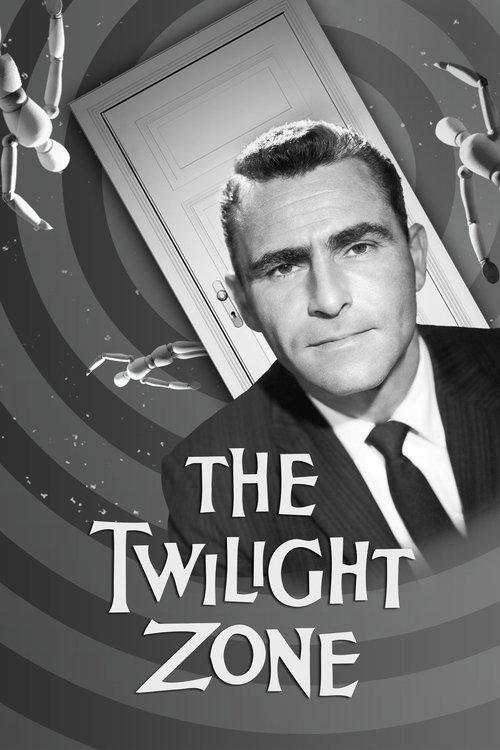
Rod Serling brought a unique blend of suspense, science fiction, and moral fable to CBS with The Twilight Zone. Running from October 1959 to June 1964, this anthology series challenged viewers with fifty seasons of storytelling that defied genre conventions. Serling served as the show's creator, head writer, and on-screen host, guiding audiences through tales of time travel, alien encounters, and psychological unraveling. The program aired for five seasons, delivering 156 episodes that earned an impressive 8.5 rating from over 100,000 voters. Each half-hour episode stood alone, often ending with a twist that recontextualized the entire narrative.
The show blended drama with surrealism to explore human nature under extreme pressure, creating a tone that was both terrifying and deeply thoughtful. Unlike typical television of the era, it tackled prejudice, nuclear war, and conformity without flinching. Guest stars ranging from William Shatner to Burgess Meredith appeared in self-contained stories where ordinary people found themselves trapped in impossible situations. The series remains a landmark in television history for its innovative storytelling and profound social commentary.
Stream
Availability and pricing can change. Confirm on the provider's site before purchasing.
Every episode begins when an unsuspecting person crosses a threshold into a world where the rules of reality no longer apply. This realm, known as the Twilight Zone, is not a physical place but a state of mind where logic bends and fear takes center stage. A man might wake up to find himself the last survivor on Earth, only to realize he is being watched by aliens who are actually testing his character. Another story follows a town where everyone shares a single consciousness, forcing individuals to confront the loss of their identity. The narratives rarely rely on special effects; instead, they use clever writing and stark visuals to create a sense of dread and wonder.
The structure of the series evolved significantly over its run. The first thirty-six episodes established the formula with tight pacing and a haunting score by Bernard Herrmann. Viewers tuned in every Friday night to see how far Serling could push the boundaries of acceptable television content. When the show moved to its second season, the iconic spiral graphics and Marius Constant theme became synonymous with the brand. Season three refined these elements while tackling heavier themes about isolation and paranoia during the Cold War.
A major shift occurred in season four when the network demanded hour-long episodes. This change allowed for more complex character development and deeper exploration of philosophical questions. However, the extended format struggled to maintain the tight tension of the shorter stories, leading to mixed results. By season five, the show reverted to the half-hour format and returned to Friday nights. Despite declining ratings and budget cuts, the final season still produced memorable entries like "The Invaders" and "The Passersby," which cemented the series' reputation for ending with a punchline that changed everything.
Guest stars formed the backbone of the cast, appearing in one-off roles that showcased their range. William Shatner played a soldier facing an alien invasion that turned out to be a test of humanity. Robert Redford appeared in a story about a man who could stop time but couldn't save the woman he loved. These performances highlighted the versatility of Hollywood talent willing to work in a medium that prioritized script over star power. The absence of recurring main characters meant that every viewer felt the stakes were personal, as anyone could be the next protagonist to face the unknown.
The Twilight Zone- Both Original 1959 Intros
Critical Consensus
Widely regarded as one of the greatest television series ever made, The Twilight Zone is praised for its innovative storytelling, profound social commentary, and masterful use of suspense. Rod Serling's writing elevated the anthology format, blending genre tropes with deep philosophical questions about humanity, creating a timeless legacy that influenced countless subsequent shows.
“A masterpiece of television that transcends its era, offering stories that are as relevant today as they were sixty years ago.”
Matt Zoller Seitz
Vulture
“Serling's ability to weave social commentary into sci-fi fables remains unmatched in the history of the medium.”
Alan Sepinwall
Rolling Stone
“The Twilight Zone is not just a show; it is a cultural phenomenon that defined the boundaries of imagination.”
David Bianculli
NPR
Rod Serling
Self - Host / Narrator
William Shatner
Lt. Martin Sloan ("A Stop at Willoughby")
Robert Redford
Tom ("Time Enough at Last")
Burgess Meredith
Mr. Dingle ("The Invaders")
Martin Landau
Anton Karlsen ("Living Doll")
Directors
Douglas Heyes, John Brahm, Richard L. Bare, Vincent McEveety, Robert Butler
Writers
Rod Serling, Charles Beaumont, Richard Matheson, George Clayton Johnson, Jerome Bixby
Composers
Bernard Herrmann, Marius Constant
Cinematographers
Loyal Griggs, Russell Harlan
Producer
Rod Serling
Emmy Award (1960)
Outstanding Writing Achievement in Drama: Won
Peabody Award (1960)
Entertainment: Won
Television Hall of Fame (1988)
Induction: Won
Join the community
fans discussing