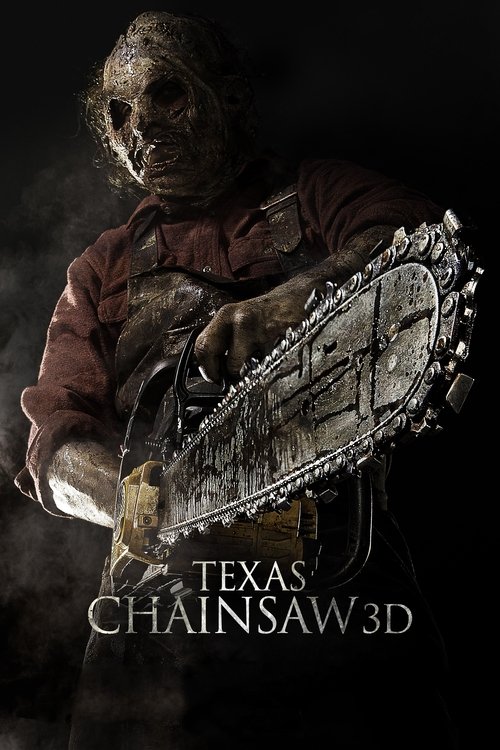
“A masterpiece of low-budget horror that transcends its modest origins to deliver a nightmarish vision of American decay.”
Roger Ebert
Chicago Sun-Times

 United States
"There's nothing like the smell of a dead body."
Part of a Collection
Texas Chain Saw Massacre Collection
Tobe Hooper's 1974 debut feature launched a new era of horror cinema by stripping away supernatural elements to reveal something far more terrifying: plausible, human evil. Shot on a shoestring budget of roughly $140,000 in the sweltering heat of rural Texas, the film captures a group of friends stumbling into a nightmare that feels less like fiction and more like a documentary of a crime scene gone wrong.
Its raw aesthetic, driven by handheld camera work and a disorienting soundscape, created an atmosphere of claustrophobia that audiences had rarely experienced. The movie does not rely on jump scares or monsters under the bed but instead builds dread through the relentless pursuit of a family that views human beings as livestock. This approach redefined the slasher genre and proved that psychological terror could outperform big-budget spectacle.
Stream
Availability and pricing can change. Confirm on the provider's site before purchasing.
The story opens with five young adults driving along a desolate stretch of highway in Texas during the early 1970s. Sally Hardesty sits in the passenger seat next to her disabled brother Franklin, while their friend Jerry drives. Two others, Kirk and Pam, fill the backseat. Their journey begins with casual conversation about their grandfather's ashes, which they plan to scatter at an old homestead. The mood shifts quickly when they encounter a bizarre hitchhiker standing motionless in the middle of the road, wearing a mask made of human skin. After a brief, unsettling exchange, the hitchhiker vanishes into the brush.
Seeking directions, the group stops at a gas station where they meet a strange elderly man who speaks in riddles about "the family." His cryptic warnings go unheeded until they arrive at a dilapidated farmhouse nearby. Inside, they find no one, only the faint sound of a chainsaw buzzing in the distance. As night falls, the house reveals its true nature as a slaughterhouse run by a grotesque clan. Leatherface, a hulking figure clad in a mask of human skin, emerges from the shadows wielding his signature weapon.
The survivors realize too late that they have been lured into a trap. Franklin attempts to flee on foot but is brutally killed by the family patriarch, Nubbins Sawyer, also known as Old Man. Jerry meets a similar fate shortly after being cornered by Leatherface. The remaining three, Sally, Kirk, and Pam, are forced into a chaotic game of cat and mouse within the labyrinthine house. The film focuses heavily on the sensory experience of fear, using long tracking shots and the constant drone of machinery to create a sense of inescapable doom.
As the night deepens, the line between reality and hallucination blurs. The heat and dust of the Texas landscape add to the characters' exhaustion, making every step toward escape feel impossible. They discover rooms filled with human remains and realize the family views them merely as food sources. The narrative builds through a series of escalating threats, including close calls with the family members and narrow escapes through the maze-like property. Despite the horrors they face, the survivors cling to the slim hope of reaching safety, unaware of the true extent of the tragedy that awaits them beyond the immediate danger.
Original Trailer
Critical Consensus
This low-budget masterpiece redefined horror by replacing supernatural monsters with the visceral reality of human cruelty. Its gritty realism and psychological tension create a nightmarish atmosphere that feels disturbingly authentic. Critics praise the film for its ability to evoke genuine dread without relying on gratuitous gore, cementing its status as a classic that influenced countless filmmakers.
“A masterpiece of low-budget horror that transcends its modest origins to deliver a nightmarish vision of American decay.”
Roger Ebert
Chicago Sun-Times
“Hooper's direction is so effective that the film feels less like a movie and more like a documentary of a nightmare.”
Variety Staff
Variety
“The film is a brutal, unflinching look at the dark underbelly of the American psyche, delivered with a chilling efficiency that haunts the viewer long after the credits roll.”
Peter Bradshaw
The Guardian
Marilyn Burns
Sally Hardesty
Gunnar Hansen
Leatherface
Edwin Neal
Hitchhiker / Drayton Sawyer
Allen Danziger
Jerry
Paul A. Partain
Franklin Hardesty
Jim Siedow
Nubbins Sawyer (Old Man)
Teri McMinn
Pam
John Dugan
Kirk
Director
Tobe Hooper
Writers
Kim Henkel, Tobe Hooper
Composer
Jay Van Hoy
Cinematographer
Daniel Pearl
Producers
Kim Henkel, Robert Halmi Sr.
Saturn Awards (1975)
Best Horror Film: Won
National Film Registry (2001)
Preservation: Selected
New York Film Critics Circle (1974)
Special Citation: Won
Join the community
fans discussing