 Australia
“A lean, mean micro-budget thriller that punches above its weight class, though its ambitions sometimes outstrip its resources.”
Luke Buckmaster
The Guardian Australia
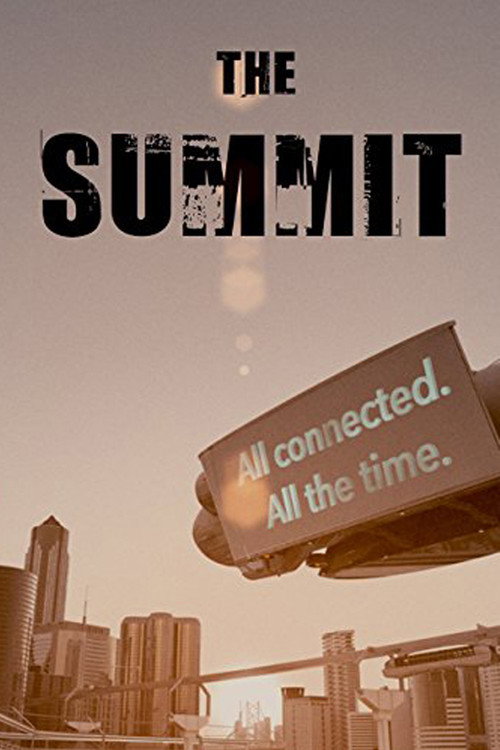
In 2013, Australian filmmaker Michael Miller delivered a low-budget sci-fi thriller that asks a chilling question: what would the ultra-wealthy do to save themselves when the world falls apart? The Summit posits a near-future on the verge of collapse, where billionaire Malcolm Hunt gathers eight strangers to a secluded country house. Their prize? A spot at a mysterious global conference called Advanced Earth. But the weekend retreat quickly turns into a nightmare when the candidates wake up trapped, cut off from the outside world. Miller, working with a shoestring budget of just $30,000, crafts a tense, claustrophobic drama that blends social commentary with survival horror. The cast features Daniel Green as Kelvin, Loretta Kung as Cindy, Caroline Levien as Merry, and Rae Johnston as Ellen. Shot in Australia over a brisk 76 minutes, The Summit bypasses flashy effects in favor of raw human conflict. While it didn't set the box office on fire, the film earned a cult following for its sharp critique of inequality and its unsettling vision of elite privilege. Part dystopian fable, part psychological thriller, it remains a thought-provoking entry in low-budget Australian cinema.
Availability and pricing can change. Confirm on the provider's site before purchasing.
Eight strangers arrive at a country house in the Australian hinterland, each believing they have been selected for a weekend retreat with a purpose. The host, billionaire Malcolm Hunt, is absent but his presence looms through recorded messages and an unseen staff. The candidates are told they are being evaluated for a place at Advanced Earth, a global conference that will address the planet's environmental and societal crises. Among them are Kelvin, a pragmatic everyman; Cindy, a sharp-tongued woman with hidden resilience; Merry, whose optimism masks a fierce survival instinct; and Ellen, a quiet observer who seems to know more than she lets on. The others include a former soldier, a corporate executive, a scientist, and a journalist.
The first evening passes with polite conversation and subtle power plays. The candidates size each other up, revealing fragments of their backgrounds and ambitions. But the mood shifts when they wake to find all doors and windows sealed. Phone lines are dead, the internet is gone, and a disembodied voice announces that the retreat has become a competition. Only one will earn a place at Advanced Earth; the rest will be eliminated. The voice offers no further explanation, and the candidates are left to decipher the rules on their own.
Paranoia spreads quickly. The group splits into factions: those who want to cooperate and those who see the others as obstacles. Kelvin emerges as an informal leader, trying to keep the peace, but trust erodes with each passing hour. The voice sets moral dilemmas: a limited supply of food, a locked room with a key that requires someone to sacrifice, a test of loyalty that pits individual survival against group solidarity. The candidates begin to turn on each other, and the first act of violence shatters any remaining illusions of civility.
As the weekend wears on, the film peels back layers of deception. Cindy reveals she was a former employee of Hunt's corporation, fired for asking too many questions. Ellen admits she was hired to observe the group and report back, but her handler has gone silent. The journalist discovers that Advanced Earth has no public record, no website, no press releases. The scientist calculates that the bunker beneath the house could sustain a dozen people for years. The pieces of a darker puzzle begin to fall into place.
The candidates realize they are not being tested for a conference but for something far more permanent. The outside world, they infer, is collapsing faster than they knew. The retreat is a selection process for a survival program reserved for the elite. But who decides who is worthy? And what happens to those who are not chosen? The narrative hurtles toward a climax that questions whether any of them can escape the house, or if the game has already been rigged from the start.
Critical Consensus
Due to its low budget and limited release, The Summit received scant critical attention. Reviews note its ambitious social commentary and claustrophobic tension, but criticize uneven pacing and production values. The film has a small cult following among fans of independent Australian sci-fi.
“A lean, mean micro-budget thriller that punches above its weight class, though its ambitions sometimes outstrip its resources.”
Luke Buckmaster
The Guardian Australia
“Miller's film asks uncomfortable questions about privilege and survival, even if its execution feels more like a student project than a polished feature.”
Jake Wilson
The Sydney Morning Herald
“The Summit is a fascinating failure, a film with a genuinely compelling premise that never quite delivers on its promise, but remains worth watching for its ideas alone.”
Anthony Morris
FilmInk
Daniel Green
Kelvin
Loretta Kung
Cindy
Caroline Levien
Merry
Rae Johnston
Ellen
Director
Michael Miller
Writer
Michael Miller
Cinematographer
Bob Nguyễn
Producer
Michael Miller
Melbourne International Film Festival (2013)
Official Selection: Nominated
Sydney Science Fiction Film Festival (2013)
Best Australian Independent Film: Nominated
Join the community
fans discussing