The Ohio State University Marching Band
 United States
The Best Damn Band in the Land
Buckeye Nation
Fandom
About
The Ohio State University Marching Band is an American marching band and ensemble. It is famous for its signature floating and animated formations, script writing, and high-step cadence, with the sousaphone player who dots the i being a particularly coveted role. The band is one of the largest and most competitive university marching bands in the United States. Today, the ensemble consists of 228 students, rehearsing approximately 10 hours a week and maintaining a highly competitive environment through weekly challenges for performance spots. The band operates on an annual budget of approximately $2.5 million and is directed by Dr. Christopher Hoch, with Associate Director Philip Day and Assistant Director Josh Reynolds.
Formation Story
The Ohio State University Marching Band (OSUMB) began its storied journey in 1878, forming in Columbus, Ohio, United States. Initially established as a modest fife and drum corps, it was an integral part of The Ohio State University's military department, specifically serving its ROTC program. Over the ensuing decades, this foundational ensemble gradually evolved, transforming from its fife and drum origins into a more robust military-style brass band, laying the groundwork for its future grandeur.
A significant period of innovation began in 1921 under the direction of Gustav Bruder. It was during this time that the band introduced formal auditions, marking a new era of selective membership. That same year, bandmember Elvin A. Donaldson made a pivotal contribution by creating the band's first O-H-I-O formation, a precursor to the elaborate field designs that would become its hallmark. The band's growing prominence also fostered external support, leading to the formation of The Grey Baton in 1921 by Jenie Lee Burke, an early fan support group that would later evolve into the Eta Chapter of Kappa Kappa Psi, the national band fraternity.
The band underwent a profound revolution starting in 1924 with the appointment of Eugene J. Weigel as director. Weigel's visionary leadership introduced a suite of innovations that would define the group's iconic style, including a distinctive fast cadence characterized by a high knee lift, pioneering floating and animated formations, and a unique script writing style on the field. These elements rapidly became the ensemble's signature. The pinnacle of Weigel's creative genius debuted on October 10, 1936, with the first performance of the signature Script Ohio formation. Inspired by the elaborate marquee of the Loew's Ohio Theatre in downtown Columbus, this formation was personally designed by Weigel. The inaugural "dotting of the i" in Script Ohio was performed by cornetist John Brungart. However, in 1937, sousaphone player Glen Johnson took on this distinguished role, solidifying the tradition that a sousaphone player would permanently perform the "dotting of the i," accompanied by a ceremonial bow to the cheering crowd. This position swiftly became the most coveted in the ensemble, cementing Script Ohio as an enduring symbol of the band's excellence and innovation.
Musical Style
The band's sound is rooted in the British military brass band tradition, with an all-brass and percussion instrumentation that sets it apart from most American college marching bands. The repertoire includes traditional marches, fight songs such as Across the Field and Buckeye Battle Cry, and popular music arranged for the ensemble. Halftime shows are known for their geometric precision and innovative formations, often telling a visual story that complements the music.
The band's fast cadence and high knee lift create a distinctive visual and auditory impact. Arrangements are tailored to the brass and percussion palette, emphasizing bold, clear lines and dynamic contrasts. The band does not use woodwinds, which gives it a brighter, more penetrating sound that carries well in large stadiums.
Cultural Impact
Script Ohio is one of the most recognizable traditions in college football, regularly drawing national media attention. The band's innovations in marching and formation design have influenced countless high school and college bands across the United States. Its performance of Hang On Sloopy helped cement the song as the official rock song of Ohio in 1985.
The band is a central part of the Ohio State game-day experience, with its Skull Session pre-game concert drawing thousands of fans. The ramp entrance, in which the band charges onto the field, is a ritual that energizes the stadium. The band's nickname, TBDBITL, has become a brand in its own right, appearing on merchandise and in popular culture. The band is recognized as one of the few all-brass and percussion collegiate marching bands in the country and is often deemed the largest of its type in the world.
Fandom Culture
Buckeye fans are among the most passionate in college sports, and the marching band is a point of pride. The Grey Baton, founded in 1921, was an early fan support group that later evolved into a chapter of Kappa Kappa Psi. Fans pack Ohio Stadium for every home game, and the band's performances are a major draw. The tradition of waving scarlet and gray pom-poms during Hang On Sloopy is a stadium-wide ritual. There is no official lightstick or specific fandom name for the band itself, but the broader Buckeye Nation supports the ensemble enthusiastically. The band's official Twitter handle is @tbdbitl.
Awards & Accolades
Milestones
Band formed as fife and drum corps
First tryouts held under director Gustav Bruder; first O-H-I-O formation created; Grey Baton founded
First Script Ohio performed on October 10
Sousaphone player Glen Johnson becomes first sousaphone i-dotter; bow to crowd tradition begins
Disneyland performance under director Paul Droste
Performance at BCS National Championship Game
Trivia
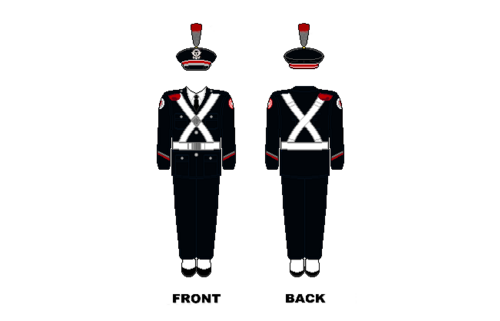
The band's dark navy uniforms are often mistaken for black, but they are actually dark navy. The band's nickname TBDBITL is pronounced /təˈbɪtəl/. The practice field is Lincoln Tower Field. The band's fight songs include Across the Field and Buckeye Battle Cry. The traditional pregame block consists of 192 members, with 36 alternates; each of the 16 rows has 12 regular members and two alternates, except for J-Row which has two alternates for each instrument (tenors, cymbals, and bass drum). The band has no flag corps or other auxiliary units.
Keywords
Sources
Quick Facts
- Formed
- 1878
- Status
- Active
- Members
- 228
- Director
- Dr. Christopher Hoch
- Budget
- $2.5 million
Group Info
- Fandom
- Buckeye Nation
- Formed
- 1878-01-01
- Origin
- Columbus, Ohio, United States
- Company
- The Ohio State University School of Music
- Fan Color
- Scarlet and Gray
- Status
- Active
Social Media
Also Known As
Join the community
fans discussing