 United States
“The Offering successfully mines Jewish folklore for its horror, delivering an atmospheric and culturally specific nightmare that feels refreshingly unique within the genre.”
Meagan Navarro
Bloody Disgusting
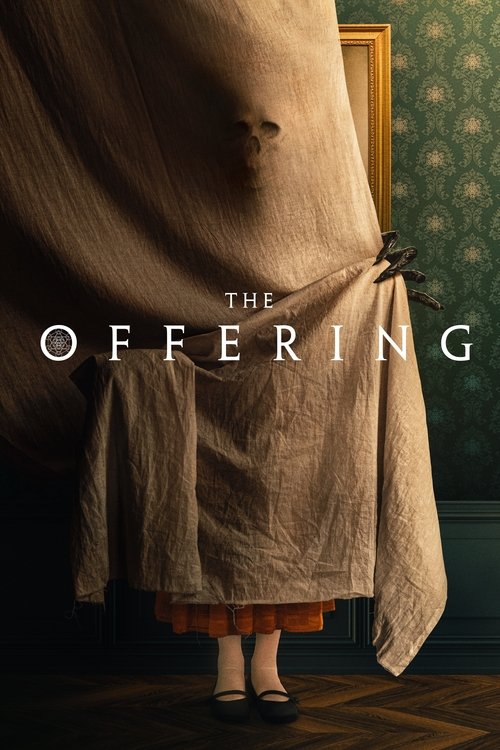
Oliver Park's directorial debut drops us into a Brooklyn Hasidic funeral home where family secrets run deeper than the morgue downstairs. Nick Blood plays Art, a man who left his Orthodox community behind, now returning with his pregnant non-Jewish wife Claire (Emm Wiseman) to patch things up with his father Saul (Allan Corduner). But the timing couldn't be worse. A corpse arrives under strange circumstances, and when Saul performs the Tahara purification ritual, something ancient and hungry wakes up.
This is Jewish horror done with genuine respect for the source material. The film draws from the Zohar and other mystical texts to build its monster, a Mazzik, a demonic entity that operates on the logic of blood pacts and generational debt. Millennium Media, better known for action franchises, gave Park the budget to shoot at Nu Boyana Studios in Sofia, Bulgaria, with a 60-piece orchestra recording Christopher Young's score. Young, who composed for Hellraiser and The Grudge, weaves in shofar blasts and cantorial chants that give the soundtrack a liturgical eeriness.
The film had its festival run at Sitges and FrightFest before landing on streaming, where it found an audience hungry for horror that doesn't just use Judaism as set dressing. The attention to ritual detail, from the funeral preparations to the exorcism sequences, came from consultation with Orthodox advisors. It's a small film that wears its heritage on its sleeve, and that specificity is what makes it stick with you.
Stream
Rent
Buy
Availability and pricing can change. Confirm on the provider's site before purchasing.
Art hasn't set foot in his family's Brooklyn funeral home in years. He left the Hasidic community, married outside the faith, and built a secular life. But when he learns his mother has passed, he brings Claire, his pregnant wife, back to make amends with his father Saul. The reunion is tense. Saul runs the business with a quiet authority, and the gulf between father and son feels wider than the East River.
That same night, a body arrives. The deceased is Heimish, a man found dead under circumstances the police won't explain. Saul prepares the body for the Tahara, the ritual purification that involves washing and dressing the deceased according to tradition. But as he works, something in the room shifts. The temperature drops. Shadows move wrong. Saul brushes it off as nerves, but the viewer knows better. The corpse isn't just a body. It's a vessel.
Claire starts noticing things first. A locked door swings open. She hears whispers in the walls. Art tries to reassure her, but he's unsettled too. The funeral home's other employees, including the devout Chayim and the elderly Yosille, begin acting erratically. One of them mutters about a Mazzik, a demon from Jewish lore that feeds on family lines. Art dismisses it as superstition until he finds his father's journal, filled with diagrams of protective circles and prayers against evil spirits. The entries go back generations.
As the supernatural activity intensifies, Art learns the truth. His great-grandfather made a deal with the Mazzik during a time of persecution. The demon would protect the family if they offered the firstborn of each generation. The pact has been collecting its due for decades. Art's own father lost a sibling to it. Now the entity has come for Art's unborn child. The film traps us in the funeral home's cramped rooms and cold morgue, never letting us forget that this is a place where the dead are prepared for the next world, and where the boundary between worlds is thin.
Art must decide how far he's willing to go to protect his family. He can run, but the demon will follow. He can fight, but he doesn't know the old rituals. And he can reconcile with his father, accepting the heritage he rejected, but that means embracing a world of rules and responsibilities he spent years escaping. The family's faith becomes both their weapon and their burden, and the film builds to a confrontation that forces Art to choose between his old life and the one he's about to bring into the world.
Official Trailer
Critical Consensus
A modestly effective horror film that benefits from its unique Jewish folklore premise and strong performances, though derivative plotting and uneven pacing prevent it from rising above genre conventions.
“The Offering successfully mines Jewish folklore for its horror, delivering an atmospheric and culturally specific nightmare that feels refreshingly unique within the genre.”
Meagan Navarro
Bloody Disgusting
“While the film's scares are familiar, the specificity of its Jewish setting and the emotional weight of its family drama give it a distinctive texture.”
Noel Murray
Los Angeles Times
“The Offering has an intriguing premise and a game cast, but it never quite capitalizes on its potential, settling for jump scares instead of genuine dread.”
Richard Whittaker
Austin Chronicle
“A film that respects its source material but struggles to find a compelling visual language for its horror, resulting in a competent but unremarkable genre entry.”
Brian Tallerico
RogerEbert.com
Nick Blood
Art
Emm Wiseman
Claire
Paul Kaye
Heimish
Allan Corduner
Saul
Daniel Ben Zenou
Chayim
Sofia Weldon
Sarah Scheindal
Anton Trendafilov
Yosille
Meglena Karalambova
Aida
Jonathan Yunger
Levi Siegelman
Velizar Binev
Moishe
Jodie Jacobs
Chana
Yonko Dimitrov
Shmuel
Director
Oliver Park
Writers
Hank Hoffman, Jonathan Yunger
Composer
Christopher Young
Cinematographer
Lorenzo Senatore
Producers
Hank Hoffman, Sam Schulte, Jeffrey Greenstein, Les Weldon, Jonathan Yunger
Fangoria Chainsaw Awards (2023)
Best Limited Release Film: Nominated
Join the community
fans discussing