“The Last Samurai is a handsome, earnest, and surprisingly thoughtful epic that treats its subject with a gravity and respect that is rare in Hollywood historical films.”
A.O. Scott
The New York Times
 United States
"One man's redemption, forged in the spirit of the samurai."
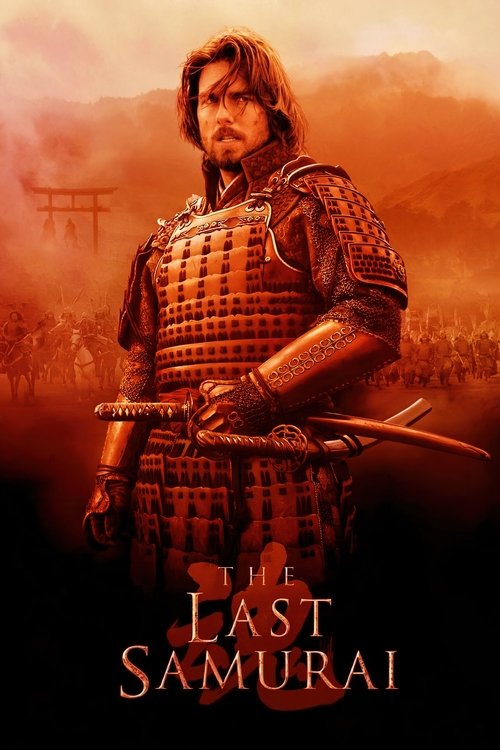
Edward Zwick directed this sweeping 2003 war drama, which pits tradition against modernization in 1870s Japan. Tom Cruise plays Nathan Algren, a disillusioned American military captain haunted by his participation in the massacre of Native Americans. He is hired by the Japanese emperor to train the nation's first modern army, but his mission takes an unexpected turn when he is captured by samurai rebels. Ken Watanabe delivers a powerful performance as Katsumoto, the rebel leader who teaches Algren the samurai code. The film also features Timothy Spall, Hiroyuki Sanada, and Koyuki. Shot on location in New Zealand and Japan, the production carried a $140 million budget and earned nearly $457 million worldwide. Hans Zimmer's score and John Toll's cinematography earned Oscar nominations. The movie balances intimate character drama with large-scale battle sequences, reflecting on guilt, honor, and cultural conflict.
Stream
Max
Rent
Prime Video
$3.99
Buy
Prime Video
$9.99
Availability and pricing can change. Confirm on the provider's site before purchasing.
In 1876, Captain Nathan Algren, a veteran of the American Civil War and the Indian Wars, has sunk into alcoholism and self-loathing. He makes a meager living demonstrating Winchester rifles for a weapons manufacturer. When offered a contract to train the newly formed Imperial Japanese Army, he accepts, seeing it as a way to escape his demons.
Algren arrives in Japan to find the country in turmoil. Emperor Meiji, influenced by his ruthless modernization advisor Omura, is determined to westernize Japan and abolish the samurai class. The samurai, led by the noble Katsumoto, resist this cultural erasure. Algren is tasked with turning conscripted peasant farmers into a modern fighting force capable of crushing the samurai rebellion.
The training is fraught with difficulty. Algren's superior, Colonel Bagley, dismisses his warnings that the raw recruits are unprepared. When Omura forces a premature engagement, the Imperial Army is routed by the samurai. During the chaotic battle, Algren's friend Sergeant Zebulon Gant is killed. Surrounded and expecting death, Algren instead finds himself taken prisoner by Katsumoto's warriors.
Algren is brought to a remote mountain village, the samurai's stronghold, where he is placed in the care of Taka, a widow whose husband he killed in battle. Initially hostile and confined, Algren slowly begins to heal. He observes the samurai's disciplined way of life, their devotion to honor, family, and the Bushido code. He learns their language, participates in their rituals, and trains in swordsmanship under the stern but skilled Ujio. The villagers, including Taka's two sons, gradually accept him. Algren overcomes his alcoholism and finds a sense of peace he has never known.
Katsumoto and Algren develop a deep mutual respect. Katsumoto sees in Algren a warrior's soul, while Algren finds in the samurai code the redemption he seeks. When ninjas attack the village to assassinate Katsumoto, Algren helps defend it, solidifying his place among the samurai. Katsumoto then takes Algren to Tokyo for an audience with the Emperor. There, Algren is shocked to see the Imperial Army now well-equipped and formidable, while Katsumoto is devastated to find the Emperor is a young puppet controlled by Omura. When Katsumoto is arrested for carrying a sword, Algren helps him escape, fully committing to the samurai cause. The stage is set for a final, desperate battle between tradition and modernization.
Original Theatrical Trailer
Critical Consensus
The Last Samurai is a visually stunning epic with a powerful performance from Ken Watanabe, but its derivative narrative and white savior tropes divide critics. The film's respectful treatment of Japanese culture and impressive battle sequences earn praise, while its historical liberties and Tom Cruise's one-note portrayal draw criticism. Overall, it's a handsome but flawed historical drama.
“The Last Samurai is a handsome, earnest, and surprisingly thoughtful epic that treats its subject with a gravity and respect that is rare in Hollywood historical films.”
A.O. Scott
The New York Times
“The Last Samurai is a masterful epic, a film of great beauty and power, with Tom Cruise giving one of his best performances as a man who finds redemption in an unexpected place.”
Roger Ebert
Chicago Sun-Times
“Edward Zwick's sweeping historical epic is visually stunning and boasts a strong performance from Ken Watanabe, but the film's white savior narrative undermines its cultural ambitions.”
Todd McCarthy
Variety
“The Last Samurai is a grand, old-fashioned epic that gets under your skin. Cruise delivers, but it's Ken Watanabe who steals the movie as the samurai leader.”
Peter Travers
Rolling Stone
“The film is visually spectacular and emotionally engaging, but its white savior complex and historical liberties prevent it from being truly great.”
Kenneth Turan
Los Angeles Times
Tom Cruise
Nathan Algren
Ken Watanabe
Moritsugu Katsumoto
Timothy Spall
Simon Graham
Tony Goldwyn
Colonel Benjamin Bagley
Hiroyuki Sanada
Ujio
Koyuki
Taka
Shin Koyamada
Nobutada
Billy Connolly
Sergeant Zebulon Gant
Togo Igawa
General Hasegawa
Shichinosuke Nakamura
Emperor Meiji
Masato Harada
Omura
William Atherton
Winchester Representative
Director
Edward Zwick
Writers
John Logan, Edward Zwick, Marshall Herskovitz
Composer
Hans Zimmer
Cinematographer
John Toll
Producers
Tom Engelman, Paula Wagner, Edward Zwick, Tom Cruise, Marshall Herskovitz
Academy Awards (2004)
Best Supporting Actor: Nominated
Academy Awards (2004)
Best Art Direction: Nominated
Academy Awards (2004)
Best Costume Design: Nominated
Academy Awards (2004)
Best Sound Mixing: Nominated
Golden Globe Awards (2004)
Best Actor – Motion Picture Drama: Nominated
Golden Globe Awards (2004)
Best Supporting Actor: Nominated
Golden Globe Awards (2004)
Best Original Score: Nominated
National Board of Review (2003)
Best Supporting Actor: Won
National Board of Review (2003)
Best Director: Won
Join the community
fans discussing