 Germany
“It is a masterpiece of style and substance, a film that uses the Western genre to explore the darkest corners of human nature.”
Roger Ebert
Chicago Sun-Times
Part of the Dollars Trilogy series
Series community
Part of a Collection
Man with No Name Collection
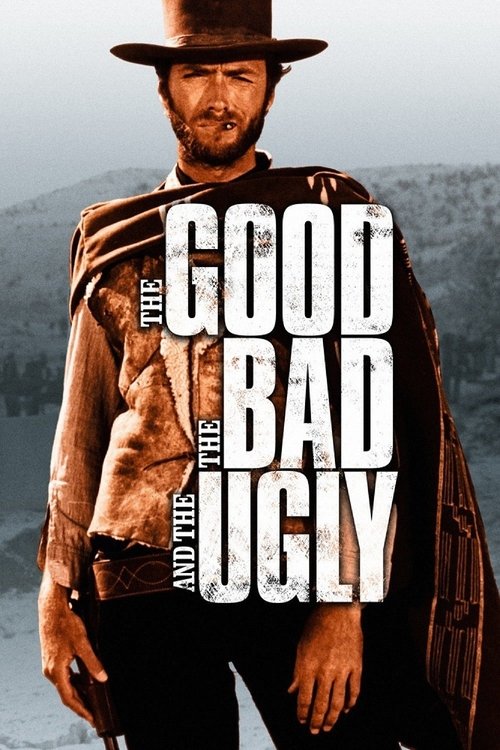
Set against the brutal backdrop of the American Civil War, this film follows three distinct gunmen as they navigate a landscape defined by moral ambiguity and survival. Clint Eastwood plays Blondie, a silent bounty hunter who captures Tuco Ramirez, a loud and cunning Mexican bandit played by Eli Wallach. Their uneasy partnership forms when Blondie realizes Tuco knows the location of a massive fortune in stolen Confederate gold. They must work together to find the treasure while evading the relentless pursuit of Angel Eyes, a cold-blooded hitman portrayed by Lee Van Cleef.
Sergio Leone directed this 1966 masterpiece, which serves as the final chapter of his Man with No Name trilogy. The production utilized Spanish landscapes like the Tabernas Desert to create an expansive visual style that redefined the Western genre. Ennio Morricone composed a score featuring whistling and vocalizations that became instantly iconic. Critics praised the film for its operatic violence and complex anti-heroes rather than clear-cut villains.
Availability and pricing can change. Confirm on the provider's site before purchasing.
The story opens with Blondie wandering through the desolate Southwest during the height of the Civil War. He spots a Confederate soldier named Jackson and decides to capture him for a $200 bounty. Blondie tricks the man into thinking he is a Union soldier before turning him over to authorities, but he quickly escapes custody after realizing the soldiers plan to hang him anyway. This sequence establishes Blondie's resourcefulness and his willingness to operate outside the law. Meanwhile, Tuco Ramirez roams the countryside, constantly on the run from Union forces who want to execute him as a deserter. He survives by relying on his quick wit and ability to talk his way out of trouble.
Blondie eventually tracks down Tuco at a saloon and arrests him. He plans to turn Tuco in for a reward, but the situation changes when Tuco reveals he knows where a cache of Confederate gold is hidden. The money belongs to a dead man named Bill Carson, and Tuco has the name of the person who buried it. However, he does not know which specific grave holds the inscription. To solve the puzzle, Blondie needs the name, and Tuco needs to know the cemetery location. They strike a temporary truce to split the potential fortune, though both men remain deeply suspicious of each other.
Angel Eyes enters the picture as a professional killer hired to find Bill Carson. Unlike Blondie or Tuco, who are driven by greed or survival, Angel Eyes operates purely for money without any moral qualms. He methodically hunts down anyone who might know about the gold, killing them without hesitation. The narrative shifts between the duo's journey across the desert and Angel Eyes' systematic elimination of witnesses. The war provides a chaotic setting where men die for causes they do not understand, adding a layer of absurdity to their personal quest.
The trio's dynamic evolves through a series of betrayals and narrow escapes. Blondie and Tuco frequently double-cross one another, engaging in a dangerous game of cat and mouse. They face numerous threats from outlaws and soldiers alike, forcing them to rely on each other despite their mutual distrust. A dramatic sequence unfolds at a prison camp where they attempt to break into a Confederate stronghold to find the final clue. Tension mounts as the Battle of the Crater approaches, bringing all three men closer to their ultimate destination.
The film builds toward a convergence at Sad Hill Cemetery in New Mexico. Each character believes they can outsmart the others to claim the $200,000 in gold. The narrative weaves themes of greed, loyalty, and the futility of war into the escalating confrontations. The audience watches as the stakes rise and the characters prepare for a deadly encounter that will determine who survives and who walks away with the treasure. The suspense remains high as the three men finally meet at the burial site, each holding pieces of the puzzle needed to unlock the hidden wealth.
Official Sizzle
Official Trailer
Remastered Trailer
Critical Consensus
Widely regarded as the definitive Spaghetti Western, this film transcends genre conventions through Sergio Leone's operatic direction and Ennio Morricone's iconic score. It redefines the Western by focusing on moral ambiguity, featuring complex anti-heroes rather than clear-cut villains. Its visual storytelling creates a unique atmosphere of tension and grandeur that remains influential decades later.
“It is a masterpiece of style and substance, a film that uses the Western genre to explore the darkest corners of human nature.”
Roger Ebert
Chicago Sun-Times
“Leone has created a mythic vision of the West, where the lines between good and evil are blurred, and the only thing that matters is survival.”
Pauline Kael
The New Yorker
“Morricone's score is as much a character as the actors themselves, elevating the film to a level of operatic intensity rarely seen in Westerns.”
Peter Bradshaw
The Guardian
Clint Eastwood
Blondie
Eli Wallach
Tuco Ramirez
Lee Van Cleef
Sentenza / Angel Eyes
Aldo Giuffrè
Alcoholic Union Captain
Luigi Pistilli
Father Pablo Ramirez
Director
Sergio Leone
Writers
Luciano Vincenzoni, Sergio Leone, Agenore Incrocci, Furio Scarpelli, Mickey Knox
Composer
Ennio Morricone
Cinematographer
Tonino Delli Colli
Producer
Alberto Grimaldi
Golden Globe Awards (1968)
Best Original Score: Won
BAFTA Awards (1968)
Best Cinematography: Nominated
Grammy Awards (1968)
Best Original Score Written for a Motion Picture: Won
Hugo Awards (1968)
Best Dramatic Presentation: Nominated
Join the community
fans discussing