 Japan
Japan“A genuinely moving and beautifully animated film that transcends its genre trappings.”
Justin Chang
Variety
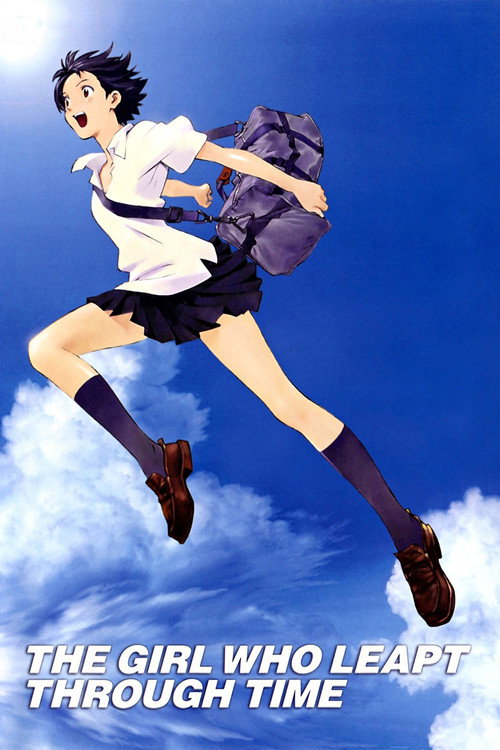
Mamoru Hosoda's 2006 animated film, The Girl Who Leapt Through Time, offers a charming and thoughtful take on the well-worn trope of time travel. The story centers on Makoto Konno, a high school student who stumbles upon a peculiar ability: she can physically leap backward in time. Voiced by Riisa Naka, Makoto initially uses this newfound power for the most mundane, yet relatable, teenage pursuits – acing pop quizzes, avoiding embarrassing social situations, and getting extra time to practice for baseball.
Directed by Hosoda, who would later go on to helm acclaimed features like Summer Wars and Mirai, the film is a production from the renowned Madhouse studio. It blends elements of science fiction, fantasy, and coming-of-age drama into a narrative that feels both whimsical and deeply human. The cast also features Takuya Ishida as Chiaki Mamiya and Mitsutaka Itakura as Kousuke Tsuda, rounding out the core friendships that Makoto navigates. While not a massive blockbuster, the film found a dedicated audience, grossing over $3.4 million and earning a solid 7.8 rating from over 2,000 viewers, signaling its positive reception among critics and moviegoers alike.
Stream
Max
Rent
Prime Video
Apple TV
Google Play
YouTube
Availability and pricing can change. Confirm on the provider's site before purchasing.
The film opens in Tokyo, introducing Makoto Konno, a spirited but often indecisive high school student. She shares her days with her two best friends, the energetic Chiaki Mamiya, a recent transfer student, and the more grounded Kousuke Tsuda. Makoto's life is a typical teenage whirlwind of classes, hanging out, and avoiding the looming pressure of her future. She's prone to procrastination, often finding herself in minor jams due to her inability to make firm decisions.
Her ordinary life takes a decidedly extraordinary turn when, during a chaotic moment in her classroom, she accidentally falls onto a strange device. This peculiar contraption, which she initially dismisses as a broken sewing machine, turns out to be a functional time-travel mechanism. After a disorienting experience, Makoto finds herself inexplicably rewound moments into her own past. Bewildered but quickly grasping the implications, she discovers she possesses the ability to leap backward through time, altering events by simply willing it to happen.
Initially, Makoto's reaction to her newfound power is pure adolescent glee. She uses her time leaps for a variety of personal conveniences. Pop quizzes become effortless as she revisits them with foreknowledge of the questions. Oversleeping is no longer an issue when her alarm can be reset with a thought. She replays embarrassing stumbles and awkward conversations, opting for more socially adept responses. Even minor victories, like winning a karaoke competition or avoiding a run-in with a school bully, become achievable through her temporal manipulations.
Her focus also turns towards her friendships. She uses her ability to prolong enjoyable moments with Chiaki and Kousuke, sometimes to avoid difficult conversations or to try and navigate her developing feelings for both boys. There are moments where she tries to help her friends, like preventing Kousuke from getting into a fight or trying to set up her aunt with someone. However, as Makoto continues to experiment with her jumps, she begins to notice subtle, and sometimes not-so-subtle, changes rippling through her reality. The film starts to explore the unintended consequences of altering the past, showing how even seemingly small changes can lead to unexpected and increasingly complicated outcomes for herself and those closest to her.
4K Remaster Official English Trailer
4K Remaster Official Trailer [Subtitled]
Critical Consensus
Mamoru Hosoda's The Girl Who Leapt Through Time is a charming and insightful animated film that uses its fantastical premise to explore relatable teenage anxieties and the bittersweet nature of growing up. Its thoughtful exploration of consequence and choice resonates deeply.
“A genuinely moving and beautifully animated film that transcends its genre trappings.”
Justin Chang
Variety
“Hosoda's direction is assured, blending whimsical fantasy with a grounded emotional reality.”
Mark Adams
Screen Daily
“It’s a charming, bittersweet coming-of-age story that resonates long after the credits roll.”
Liam Lacey
The Globe and Mail
“A delightful and surprisingly profound exploration of consequence and choice.”
David Chen
Slashfilm
Riisa Naka
Makoto Konno (voice)
Takuya Ishida
Chiaki Mamiya (voice)
Mitsutaka Itakura
Kousuke Tsuda (voice)
Ayami Kakiuchi
Yuri Hayakawa (voice)
Mitsuki Tanimura
Kaho Fujitani (voice)
Yuki Sekido
Miyuki Konno (voice)
Utawaka Katsura
Makoto's Father (voice)
Midori Ando
Makoto's Mother (voice)
Fumihiko Tachiki
Fukushima (voice)
Keiko Yamamoto
Auntie (voice)
Shiori Yokohari
Moriko Uesugi (voice)
Sonoka Matsuoka
Sekimi Nowake (voice)
Director
Mamoru Hosoda
Writers
Satoko Okudera, Yasutaka Tsutsui
Composer
Kiyoshi Yoshida
Cinematographer
Yoshihiro Tomita
Producers
Yuichiro Saito, Takashi Watanabe
Japan Academy Prize (2007)
Best Animation: Nominated
Mainichi Film Awards (2007)
Best Animated Film: Won
Tokyo International Anime Fair (2007)
Best Feature Film Award: Won
Join the community
fans discussing