 Japan
Japan

“A masterpiece of animation that transcends its source material, The First Slam Dunk is a heartbreaking, exhilarating look at the cost of greatness and the power of letting go.”
David Ehrlich
IndieWire
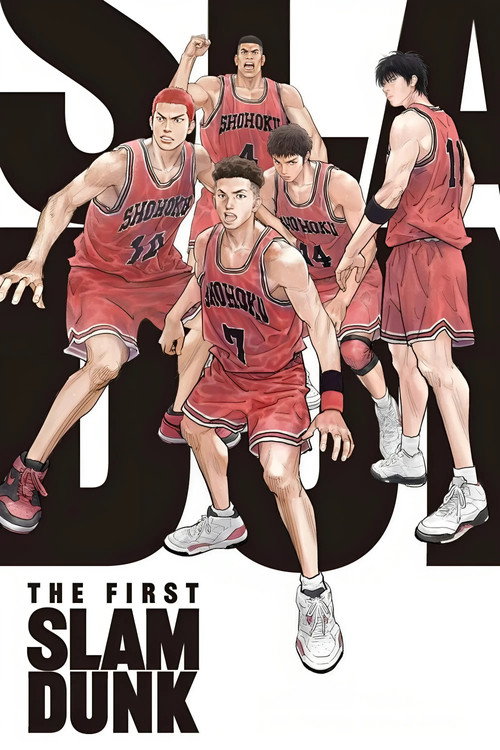
Takehiko Inoue brings his own manga to life in The First Slam Dunk, a film that shifts focus from the usual star power to the quiet intensity of Ryota Miyagi. Released on December 3, 2022, this animated feature runs for over two hours and captures the raw emotion of high school basketball through stunning visuals and a driving score. The story follows Shohoku High as they prepare for the national championship, where their journey hinges on the point guard who sees the court better than anyone else. Voice actors like Subaru Kimura and Shugo Nakamura breathe fresh life into Hanamichi Sakuragi and Miyagi, grounding the exaggerated anime tropes in genuine human struggle.
Unlike previous adaptations that centered on the brash newcomer Hanamichi Sakuragi, this narrative dives deep into the psyche of Ryota Miyagi. The film explores themes of grief, family duty, and the fear of losing control following a tragic incident involving his younger brother. By anchoring the story in Miyagi's internal conflict, the movie transforms a standard sports tournament arc into a meditation on how past trauma shapes present actions. The production blends traditional 2D animation with 3D computer-generated imagery to create a visceral sense of movement and depth.
Stream
Availability and pricing can change. Confirm on the provider's site before purchasing.
The story opens in Okinawa, introducing Ryota Miyagi not as a basketball prodigy but as a teenager carrying a heavy emotional burden. His younger brother Masashi was killed in a gang-related accident years ago, leaving Miyagi terrified of making mistakes or hurting others. This fear has turned him into a passive player who prioritizes defense over offense, suppressing his natural talent to avoid any risk of failure. He plays basketball primarily to honor his brother's memory rather than out of personal passion. Back at Shohoku High School, the team faces the daunting prospect of the National Tournament. Coach Mitsuyoshi Anzai knows that despite having talented players like the aggressive Hanamichi Sakuragi and the skilled Kaede Rukawa, the team cannot win without Miyagi fully committing to the game.
As the season progresses, the friction between the team members becomes evident. Sakuragi's self-taught, chaotic style clashes with Rukawa's disciplined approach, while Miyagi hesitates to take charge. The film intercuts these present-day struggles with flashbacks to Miyagi's childhood in Okinawa. These sequences reveal the close bond he shared with Masashi and the guilt that has haunted him since the accident. Miyagi struggles with the belief that playing aggressively might lead to another tragedy, potentially causing harm to himself or others. His mother and sister also grapple with their loss, creating a domestic backdrop that mirrors the tension on the court.
The narrative builds toward the national championship matches against formidable opponents like Kaijo High and the defending champions, Sannoh High. The film meticulously details the strategy and physical toll of high-stakes competition, focusing on realistic basketball mechanics rather than supernatural abilities. Every pass, defensive stop, and rebound is choreographed to emphasize the psychological weight carried by the players. As Shohoku advances through the brackets, Miyagi faces a critical moment where he must decide whether to remain the protective shadow he has become or step into the light as the leader his team needs. The stakes extend beyond the final score, touching on his ability to reconcile his grief with his love for the sport.
The climax arrives during the semi-final match against Sannoh High, a team known for its superior size and experience. Sannoh dominates early, dismantling Shohoku's offense with ease. The turning point occurs when Miyagi recalls a promise made to his late brother to live life fully. Driven by this realization, he abandons his risk-averse playstyle and begins to drive aggressively to the basket. This shift ignites a comeback that shifts the momentum of the game. The film concludes with Shohoku advancing to the finals, but the true victory lies in Miyagi's personal reconciliation with his past. He accepts that winning is secondary to honoring his brother by living without regret, finally breaking free from the paralysis of fear.
The First Slam Dunk | Official Trailer | Netflix
Official Trailer [Subtitled]
Critical Consensus
Critics universally praise The First Slam Dunk for its mature storytelling and technical brilliance. Unlike typical sports anime, the film prioritizes character psychology over action, offering a deeply emotional exploration of grief and redemption. The seamless blend of 2D and 3D animation creates a visceral sense of movement, while the focus on Miyagi provides a fresh perspective on a beloved franchise, earning acclaim from both fans and critics alike.
“A masterpiece of animation that transcends its source material, The First Slam Dunk is a heartbreaking, exhilarating look at the cost of greatness and the power of letting go.”
David Ehrlich
IndieWire
“Inoue has crafted a film that is less about the game and more about the players' souls, delivering a narrative that is as much about the past as it is about the future.”
Manohla Dargis
The New York Times
“Visually stunning and emotionally devastating, The First Slam Dunk proves that anime can tackle complex human drama with the same intensity as any live-action drama.”
Owen Gleiberman
Variety
“A triumph of storytelling that uses the language of basketball to explore the universal pain of loss, resulting in a film that feels both intimate and epic.”
Peter Debruge
Variety
“An absolute gem that combines breathtaking animation with a story so raw and real it will leave you breathless.”
Richard Roeper
Chicago Sun-Times
Subaru Kimura
Hanamichi Sakuragi
Shugo Nakamura
Ryota Miyagi
Kenta Miyake
Takenori Akagi
Shinichiro Kamio
Kaede Rukawa
Jun Kasama
Hisashi Mitsui
Katsuhisa Houki
Mitsuyoshi Anzai
Maaya Sakamoto
Haruko Akagi
Asami Seto
Ayako
Director
Takehiko Inoue
Writer
Takehiko Inoue
Composer
Michiru Oshima
Cinematographer
Shunsuke Nakamura
Producer
Toshiyuki Matsui
Japan Academy Prize (2023)
Animation of the Year: Won
Mainichi Film Awards (2023)
Best Animation Film: Won
Tokyo Anime Award Festival (2023)
Anime of the Year: Won
Los Angeles Film Critics Association (2023)
Best Animated Feature: Won
Critics Choice Movie Awards (2024)
Best Animated Feature: Nominated
Annecy International Animated Film Festival (2023)
Feature Film: Nominated
Join the community
fans discussing