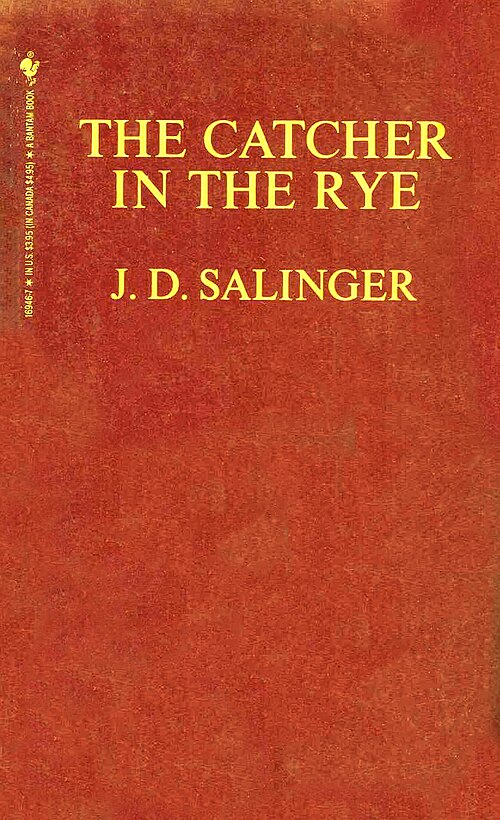
The Catcher in the Rye in popular culture
"How a banned novel became an enduring symbol of teenage alienation"
J.D. Salinger
Overview
Published on July 16, 1951, J.D. Salinger's The Catcher in the Rye introduced Holden Caulfield, a voice that instantly resonated with disaffected youth across the globe. The narrative follows Holden's three-day wandering through New York City after his expulsion from Pencey Prep, capturing his struggle with isolation and the perceived phoniness of the adult world. While the book spans just 277 pages, its impact has stretched far beyond its length, making it a definitive text for understanding post-World War II adolescent angst.
Despite Salinger's fierce protection of his work and refusal to allow film adaptations, the novel permeates music, television, and literature as a shorthand for rebellion. John Fowles explicitly cited the book in The Collector when exploring themes of adolescence, while bands like The Dandy Warhols have paid tribute with songs sharing the title. Its status as the second most-banned book in American history only heightened its allure among young readers seeking defiance against authority figures.
Recent cultural analysis continues to re-examine Holden Caulfield through modern lenses. A 2026 discussion in Salon explored how the character has evolved into a symbol of performative masculinity in contemporary discourse, reflecting shifting societal attitudes toward mental health. From high school curricula to political rhetoric, the novel remains a potent artifact that bridges the gap between high literature and mass culture, proving that Salinger inadvertently shaped the very pop culture he came to shun.
Keywords
Sources
Book Info
- Author
- J.D. Salinger
- Publisher
- Little, Brown and Company
- Published
- July 16, 1951
- Pages
- 277
- ISBN
- 978-0316769488
- Language
- English
- Total copies sold worldwide
- Over 65 million
- Ranking as most banned book
- Second most-banned in American history
- Film adaptation status
- Never adapted due to author prohibition
- Author lifespan
- 1919–2010
- Key cultural reference year
- 1963 (The Collector)
Links
Join the community
fans discussing