 Japan
“A dazzling, dreamlike fantasy that is both a triumph of imagination and a deeply moving exploration of loss and the power of storytelling.”
Peter Bradshaw
The Guardian
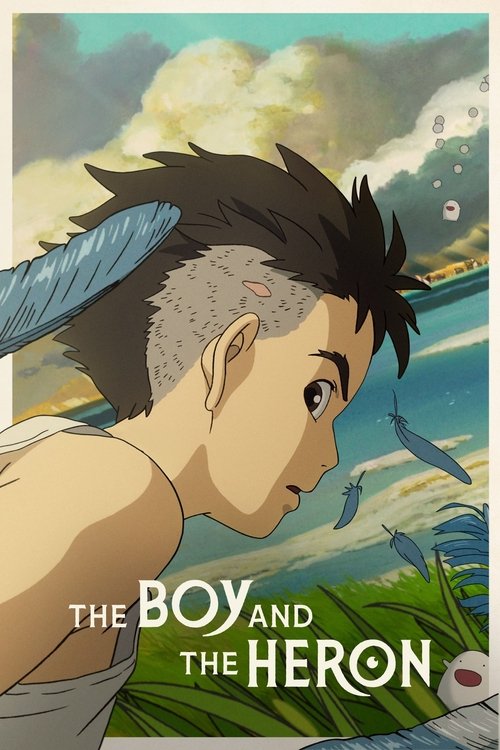
Set against the turbulent backdrop of World War II in 1943 Japan, The Boy and the Heron introduces Mahito Maki, a twelve-year-old boy whose life is shattered when his mother dies tragically in a hospital fire during an air raid. Haunted by grief and guilt over a promise he made to his dying mother, Mahito relocates with his father to the serene but eerie countryside estate of Shoichi's new wife, Natsuko. The move proves difficult for Mahito as he struggles to adjust to the rural environment and feels alienated from his stepmother.
While exploring the grounds of the family estate, Mahito encounters a mysterious gray heron that speaks to him in human language. The bird claims to be the reincarnation of Kiriko and insists that Mahito is the "long-awaited one" destined to enter a magical world hidden within the old tower on the property. Despite his fear and confusion, Mahito follows the heron into a parallel dimension where the dead coexist with the living and the laws of physics are fluid. Hayao Miyazaki returns as writer and director, marking his latest feature film after a brief retirement.
Stream
Rent
Availability and pricing can change. Confirm on the provider's site before purchasing.
Mahito Maki navigates a surreal landscape that mirrors his internal emotional state. In this fantastical realm, he meets a motley crew of spirits, including a mischievous parakeet king named Wakamushi, a group of floating egg-like creatures called the Warawara, and a strange shapeshifting figure known as the Great Goshawk. He also encounters the enigmatic Lady Himi, a woman who lives in a tower and seems to hold the key to the world's balance. The central conflict arises as Mahito learns that the world is threatened by the Great Goshawk, a powerful and malevolent spirit who seeks to destroy the barrier between the worlds and plunge everything into chaos.
Mahito discovers that the world he has entered relies on a delicate balance maintained by specific artifacts and rituals. He must confront the Great Goshawk and the chaotic forces it unleashes while grappling with his own feelings of loss, anger, and the desire to return home. The narrative weaves through various episodes of danger and wonder, introducing themes of creation, destruction, and the cyclical nature of life and death. Mahito faces trials that force him to question the nature of reality and his place within it, all while the Gray Heron continues to guide and sometimes mislead him.
The tension builds as the barrier between the worlds begins to collapse, threatening to erase both realms. Mahito must make a choice that will determine the fate of the magical world and his own future, culminating in a journey that challenges his understanding of what it means to live and let go. The story explores how grief can distort perception and how the past can haunt the present if not properly processed. Mahito's interactions with the spirits reveal deeper truths about the cost of holding onto memories versus the necessity of moving forward.
As the climax approaches, the stakes become personal rather than just cosmic. Mahito realizes that the heron has been manipulating events to draw him into this realm, not necessarily out of love, but perhaps to test him or to fulfill a cosmic cycle. The film presents a complex view of morality where even well-meaning actions can have unintended consequences. The visual storytelling emphasizes the fragility of existence and the power of human resilience in the face of overwhelming odds.
The final act brings Mahito to a confrontation with the Great Goshawk, forcing him to choose between escaping into a fantasy world or accepting the harsh realities of the real world. This decision defines the character's growth and sets the stage for the film's resolution. The audience witnesses Mahito's transformation from a grieving child to someone capable of making difficult choices for the greater good.
Official Trailer 2
Official English Trailer
Final Trailer
Critical Consensus
Critics widely acclaim The Boy and the Heron as a masterpiece of animation and a profound meditation on grief, creativity, and the passage of time. Praised for its intricate hand-drawn visuals and emotional depth, the film is viewed as Hayao Miyazaki's most personal work, blending fantasy with autobiographical elements to create a rich, dreamlike narrative that resonates deeply with audiences of all ages.
“A dazzling, dreamlike fantasy that is both a triumph of imagination and a deeply moving exploration of loss and the power of storytelling.”
Peter Bradshaw
The Guardian
“Miyazaki has crafted a film that is as much about the act of creation as it is about the story itself, a visual symphony that leaves you breathless.”
David Ehrlich
IndieWire
“An epic of the soul, The Boy and the Heron is a testament to the enduring power of animation to convey complex emotions and philosophical ideas.”
Owen Gleiberman
Variety
“A stunning achievement that reaffirms Miyazaki's status as one of the greatest filmmakers of our time, blending magic and melancholy with unparalleled skill.”
Richard Roeper
Chicago Sun-Times
“A film that defies easy categorization, offering a rich tapestry of imagery and emotion that lingers long after the credits roll.”
A.O. Scott
The New York Times
Soma Santoki
Mahito Maki (voice)
Masaki Suda
Gray Heron (voice)
Ko Shibasaki
Kiriko (voice)
Aimyon
Lady Himi (voice)
Yoshino Kimura
Natsuko (voice)
Takuya Kimura
Shoichi Maki (voice)
Keiko Takeshita
Izumi (voice)
Jun Fubuki
Utako (voice)
Sawako Agawa
Eriko (voice)
Karen Takizawa
Warawara (voice)
Shinobu Otake
Aiko (voice)
Jun Kunimura
Parakeet King (voice)
Director
Hayao Miyazaki
Writer
Hayao Miyazaki
Composer
Joe Hisaishi
Cinematographer
Atsushi Okui
Producer
Toshio Suzuki
Academy Awards (2024)
Best Animated Feature: Won
Golden Globe Awards (2024)
Best Animated Feature Film: Won
BAFTA Awards (2024)
Best Animated Film: Won
Critics' Choice Movie Awards (2024)
Best Animated Feature: Won
Annie Awards (2024)
Best Animated Feature: Won
Join the community
fans discussing