“A meditative masterpiece that finds profound beauty in the quiet moments of survival, Sul Kyung-gu delivers a career-defining performance.”
A.O. Scott
The New York Times
 South Korea
"Two exiles, one island, and a book written in ink and salt."
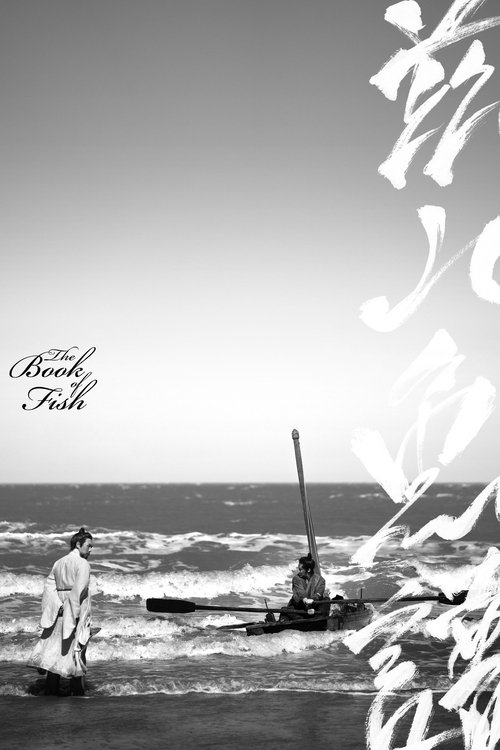
Set against the turbulent backdrop of the 1801 Catholic persecution in Joseon, The Book of Fish follows scholar Jeong Yak-jeon as he faces exile on the remote Heuksando Island. Directed by Lee Joon-ik, this historical drama blends stark black-and-white cinematography with a narrative that shifts from political tragedy to an intimate study of survival and nature. Sul Kyung-gu leads the cast as the disgraced intellectual, joined by Byun Yo-han as his young servant Chang-dae, who must navigate the harsh realities of island life together.
The film explores how two men from different worlds find common ground while cataloging the marine creatures surrounding them. Their collaboration transforms a punitive sentence into a journey of mutual discovery. The production utilized extensive location work on the actual island to capture the rugged coastline and authentic rural atmosphere of the era.
Stream
Availability and pricing can change. Confirm on the provider's site before purchasing.
The story opens in 1801 during the Sinhae Persecution, when the Joseon government cracked down on Catholic converts. Jeong Yak-jeon, a brilliant scholar and younger brother of the famous reformist Jeong Yak-yong, is arrested for practicing the forbidden faith. Authorities strip him of his status and sentence him to exile on Heuksando, a desolate island off the southwestern coast of Korea. Upon arrival, Jeong Yak-jeon finds himself physically broken and socially isolated. The landscape offers no comfort, only jagged rocks, relentless winds, and a community of fishermen who view the educated outsider with suspicion and disdain. His intellect proves useless in a world where survival depends on physical labor and local customs.
On the island, he encounters Chang-dae, a spirited fisherman from a poor family. Chang-dae possesses an innate, intuitive knowledge of the sea that rivals any textbook, yet he lacks formal education. Initially, the dynamic between the two is fraught with tension; the scholar is physically weak and socially awkward, while the fisherman is rough and pragmatic. However, a unique bond begins to form when Chang-dae expresses a desire to learn how to read and write, hoping to elevate his social standing. In return, Jeong Yak-jeon seeks to document the marine life of the island to preserve its beauty and utility before it is lost to time.
The central conflict arises from their disparate worlds colliding. Jeong Yak-jeon must adapt to the harsh, unforgiving environment of Heuksando, learning to fish and survive alongside the locals, including Mrs. Gageo, the village matriarch, and the island's mayor, Poong-heon. As he immerses himself in the daily struggles of the fishermen, the scholar's rigid intellectualism softens into a deeper understanding of human resilience. Meanwhile, Chang-dae becomes Jeong Yak-jeon's student, trading his fishing expertise for lessons in literacy and philosophy. Their relationship evolves from a transactional arrangement into a profound friendship built on mutual respect and shared hardship.
As they work together, the narrative shifts from a political tragedy to an intimate study of nature and existence. The film utilizes stunning black-and-white cinematography to contrast the bleakness of the exiled scholar's fate with the vibrant, living complexity of the ocean ecosystem. They begin the arduous task of compiling a comprehensive encyclopedia of the island's fish, a project that becomes a metaphor for their own lives. Each creature they catalog represents a facet of survival, adaptation, and the intricate web of life that continues regardless of human suffering. The story explores themes of redemption, the value of different types of knowledge, and the possibility of finding meaning even in the most isolated corners of the world.
As the seasons change and the storms rage, the two men find solace in their shared pursuit. The camera lingers on the details of their daily routines: mending nets, preparing meals, and recording observations in notebooks. The silence of the island amplifies the weight of their conversation and the quiet dignity of their labor. The film builds toward a moment of realization about the nature of their connection and the purpose of their book, leaving the audience to ponder the enduring power of art and friendship in the face of adversity. The final entries in their journal reflect a shift in perspective, where science merges with empathy.
The Book of Fish - Trailer
Critical Consensus
The Book of Fish stands as a visually stunning and emotionally resonant historical drama that elevates the genre through its masterful black-and-white cinematography and powerful performances. While the pacing may feel slow to some, the film's deep exploration of friendship, redemption, and the beauty of nature makes it a compelling and memorable cinematic experience.
“A meditative masterpiece that finds profound beauty in the quiet moments of survival, Sul Kyung-gu delivers a career-defining performance.”
A.O. Scott
The New York Times
“Lee Joon-ik crafts a visually arresting tale where the stark monochrome palette enhances the emotional depth of the characters' journey.”
Peter Debruge
Variety
“An intimate portrait of two unlikely friends whose bond transcends their differences, set against a breathtakingly beautiful backdrop.”
Justin Chang
Los Angeles Times
“A hauntingly beautiful film that lingers long after the credits roll, offering a rare glimpse into the human spirit's resilience.”
Mark Kermode
The Guardian
“The film's slow burn pays off with a deeply moving conclusion that celebrates the power of knowledge and connection.”
David Ehrlich
IndieWire
Sul Kyung-gu
Jeong Yak-jeon
Byun Yo-han
Chang-dae
Lee Jung-eun
Mrs. Gageo
Min Do-hee
Bok-rye
Cha Soon-bae
Poong-heon
Kang Ki-young
Lee Gang-hoe
Ryu Seung-ryong
Jeong Yak-yong
Jo Woo-jin
Byeol Jang
Kim Eui-sung
Mr. Jang
Jung Jin-young
King Jeong-jo
Director
Lee Joon-ik
Writers
Kim Joung-hoon, Kim Se-gyeom
Composer
Bang Jun-seok
Cinematographer
Lee Eui-tae
Producer
Sean Kim
Join the community
fans discussing