 United States
“The Blue Lagoon is a pretty, soft-core fantasy about two children growing up on a desert island, but it's also a movie that seems to have been made by people who have never met a real child.”
Vincent Canby
The New York Times
Part of a Collection
The Blue Lagoon Collection
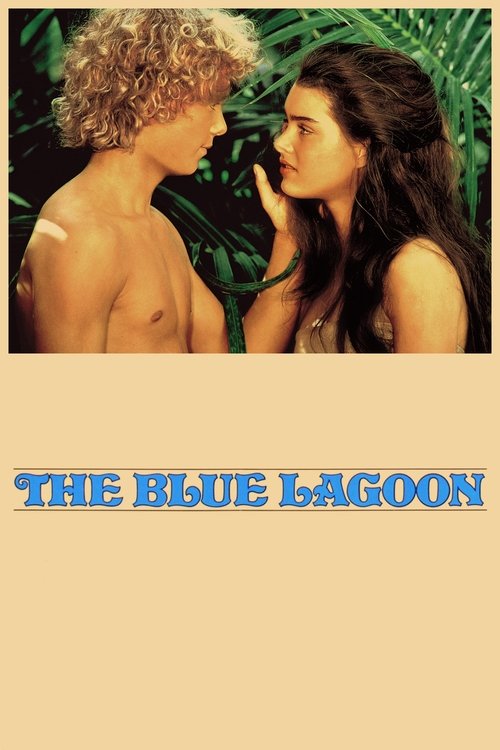
In 1980, a film arrived that would become one of the most talked-about movies of its era, not for its craft but for its controversy. The Blue Lagoon, directed by Randal Kleiser fresh off Grease, tells the story of two children stranded on a tropical island who grow into adolescence and young adulthood with no adult supervision or societal rules. Based on Henry De Vere Stacpoole's 1908 novel, the film had already been adapted twice before, but this version became a cultural flashpoint.
Shot on location in the Fiji Islands over several months, the production weathered a typhoon that destroyed sets and forced a three-month delay. The budget was $4.5 million, modest by studio standards, but the film would go on to gross nearly $59 million domestically, making it a genuine box office hit. Much of that success came from the buzz surrounding its young star, Brooke Shields, who was just 14 years old during filming. Her mother stayed on set at all times, and a body double was used for some explicit scenes, but the controversy over adolescent nudity followed the film for decades.
The Blue Lagoon received overwhelmingly negative reviews from critics, who called it exploitative and shallow. Yet audiences flocked to see it, drawn by the lush cinematography of Néstor Almendros and a sweeping orchestral score by Basil Poledouris that earned an Academy Award nomination. Over time, the film has been reassessed as a camp classic and a time capsule of late-1970s attitudes toward sexuality and innocence. Its image of two teenagers kissing in crystal-clear water remains instantly recognizable, even as the debates it sparked continue.
Availability and pricing can change. Confirm on the provider's site before purchasing.
The story begins in the late 19th century aboard a sailing ship crossing the Pacific. Young cousins Emmeline and Richard travel with Richard's father, Arthur Lestrange. When the ship catches fire and sinks, the two children escape in a lifeboat along with the ship's cook, Paddy Button. After days adrift, they wash ashore on a lush, uninhabited tropical island somewhere in the South Pacific.
Paddy takes charge, teaching the children how to fish, build shelter, and identify which plants are safe to eat. He warns them about a mysterious bad berry that causes sickness, and he keeps a strict routine. But Paddy is a heavy drinker, and when he discovers a cache of rum washed up from the wreck, he drinks himself to death. Emmeline and Richard, now about seven and eight years old, are left completely alone.
The film jumps forward in time. The children have grown into adolescence, played by Brooke Shields and Christopher Atkins. They have built a simple hut, learned to catch fish with spears, and explored every corner of their island paradise. Their days are filled with swimming in crystal-clear lagoons, climbing palm trees for coconuts, and sleeping under the stars. They have no concept of the outside world, no language for what they are feeling as their bodies change.
As they reach puberty, a new tension enters their relationship. Emmeline becomes curious about the differences between herself and Richard. Richard struggles with feelings he cannot name. They fumble toward physical intimacy without any framework to understand it, their encounters alternating between tenderness and awkwardness. A young boy named Paddy washes ashore and briefly joins them, but he dies from an illness, leaving them alone again.
Years pass. Emmeline gives birth to a son, whom they name Paddy. The family of three continues their isolated existence, living off the land and sea. But one day, a ship appears on the horizon. Emmeline and Richard face a choice: stay in their paradise or try to return to the world they barely remember. They build a raft and set out to sea, hoping to signal the vessel. A violent storm strikes, capsizing their raft and leaving them adrift in the open ocean.
The Blue Lagoon (1980) ORIGINAL TRAILER [HD 1080p]
THE BLUE LAGOON (New & Exclusive) Trailer
Critical Consensus
The Blue Lagoon is a visually stunning but narratively shallow coming-of-age romance, criticized for its exploitative portrayal of adolescent sexuality and wooden performances. The cinematography captures the beauty of the Fijian islands, but slow pacing and lack of emotional depth undermine its potential, resulting in a cult curiosity rather than a classic.
“The Blue Lagoon is a pretty, soft-core fantasy about two children growing up on a desert island, but it's also a movie that seems to have been made by people who have never met a real child.”
Vincent Canby
The New York Times
“The Blue Lagoon is a silly, soft-core fantasy that's too innocent to be erotic and too naive to be taken seriously as a story about survival.”
Roger Ebert
Chicago Sun-Times
“The Blue Lagoon is a beautifully photographed but dramatically inert film that relies entirely on the physical appeal of its young stars to hold audience interest.”
Variety Staff
Variety
“Randal Kleiser's film is a glossy, soft-core fantasy that treats its subject with a peculiar combination of prurience and prudishness.”
David Ansen
Newsweek
Brooke Shields
Emmeline
Christopher Atkins
Richard
Leo McKern
Paddy Button
William Daniels
Arthur Lestrange
Jeffrey Kleiser
Lookout
Elva Josephson
Young Emmeline
Glenn Kohan
Young Richard
Bradley Pryce
Little Paddy
Director
Randal Kleiser
Writers
Douglas Day Stewart, Henry De Vere Stacpoole
Composer
Basil Poledouris
Cinematographer
Néstor Almendros
Producer
Randal Kleiser
Academy Awards (1981)
Best Original Score: Nominated
Golden Globe Awards (1981)
Best New Male Star of the Year: Nominated
Golden Globe Awards (1981)
Best Original Score: Nominated
Razzie Awards (1981)
Worst Picture: Nominated
Razzie Awards (1981)
Worst Actress: Nominated
Razzie Awards (1981)
Worst Director: Nominated
Razzie Awards (1981)
Worst Screenplay: Nominated
Join the community
fans discussing