“Billy Wilder's 'The Apartment' is a kind of traditional comedy-drama, mixing a certain low-brow humor with sentiment for key characters so that we stay engaged and care about them.”
Roger Ebert
Chicago Sun-Times
 United States
"Movie-wise, there has never been anything like it - laugh-wise, love-wise, or otherwise-wise!"
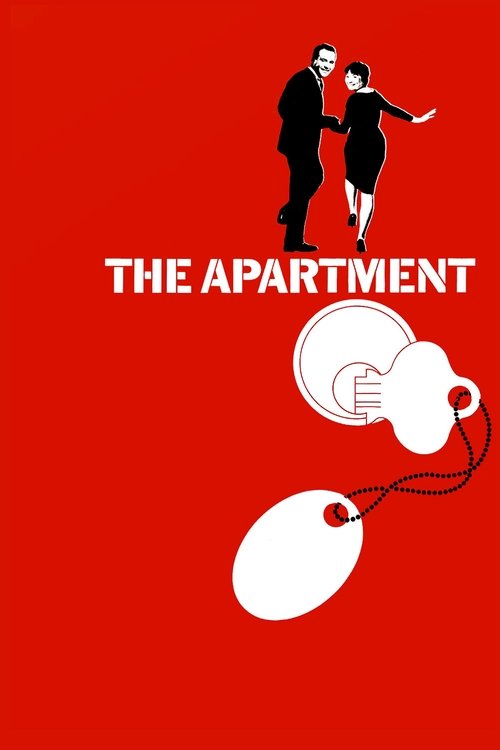
Billy Wilder's The Apartment stands as a defining work of American cinema, blending dark comedy with poignant drama to critique the dehumanizing nature of corporate culture in late 1950s New York. The film follows C.C. "Bud" Baxter, an insurance clerk who climbs the corporate ladder by lending his small Upper West Side apartment to executives for their extramarital affairs. This arrangement provides Bud with the leverage he needs to secure a promotion but isolates him from genuine human connection.
Released in June 1960, the movie was a critical and commercial success, winning five Academy Awards including Best Picture. Its enduring appeal lies in its unflinching look at loneliness and the desperate search for intimacy within a rigid social hierarchy. Jack Lemmon and Shirley MacLaine deliver performances that anchor the film's emotional core, while Fred MacMurray portrays the charismatic yet morally bankrupt executive Jeff Sheldrake.
Availability and pricing can change. Confirm on the provider's site before purchasing.
In the winter of 1959, C.C. "Bud" Baxter works as a lowly clerk at the massive Sheldrake Insurance Company in New York City. He is perpetually overlooked for promotion, overshadowed by aggressive colleagues and a ruthless executive hierarchy. In a desperate bid to climb the corporate ladder, Bud discovers an unconventional shortcut: he allows his small Upper West Side apartment to serve as a rendezvous point for senior executives during their extramarital trysts. Dr. Dreyfuss initiates the practice, followed quickly by nearly every major figure in the company, including Vice President of Personnel Jeff D. Sheldrake, the man holding the keys to Bud's career advancement.
To maintain this lucrative arrangement, Bud must constantly cover for the executives when they are late or missing from work, often lying to management about their whereabouts. He endures significant humiliation, such as being forced to take a job interview while Sheldrake occupies his bed, and suffers physical discomfort from the wear and tear on his furniture and the presence of strangers. The apartment becomes a stage for the company's hidden vices, transforming Bud's personal sanctuary into a public utility for corporate infidelity.
The central conflict deepens when Bud falls in love with Fran Kubelik, a friendly elevator operator at the firm. Fran is also a victim of the company's culture; she is the current mistress of Jeff Sheldrake. Unlike the other women who visit the apartment casually, Fran has a tragic backstory involving her husband, who is away on business and whom she loves deeply but feels unable to leave. She visits Bud's apartment frequently because it is the only place she can escape the pressures of her life and her doomed relationship with Sheldrake.
As Bud grows closer to Fran, he becomes increasingly conflicted. He realizes that by lending his apartment to Sheldrake, he is inadvertently facilitating the very affair that is destroying Fran's happiness. The tension mounts as Bud tries to navigate his professional ambitions against his growing romantic feelings for Fran. He attempts to intervene in her relationship with Sheldrake, hoping to save her from heartbreak, but finds himself powerless against the executive's charm and influence. Meanwhile, Bud's own life spirals into chaos as he faces personal crises, including a suicide attempt after a series of humiliating events and a near-fatal accident involving a car and a taxi.
The story builds toward a climax where Bud must make a definitive choice between his career and his integrity. He realizes that the price of his promotion is too high if it means continuing to enable Sheldrake's exploitation of Fran. As the holiday season approaches, the film balances sharp workplace satire with genuine romantic longing, exploring themes of loneliness, corporate greed, and the search for human connection in a cold, impersonal world. Bud's journey is one of self-discovery, as he learns that true success lies not in climbing the corporate ladder, but in standing up for what is right and finding love in unexpected places.
Official Arrow Trailer
4K Restoration | Official Trailer
Official Trailer
Critical Consensus
The Apartment combines dark comedy with poignant drama to critique mid-century corporate life. Billy Wilder's direction elevates the material into a timeless classic anchored by exceptional performances.
“Billy Wilder's 'The Apartment' is a kind of traditional comedy-drama, mixing a certain low-brow humor with sentiment for key characters so that we stay engaged and care about them.”
Roger Ebert
Chicago Sun-Times
“Billy Wilder has furnished 'The Apartment' with a one-hook plot that comes out high in comedy, wide in warmth and long in running time.”
Variety Staff
Variety
“It is a film of rare sophistication and humanity, a masterpiece of its kind that combines the best elements of comedy and drama.”
Bosley Crowther
The New York Times
“A brilliant satire on corporate culture and a tender love story, 'The Apartment' remains one of the most enduring films of the 20th century.”
Peter Bradshaw
The Guardian
“Wilder's screenplay is a tour de force, balancing humor and pathos with a precision that few writers have ever achieved.”
Mark Kermode
IndieWire
Jack Lemmon
C.C. "Bud" Baxter
Shirley MacLaine
Fran Kubelik
Fred MacMurray
Jeff D. Sheldrake
Ray Walston
Joe Dobisch
Jack Kruschen
Dr. Dreyfuss
David Lewis
Al Kirkeby
Hope Holiday
Margie MacDougall
Joan Shawlee
Sylvia
Naomi Stevens
Mrs. Mildred Dreyfuss
Johnny Seven
Karl Matuschka
Director
Billy Wilder
Writers
Billy Wilder, I.A.L. Diamond
Composer
Adolph Deutsch
Cinematographer
Joseph LaShelle
Producer
Billy Wilder
Academy Awards (1961)
Best Picture: Won
Academy Awards (1961)
Best Director: Won
Academy Awards (1961)
Best Writing, Story and Screenplay Written Directly for the Screen: Won
Academy Awards (1961)
Best Cinematography, Black-and-White: Won
Academy Awards (1961)
Best Film Editing: Won
Academy Awards (1961)
Best Actor: Nominated
Golden Globe Awards (1961)
Best Motion Picture – Musical or Comedy: Won
BAFTA Awards (1961)
Best Film from any Source: Won
Join the community
fans discussing