 France
“Truffaut's debut feature is a sensitive, often heartbreaking, semi-autobiographical portrait of a troubled Parisian boy.”
Noel Murray
The A.V. Club
Part of the Antoine Doinel pentalogy series
Series communityPart of a Collection
The Adventures of Antoine Doinel Collection
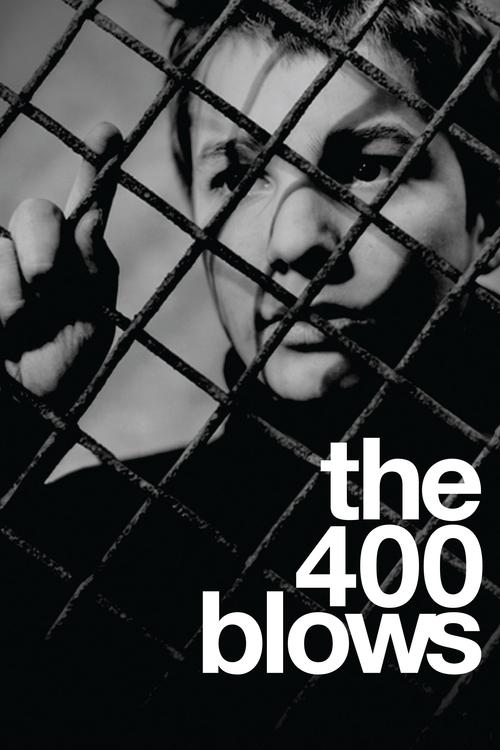
In 1959, a 27-year-old film critic named François Truffaut released his first feature. It changed cinema. The 400 Blows arrived with the force of a manifesto, a black-and-white portrait of a Parisian boy that felt unlike anything audiences had seen. Shot on the streets of Montmartre with natural light and a handheld camera, it announced the French New Wave not as a theory but as a living, breathing reality.
The film follows Antoine Doinel, a 12-year-old who skips school, lies to his parents, and steals a typewriter. But Truffaut never judges him. Instead, he turns Antoine's small rebellions into a universal cry for attention. Jean-Pierre Léaud, cast after Truffaut spotted him in a crowd of schoolboys, brings a raw, unpolished energy that makes every scene feel like a documentary of a real kid's unraveling. The result is a film that feels both intimate and revolutionary.
Beyond its influence on directors from Godard to Scorsese, The 400 Blows endures because it refuses to sentimentalize childhood. It shows a boy who is neither innocent nor monster, just trapped. The final freeze-frame, with Antoine staring into the camera, remains one of the most powerful endings in cinema, a question mark that has haunted viewers for over six decades.
Availability and pricing can change. Confirm on the provider's site before purchasing.
Antoine Doinel shares a cramped Paris apartment with his mother Gilberte and stepfather Julien. His mother, who had him out of wedlock, treats him with cold indifference, often snapping at him for minor infractions. His stepfather, though not cruel, is distant and distracted. At school, Antoine's French teacher, Mr. Sourpuss, singles him out for punishment, and the headmaster runs the institution like a prison.
Antoine finds his only real companionship in René, a classmate from a wealthier but equally neglectful home. Together they roam the streets of Montmartre, play pinball, watch movies, and invent excuses to avoid going home. After Antoine claims his mother has died to get out of trouble, the lie unravels, and his parents confront him. His stepfather slaps him. His mother, revealed to be having an affair, seems more annoyed than concerned.
Antoine begins skipping school regularly. He and René spend days at the amusement park, riding a rotor that spins them against the wall, or at the movies, losing themselves in stories that feel more real than his life. At home, he worships Balzac, writing an essay about his grandfather that he plagiarizes from the author. When his teacher catches him, he is humiliated in front of the class. His mother and stepfather, fed up, decide to send him away to a boarding school for troubled boys.
At the boarding school, Antoine endures a rigid routine and harsh discipline. He plays soccer in the courtyard and exchanges letters with René, who visits him. But the isolation deepens his despair. When his mother visits, she brings only a brief, cold conversation. Antoine's only escape is his imagination, which he pours into a notebook. After a soccer game, he and the other boys are allowed to go to town. Antoine seizes the opportunity to run away.
New trailer for The 400 Blows - in cinemas from 7 January 2022 | BFI
Critical Consensus
François Truffaut's debut is a landmark of the French New Wave, a profoundly moving and semi-autobiographical tale of adolescent rebellion. Its naturalistic style and emotional honesty capture the alienation of a young boy in Paris, cementing its status as a cinematic classic that still resonates today.
“Truffaut's debut feature is a sensitive, often heartbreaking, semi-autobiographical portrait of a troubled Parisian boy.”
Noel Murray
The A.V. Club
“It's a film that is both deeply personal and universally resonant, a coming-of-age story that feels as raw and immediate today as it did over sixty years ago.”
Sheila O'Malley
RogerEbert.com
“The film is a masterpiece of observation, capturing the small details of childhood and the larger emotional currents that shape a young life.”
David Jenkins
Little White Lies
“François Truffaut's debut is a landmark of the French New Wave, a tender and unflinching look at a boy on the edge.”
Dave Calhoun
Time Out
Jean-Pierre Léaud
Antoine Doinel
Claire Maurier
Gilberte Doinel
Albert Rémy
Julien Doinel
Patrick Auffay
René
Guy Decomble
French Teacher
Georges Flamant
Mr. Bigey
Robert Beauvais
Headmaster
Pierre Repp
English Teacher
Director
François Truffaut
Writers
François Truffaut, Marcel Moussy
Composer
Jean Constantin
Cinematographer
Henri Decaë
Producer
François Truffaut
Cannes Film Festival (1959)
Best Director: Won
Cannes Film Festival (1959)
Palme d'Or: Nominated
Golden Globe Awards (1960)
Best Foreign Language Film: Won
BAFTA Awards (1960)
Best Film: Nominated
French Syndicate of Cinema Critics (1960)
Best Film: Won
Join the community
fans discussing