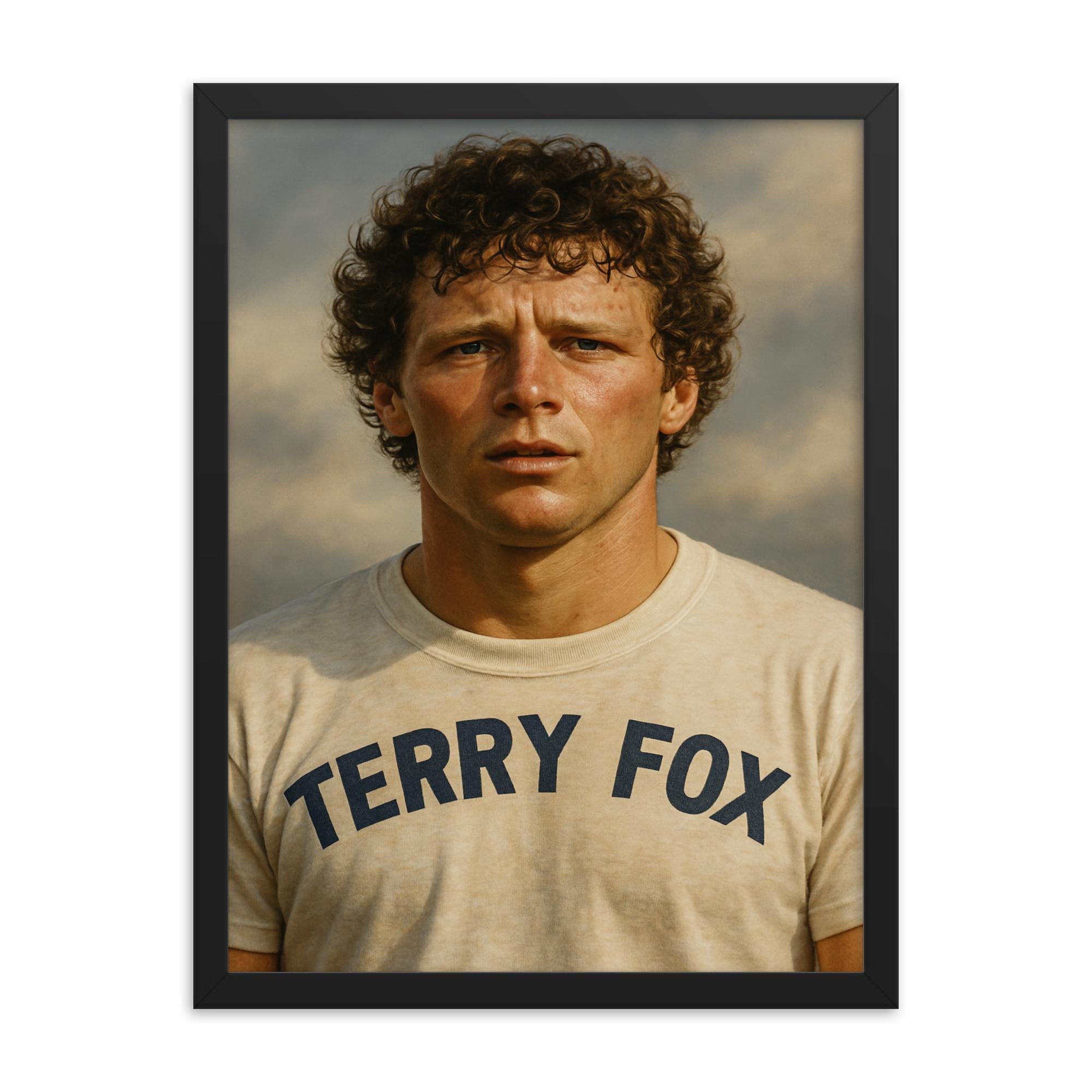
Terry Fox
 Canada
Also known as: Terrance Stanley Fox, Terry
Birthday
July 28, 1958
Birth Sign
Sagittarius
Birthplace
Winnipeg, Manitoba, Canada
Age
Died at 22
Height
5 ft 10 in (178 cm)
About
Terrance Stanley Fox, known to the world as Terry Fox, was a Canadian athlete, humanitarian, and cancer research activist born on July 28, 1958, in Winnipeg, Manitoba. He grew up in Port Coquitlam, British Columbia, where he excelled in sports, particularly distance running and basketball, at Port Coquitlam Senior Secondary School (later renamed in his honor) and Simon Fraser University. In 1977, at the age of 18, Fox was diagnosed with osteosarcoma, a form of bone cancer, which led to the amputation of his right leg. Despite this, he continued to run using a prosthetic leg and even played wheelchair basketball, winning three national championships with the Vancouver Cable Cars. Fox's most significant achievement came in 1980 when he embarked on the Marathon of Hope, a cross-Canada run to raise money for cancer research. Starting from St. John's, Newfoundland on April 12, 1980, he ran the equivalent of a full marathon every day, aiming to collect one dollar from each of Canada's 24 million citizens. His journey captured the nation's heart, and by the time he reached Ontario, he was a national celebrity, meeting with politicians, athletes, and business leaders. However, after 143 days and 5,373 kilometers, Fox was forced to stop outside Thunder Bay, Ontario, when the cancer spread to his lungs. He passed away on June 28, 1981, just a month before his 23rd birthday. Fox's legacy is monumental. He was the youngest person ever named a Companion of the Order of Canada and received the 1980 Lou Marsh Award as Canada's top sportsman. The Canadian Press named him Newsmaker of the Year in both 1980 and 1981. The annual Terry Fox Run, first held in 1981, has grown into the world's largest one-day fundraiser for cancer research, with millions of participants in over 60 countries. As of February 2026, more than C$1 billion has been raised in his name through the Terry Fox Research Institute. Numerous buildings, statues, roads, and parks across Canada bear his name, and his story continues to inspire countless people to fight for a cause greater than themselves.
Early Life & Background
Terrance Stanley Fox entered the world on July 28, 1958, in Winnipeg, Manitoba, as the second child of Doug and Betty Fox. When he was two years old, the family relocated to Port Coquitlam, British Columbia, settling into a modest home where they lived as part of a working-class community. His father worked for the BC Railway, and his mother managed the household, instilling in Terry a strong work ethic and a sense of community responsibility from an early age. Growing up in Port Coquitlam, Terry discovered a passion for athletics that would define his youth. He attended Port Coquitlam Senior Secondary School, where he quickly distinguished himself as a multi-sport athlete. Basketball became his primary focus during high school, but he also developed a serious interest in distance running. His physical potential was evident, yet his path changed dramatically in December 1976 when he was just 18 years old. A persistent limp led to a diagnosis of osteosarcoma, a rare and aggressive form of bone cancer affecting his right leg. The medical intervention required was drastic. In May 1977, surgeons performed an above-the-knee amputation on his right leg to save his life. This event marked the end of his childhood dreams of professional basketball and the beginning of a new chapter defined by resilience. Rather than retreating from the world, Terry adapted. He began playing wheelchair basketball, joining the Vancouver Cable Cars team. His determination paid off quickly as he helped lead the team to three national championships between 1977 and 1979. During this period, he also enrolled at Simon Fraser University, studying biology while training rigorously to learn how to run again with a prosthetic limb. By 1979, he had mastered the art of running with his artificial leg, setting the stage for a journey that would soon capture the imagination of a nation.
Career Growth
The breakthrough moment for Terry Fox arrived in April 1980 when he launched the Marathon of Hope. At the age of 21, he started his run in St. John's, Newfoundland, on April 12. His goal was ambitious: to run across Canada, covering approximately 5,300 kilometers, to raise one dollar from every Canadian citizen for cancer research. He ran the equivalent of a full marathon (42.2 km) every single day, regardless of weather or terrain. The run transformed Fox from a local athlete into a national icon. Crowds lined the streets in towns and cities across the country, cheering him on and donating whatever they could. He met with Prime Minister Pierre Trudeau, Governor General Edward Schreyer, and numerous other dignitaries who recognized the significance of his mission. By the time he reached Ontario, the movement had gained international attention, with supporters gathering from around the world to witness his endurance. Tragically, the run ended prematurely on September 1, 1980, just outside Thunder Bay, Ontario. Medical tests revealed that the cancer had metastasized extensively to his lungs, making it impossible for him to continue. Despite the devastating diagnosis, Fox refused to give up. He returned to Winnipeg to undergo chemotherapy and continued to speak publicly about the importance of cancer research until his health deteriorated further. His efforts earned him the Lou Marsh Award in 1980 as Canada's top sportsman and the title of Newsmaker of the Year from The Canadian Press in both 1980 and 1981. Although his life was cut short, the impact of his career was immeasurable, leaving behind a legacy that continues to drive cancer research forward today.
Career Timeline
Public Image & Style
Terry Fox is remembered as the ultimate symbol of humility and determination. His public image is defined by his prosthetic leg, which became an iconic representation of resilience against adversity. Media coverage consistently emphasizes his selflessness and the universality of his message, portraying him not as a celebrity seeking fame, but as a man driven by a singular purpose. His appearance during the Marathon of Hope was simple: athletic gear, a determined expression, and the unyielding will to keep moving forward. This authentic presence resonated deeply with the public, transcending political and social divides. Even decades later, his image remains a powerful visual shorthand for hope and perseverance in the face of illness.
Fame & Fandom (iFAMOUS Rankings)
Terry Fox remains a towering figure in Canadian history, recognized not merely as a historical athlete but as a global symbol of resilience. His enduring presence is quantified by his standing in the iFANN Global Fame Rankings, where he holds the position of the 35th most famous person in Canada and the 69th most famous person from Canada, figures that have held steady through recent cycles. These placements reflect a sustained level of attention that tracks cultural consumption and media coverage across generations. While his legacy transcends typical celebrity metrics, the data confirms his specific rank among national icons. The community surrounding him operates differently than standard fanbases; there is no formal name for his followers, who instead identify as runners or supporters of the Marathon of Hope. This group does not gather for chart pushes or streaming parties but unites through the annual Terry Fox Run, a ritual of endurance that has raised over $1 billion for cancer research since 1981. The movement functions as a living memorial, with participants physically enacting his struggle to raise funds and awareness. Even decades after his passing, the organization he founded continues to mobilize people globally, turning personal grief into collective action against disease.
Interesting Facts and Legends
Born in Winnipeg and raised in Port Coquitlam, Terry Fox lost his right leg to osteosarcoma at age 18 before becoming a wheelchair basketball champion. He launched the Marathon of Hope in June 1980, running one marathon daily across Canada to raise cancer research funds. He covered 5,373 kilometers over 143 days before his health failed due to metastatic cancer. A defining story from his journey involves the moment he collapsed on a beach near Thunder Bay, where strangers carried him the rest of the way to finish his day's run. Another widely retold legend describes how thousands of Canadians lined the roadside during his final weeks, creating a human chain of support that stretched for miles. After his death in June 1981, the Terry Fox Foundation was established, eventually surpassing the $1 billion fundraising mark in February 2026. August 3rd is now recognized as Terry Fox Day in Manitoba to honor his memory. The documentary Run Terry Run later revealed never-before-seen footage of his arduous trek, adding new layers to the mythos of his physical struggle.
Notable Quotes
“I want to give people hope... I want to show them that they can do anything if they put their mind to it.”
“If you're going to die anyway, you might as well die doing something good.”
Family & Personal Life
Terry Fox was the son of Doug Fox, a railway worker, and Betty Fox, a homemaker. He had a brother named Darrell Fox, who remained a close confidant throughout Terry's life and later played a key role in managing his legacy. The Fox family was deeply involved in supporting Terry's athletic endeavors and his recovery from cancer. After Terry's passing, his parents and brother became instrumental figures in the establishment and growth of the Terry Fox Foundation. The family maintained a low profile regarding their personal lives but dedicated themselves to ensuring Terry's mission continued. They were often seen at memorial events and fundraisers, representing the quiet strength that supported Terry's public heroism.
Notable Connections
Doug Fox (Father), Betty Fox (Mother), Darrell Fox (Brother), Simon Fraser University, Terry Fox Foundation
Relationships & Dating History
Terry Fox never married and had no children. While he was active during a time of significant social change, there are no credible records of long-term romantic partners, engagements, or marriages. He remained focused on his education and his athletic goals throughout his young adulthood. The absence of a dating history is often noted in biographies, as his life was consumed by his recovery, his athletic pursuits, and ultimately, his historic run. As of his death in 1981, he was single. His legacy, however, has inspired millions, and the "fandom" surrounding him is best described not as a traditional fanbase but as a global community of runners and supporters who participate in the annual Terry Fox Run. There is no formal name for these followers, though they are often referred to collectively as participants in the Marathon of Hope movement.
Death & Aftermath
Died
June 28, 1981 (aged 22)
Death Place
London, Ontario, Canada
Cause of Death
Metastatic osteosarcoma to lungs
Terrance Stanley Fox died on June 28, 1981, at St. Joseph's Hospital in London, Ontario. Medical imaging had confirmed that his osteosarcoma metastasized extensively to his lungs, rendering further treatment futile and forcing the termination of his Marathon of Hope run. His final days involved severe respiratory distress after he was hospitalized in Thunder Bay for excruciating pain and coughing up blood. The news triggered an immediate and profound reaction across Canada, with vigils held in Toronto, Vancouver, and other major cities where thousands gathered to pay tribute.
A private funeral service took place shortly after his death in Winnipeg, Manitoba, followed by burial at St. Boniface Cemetery while the broader public supported the newly established Terry Fox Foundation. Posthumous honors included induction into the Canadian Sports Hall of Fame, the Order of Canada, and recognition as one of Canada's Greatest Canadians. The foundation continues to manage his legacy, raising hundreds of millions for cancer research, while future tributes include a documentary titled Run Terry Run set for a 2026 premiere.
Net Worth (Estate Value)
$0
iFANN Editorial Team estimate
Terry Fox died at the age of 22 without accumulating personal wealth, so his estate value is effectively managed by the Terry Fox Foundation and the Terry Fox Research Institute. Since his death, the foundation has raised over C$1 billion (surpassing this milestone in February 2026), generating revenue through the annual Terry Fox Run, corporate sponsorships, licensing deals, and merchandise. The estate's value is measured by the ongoing impact and funds raised rather than personal assets. The foundation continues to manage his intellectual property, ensuring his image and story are used ethically to support cancer research. iFANN currently estimates the financial impact of Terry Fox's legacy at approximately $1.2 billion in total funds raised, reflecting the cumulative success of the organization he inspired.
Awards Won (7)
Terry Fox received numerous awards both during his lifetime and posthumously, reflecting his status as a national icon. During his life, he received the Lou Marsh Award in 1980 as Canada's top sportsman and was named Newsmaker of the Year by The Canadian Press in both 1980 and 1981. Posthumously, his accolades include being named the youngest person ever to receive the Order of Canada (Companion level) in 1981. He was inducted into the Canadian Sports Hall of Fame in 1984 and the BC Sports Hall of Fame in 1985. In 2004, he was voted #1 on the CBC's "The Greatest Canadian" list. Other distinctions include the naming of Mount Terry Fox in the Yukon, the Terry Fox Drive in various cities, and the establishment of the Terry Fox Research Institute. He also received the Governor General's Performing Arts Award for Lifetime Artistic Achievement posthumously in 2006.
1980 · Sportsman of the Year
Marathon of Hope
1981 · Journalism
Legacy
1980 · Journalism
Marathon of Hope
Known For
Marathon of Hope
1980 · Runner
Run Terry Run
2026 · Subject
Keywords
Sources
Quick Facts
- Profession
- activist, long-distance runner
- Born
- July 28, 1958
- Birthplace
- Winnipeg, Manitoba, Canada
- Died
- June 28, 1981
- Death Place
- London, Ontario, Canada
- Gender
- Male
- Birth Sign
- Sagittarius
Personal Details
- Full Name
- Terrance Stanley Fox
- Height
- 5 ft 10 in (178 cm)
- Children
- Education
- Port Coquitlam Senior Secondary School; Simon Fraser University
Filmography
2
Total
1
Film
1
TV
Frequently Asked Questions
How did Terry Fox die?
How far did Terry Fox run?
Did Terry Fox have any children?
What is the Terry Fox Run?
Where is Terry Fox buried?
Similar People

Join the community
fans discussing