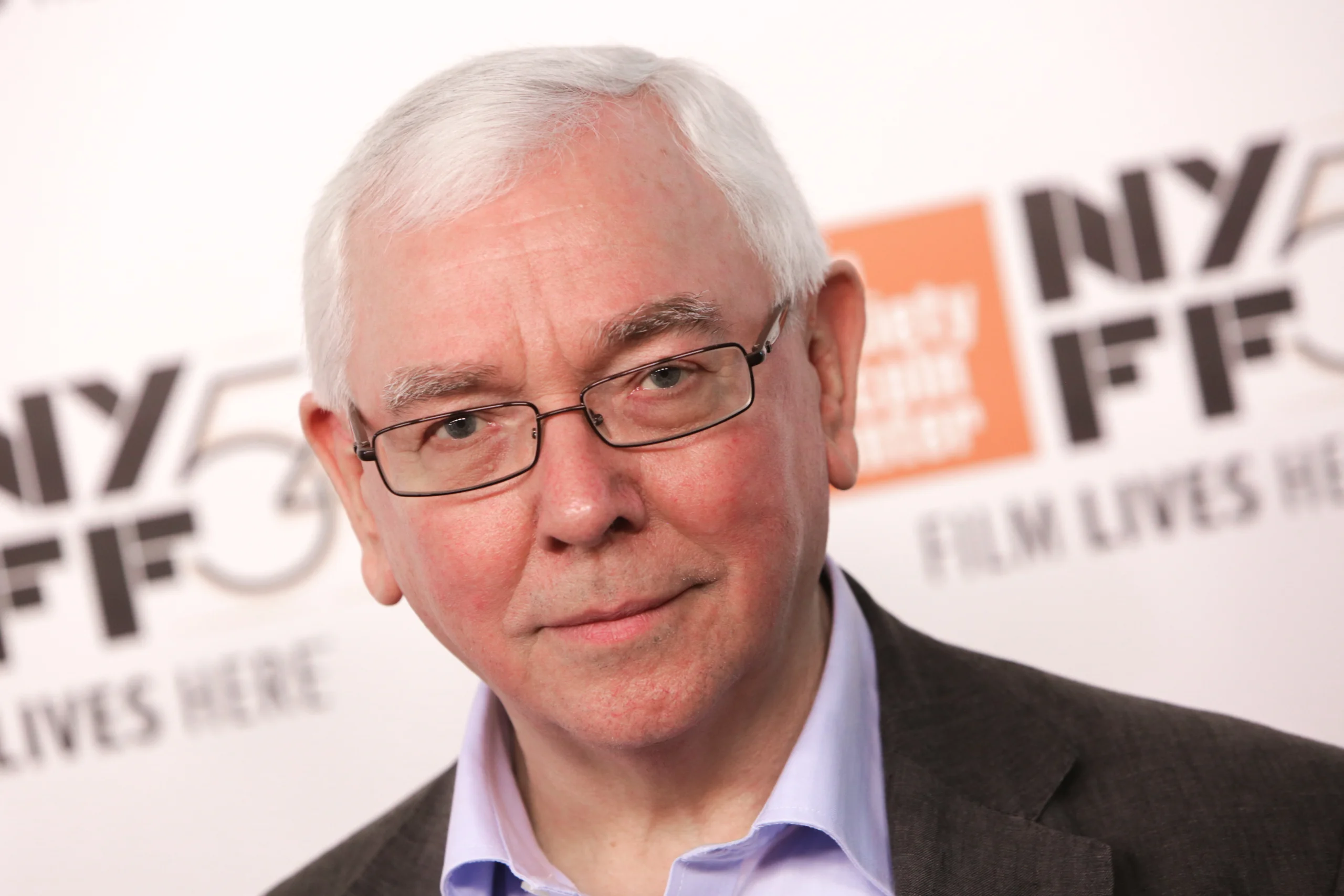
Terence Davies
 United Kingdom
Also known as: Terence Davies
Birthday
November 10, 1945
Birth Sign
Scorpio
Birthplace
Liverpool, England
Age
Died at 77
About
Terence Davies was an English film director and screenwriter, born in Liverpool in 1945 and dead at 77 in October 2023. He made about a dozen features and shorts across five decades, almost all of them written by him, and almost all of them circling the same territory: a working-class Catholic childhood in postwar Liverpool, the shame and violence inside a family, the consolations of popular song, and the way memory rearranges all of it.
His reputation rests on a small number of films that critics return to constantly. Distant Voices, Still Lives (1988) took the International Critics' Prize at Cannes. The Long Day Closes (1992) is the gentler companion piece. Of Time and the City (2008), a collage documentary narrated by Davies himself, brought him a wider audience than any of his fiction. His literary adaptations, particularly The House of Mirth (2000) and A Quiet Passion (2016), carry the same unhurried attention to grief.
He was openly gay and never married. He spoke in interviews about long stretches of celibacy and loneliness, and about the Catholic guilt that never quite left him. His films rarely made much money, and he spent years at a time trying to finance the next one. The Evening Standard once called him Britain's greatest living film director, a phrase that appeared in his obituaries more than once.
Early Life & Background
The youngest of ten children, Davies grew up in a Catholic household in Liverpool. His father was a violent alcoholic who died when Davies was seven, and the family later moved to a housing estate in Garston. Money was short throughout his childhood, and the household ran on the rhythm of the church, the cinema and the radio. Davies left school at 15 and took a job as a bookkeeper, then worked in accounting for roughly a decade. He has described those years as numb and directionless.
What changed things was a screening of Carl Theodor Dreyer's The Passion of Joan of Arc, which he saw while studying at Coventry School of Art. He credited that film with showing him what cinema could do, and he began moving toward filmmaking rather than accountancy. He later trained at the National Film and Television School, where he started work on what became a trilogy of shorts about a gay Catholic man named Robert Tucker.
The three films were made over several years on small grants and NFTS resources: Children in 1976, Madonna and Child in 1980, and Death and Transfiguration in 1983. Together they trace Tucker from a Liverpool boyhood through adult isolation and toward death, and they established the autobiographical method Davies would use for the rest of his career. The trilogy played at festivals and on television and gave him enough standing to attempt a feature.
Career Growth
The feature arrived in 1988. Distant Voices, Still Lives told the story of a Liverpool family under a violent father through songs, photographs and fragments rather than conventional plot, and it won the International Critics' Prize at Cannes. It is the film most often named as his masterpiece. The Long Day Closes followed in 1992, returning to the same childhood with more tenderness and less dread.
Davies then adapted novels. The Neon Bible (1995), from Carson McCullers, was followed by The House of Mirth (2000), his version of Edith Wharton's tragedy of a woman undone by social calculation. Neither was a commercial success. Of Time and the City (2008), assembled from archival footage of Liverpool and narrated by Davies, reached a larger audience than any of his fiction and won recognition from BAFTA and the London Critics' Circle.
The last decade of his working life was steady: The Deep Blue Sea (2011), from Terence Rattigan's play; Sunset Song (2015), from Lewis Grassic Gibbon's novel; A Quiet Passion (2016), with Cynthia Nixon as Emily Dickinson; and Benediction (2021), which traced the life of the war poet Siegfried Sassoon. That last film was his final feature. Throughout, he worked on modest budgets with small crews, and financed each project only after long gaps.
Career Timeline
Public Image & Style
Davies presented himself in interviews as a plain, precise speaker with a dry, sometimes waspish humour. He wore dark clothes, usually a jacket, and had a soft Liverpool accent he never tried to lose. He was openly gay at a time when that carried professional risk, and he talked about his sexuality and his Catholic upbringing in the same breath, without embarrassment and without self-pity.
Critics described his films as slow, lyrical and uncompromising, and he did not resist the description. He was known for refusing to speed up his pacing for commercial reasons and for saying plainly that he made films for a small audience. That stance gave him a reputation as a purist, though his interviews were often funny and unsentimental about the business of raising money.
Fame & Fandom (iFAMOUS Rankings)
iFANN has not yet collected fame data for Terence Davies, so no ranking is published for him. Within film culture his standing is high and his reach narrow: he is a director known to cinephiles, repertory programmers and critics rather than to a general audience, and his death prompted tributes from the BFI, the Criterion Collection and a long list of working directors. He does not appear on the September 2026 iFAMOUS Rankings flagship list.
His admirers have no formal name and no organised fanbase. What exists instead is a loose network of repertory cinemas, film societies and home video collectors who have kept the Liverpool films in circulation. The Criterion Collection has released several of his features, and Letterboxd users routinely recommend Distant Voices, Still Lives as the entry point for newcomers, with The Long Day Closes a close second. Retrospectives do the organising work that fan campaigns do for pop stars: Museum of the Moving Image mounted a full survey in 2025, and British cinemas programmed his work alongside it. The estate's Instagram account, @terencedaviesofficial, is the closest thing to an official fan channel, and it marks anniversaries and birthdays rather than posting new material.
Interesting Facts and Legends
Davies was a formidable mimic and raconteur in interviews, and several of his press appearances have circulated for years as clips in their own right, including a much-shared explanation of why competing with Hollywood was a pointless ambition.
He was a lifelong collector of popular song and used it in his films with unusual care, often choosing recordings from the 1940s and 50s that he had heard as a child. He once said the songs were the only reliable route back to the past.
He never learned to drive and lived for decades in ordinary flats, first in London and later in Essex. He described his daily routine as writing in the morning and reading in the afternoon.
A story fans still retell concerns the long fallow periods between his films, when he would announce projects that never found backing. He was candid about this in interviews rather than defensive, and treated the gaps as a normal condition of British art cinema.
Notable Quotes
“I've always said I make films for a very small audience, and I'm perfectly happy with that.”
“The past is not another country. It's the only country I've ever really lived in.”
“I was brought up a Catholic, and you never quite get rid of it, no matter what you do.”
“I don't compete with Hollywood. It would be like competing with the weather.”
“Songs take you back in a way nothing else does. A few bars and you're eleven again.”
Family & Personal Life
Davies was the youngest of ten children. His father, a violent alcoholic, died when Davies was seven, and the family moved to a housing estate in the Garston area of Liverpool. He spoke of his mother with great warmth and of his siblings as a loud, crowded presence in the house. He never married and had no children, and he said in later interviews that he had lived alone for much of his adult life. He kept a home in Mistley, Essex, in his final years, and was survived by relatives in Liverpool and elsewhere. His family did not issue public statements after his death beyond confirming it.
Notable Connections
Cinematographer Dick Pope, producer Olivia Stewart, and actors Cynthia Nixon, Jack Lowden and Rachel Weisz, all of whom worked on his features. He was closely tied to the BFI and the Criterion Collection, both of which supported and released his films, and to the National Film and Television School, where he trained and made his first shorts.
Relationships & Dating History
No long-term romantic partner of Davies is documented in credible sources. He was openly gay from early in his career, and he discussed his personal life in interviews with unusual directness, describing long periods of celibacy and a persistent loneliness that he linked to his Catholic upbringing and to the shame instilled by his father's violence. He attributed his difficulty forming relationships partly to the church's teaching and partly to the isolation of his working life.
He never married and had no children. He did not confirm any sustained relationship in the press, and no partner was named in his obituaries. Search interest in a "Terence Davies partner" reflects curiosity about a director who wrote so openly about desire and guilt, but the public record does not supply an answer. As of his death in October 2023 he was single.
Death & Aftermath
Died
October 7, 2023 (aged 77)
Death Place
Mistley, Essex, England
Cause of Death
Short illness (specific cause not disclosed)
Davies died at his home in Mistley, Essex, on 7 October 2023, roughly a month short of his 78th birthday. Obituaries reported that he had been ill for a short time; no specific cause of death was made public, and his family did not issue a medical statement. He had no spouse or children, and no legal dispute over his affairs was reported.
Tributes arrived quickly from the institutions that had backed him for decades. The BFI, which had funded his earliest shorts, called him one of the most distinctive voices in British cinema. The Criterion Collection, long a champion of his work, published a memorial essay on memory and autobiography in his films. Fellow directors and critics followed, and The New Yorker ran a piece under the plain headline that he was the greatest British director. The Guardian obituary, published the day after his death, traced the Liverpool childhood, the decade of bookkeeping, and the long struggle to finance each subsequent film.
Retrospectives came in the years after. Museum of the Moving Image in New York staged a full retrospective, Time Present and Time Past, in 2025, and repertory houses in Britain and the United States programmed his Liverpool films alongside the literary adaptations. His work had always circulated through festivals, art-house cinemas and home video rather than multiplexes, and that pattern continued after his death. The estate maintains an official Instagram account, @terencedaviesofficial, which marked what would have been his 80th birthday in November 2025 with a post of photographs and a quotation from his films.
No posthumous feature was announced. His final film, Benediction, had been released in 2021, and he had spent the last years of his life giving interviews about it and about the difficulty of raising money for the projects he still wanted to make.
Net Worth (Estate Value)
$2 Million
iFANN Editorial Team estimate
Davies worked almost entirely outside the commercial system. His films were financed through the BFI, BBC Film, the National Lottery and small European co-production money, and he was paid director and writer fees on modest budgets rather than a share of large box office returns. No feature he made came close to a wide release, and the most commercially visible, Of Time and the City, was a documentary made for well under a million pounds.
Income in his later years came from a mix of sources: directing fees, screenwriting fees, royalties from home video and streaming licences, and the occasional festival or speaking appearance. The Criterion Collection's releases of his work generate residuals, and British television has continued to screen the Liverpool films. He owned no property portfolio and no business interests; he lived in a flat in Mistley for much of his final decade.
Published net worth figures for Davies are not reliable, and several sites list nothing at all. Taking the small number of estimates that exist and treating his career earnings, royalties and residual income as the basis, the iFANN Editorial Team's analysis points to a figure of roughly $2 Million as of 2026. That reflects a long career of low-budget art cinema rather than any single large payday, and it is best read as an order of magnitude rather than a precise accounting. His estate, which manages the film rights and the official Instagram account, continues to draw income from licensing and home video sales.
Awards Won (15)
2009 · Best Documentary (special recognition)
Of Time and the City
1988 · International Critics' Prize
Distant Voices, Still Lives
1988 · FIPRESCI Prize
Distant Voices, Still Lives
Known For
Distant Voices, Still Lives
1988 · Director and writer
The Long Day Closes
1992 · Director and writer
The House of Mirth
2000 · Director and writer
Of Time and the City
2008 · Director, writer and narrator
A Quiet Passion
2016 · Director and writer
Benediction
2021 · Director and writer
Keywords
Sources
Quick Facts
- Profession
- Film director, screenwriter
- Born
- November 10, 1945
- Birthplace
- Liverpool, England
- Died
- October 7, 2023
- Death Place
- Mistley, Essex, England
- Gender
- Male
- Birth Sign
- Scorpio
- Education
- Coventry School of Art; National Film and Television School
Personal Details
- Full Name
- Terence Davies
- Education
- Coventry School of Art; National Film and Television School
Filmography
14
Total
12
Film
2
TV
Frequently Asked Questions
What was Terence Davies' cause of death?
Was Terence Davies married?
Where should I start with Terence Davies' films?
What was Terence Davies' last film?
What is Terence Davies best known for?
Social Media
Similar People

Join the community
fans discussing