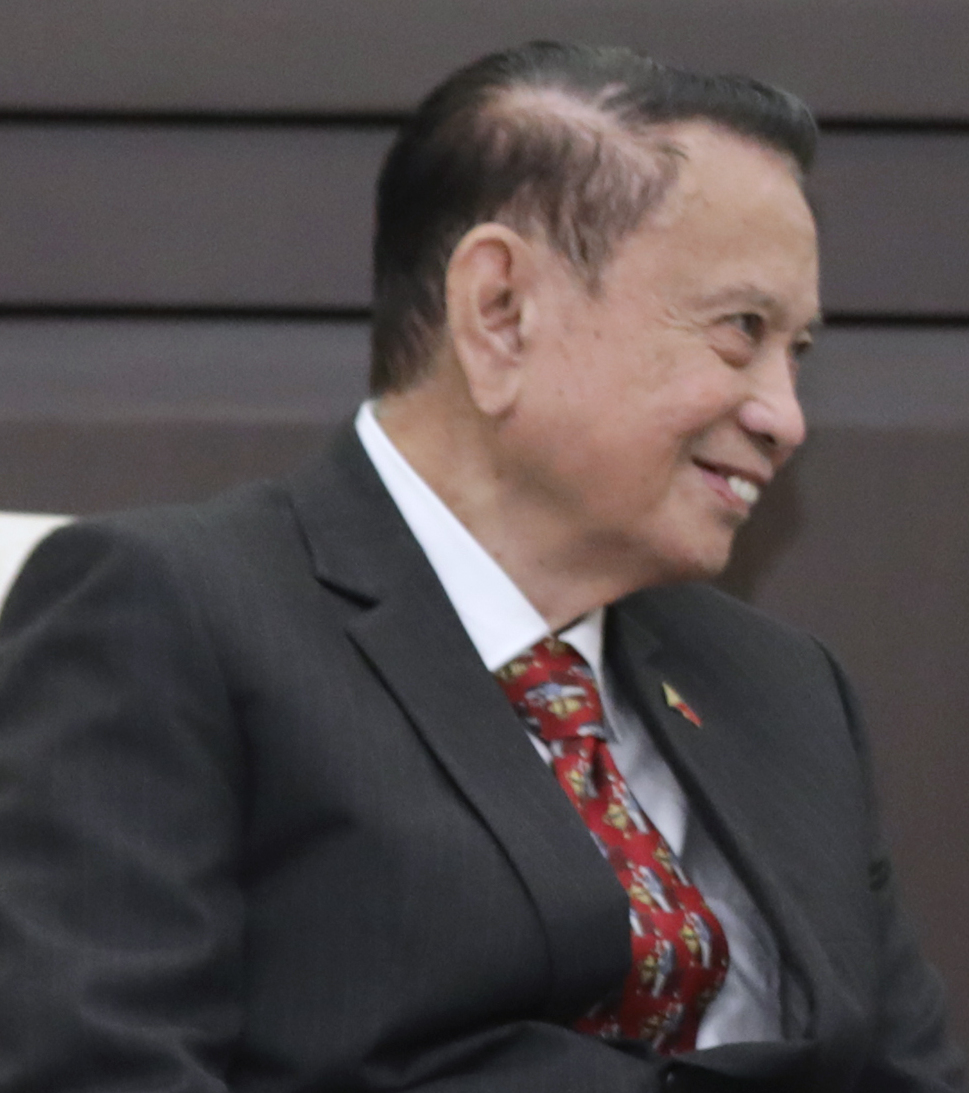
Teofisto Guingona Jr.
 Philippines
Also known as: Tito Guingona
Birthday
July 4, 1928
Birth Sign
Cancer
Birthplace
San Juan, Philippines
Age
Died at 96
About
Teofisto Guingona Jr. was a Filipino statesman and diplomat whose public career spanned over five decades. He served as the 11th vice president of the Philippines from 2001 to 2004 under President Gloria Macapagal Arroyo, and concurrently as secretary of foreign affairs. Guingona remains the only vice president in Philippine history who was never elected to the office, having been appointed after the ouster of Joseph Estrada.
Before his vice presidency, Guingona built a reputation as a human rights lawyer and a vocal opponent of the Marcos dictatorship, enduring imprisonment for his activism. His legislative career included three terms in the Senate, where he championed anti-political dynasty measures and held leadership roles such as majority and minority leader. He also served as executive secretary and justice secretary under President Fidel V. Ramos.
Guingona was known for his steadfast nationalism and his advocacy for good governance. Even in his later years, he remained a respected elder statesman, honored on his 98th birthday in 2026 with tributes to his legacy. He passed away on June 15, 2025, at the age of 96, leaving behind a legacy of principled public service.
Early Life & Background
Teofisto Tayko Guingona Jr. was born on July 4, 1928, in San Juan, then a separate municipality now part of Metro Manila. His father, Teofisto Guingona Sr., was a prominent politician who served as an assemblyman, senator, judge, and commissioner, setting an early example of public service.
Guingona pursued higher education at Ateneo de Manila University, where he worked as a working student to support his studies. This experience instilled in him a strong work ethic and a sense of discipline that would mark his career.
During the martial law era under Ferdinand Marcos, Guingona emerged as a leading opposition figure. As a human rights lawyer, he defended victims of authoritarian abuses and was imprisoned multiple times for his stance. The assassination of Ninoy Aquino in 1983 galvanized his activism; he joined rallies alongside his brother Butz Aquino and co-founded the BANDILA organization in 1985, which played a role in the pro-democracy movement.
His political breakthrough came after the People Power Revolution in 1986, when President Corazon Aquino appointed him to chair the Commission on Audit, a position he held until 1987. This appointment marked the beginning of his formal government career, leading to his first Senate election later that year.
Career Growth
Guingona's senatorial career began in 1987 when he was elected under the Lakas ng Bayan coalition. He was re-elected in 1992 and became the Senate majority leader in 1993. During his tenure, he also held leadership roles with the Mindanao Development Authority and the Mindanao Labor Management Advisory Council, reflecting his focus on regional development.
President Fidel V. Ramos appointed him executive secretary from 1993 to 1995, and then justice secretary from 1995 to 1998. He returned to the Senate for a third term in 1998, serving as minority leader until 2001.
In 2001, following the EDSA II revolution that ousted Joseph Estrada, President Gloria Macapagal Arroyo appointed Guingona as vice president and secretary of foreign affairs. He served until 2004, when he chose not to run for a full term, and was succeeded by Noli de Castro. His vice presidency was notable for his active role in foreign policy, including his stance against the renewal of the US bases treaty.
Career Timeline
Public Image & Style
Guingona was widely regarded as a principled and nationalist statesman, often seen as a moral compass in Philippine politics. His reputation was built on his unwavering opposition to authoritarianism and his commitment to human rights, which earned him respect across the political spectrum.
He was known for his calm and measured demeanor, often speaking in a thoughtful manner that conveyed gravitas. His public image was that of a elder statesman who prioritized the nation's interests over personal ambition, as evidenced by his decision not to run for a full vice presidential term.
Fans of Philippine history and politics remember him for his role in the anti-dynasty movement and his efforts to promote transparency in government. His legacy continues to inspire younger generations of public servants.
Fame & Fandom (iFAMOUS Rankings)
Teofisto Guingona Jr. commanded a global audience defined by historical significance rather than viral celebrity, with his name resonating primarily within political discourse and historical archives across the Philippines and among students of Southeast Asian democracy. iFANN has evaluated this figure's standing in the digital age, yet he currently holds no placement in the published Global Top 1,000 rankings or any scope-specific top-100 lists. While the world does not rally behind him with organized fan clubs or commercial campaigns, his legacy is sustained by a deep, respectful recognition often expressed through the affectionate nickname "Tito." This moniker reflects his status as an elder statesman whose life story of resisting authoritarianism continues to inspire admiration without the rituals typical of pop culture icons. His public engagement remains rooted in formal political history, where his contributions to human rights and constitutional reform are studied rather than celebrated through fan-driven marketing or social media trends.
Interesting Facts and Legends
Teofisto Guingona Jr. was a staunch advocate against political dynasties, helping draft an anti-political dynasty bill that the Senate passed in 1987. He was known for his sharp memory and cognitive clarity even at age 97, as noted in tributes on his 98th birthday. His son, TG Guingona, followed in his footsteps as a lawyer and congressman for the 2nd District of Bukidnon. Guingona was an avid reader and often quoted historical figures in his speeches.
One of the most enduring stories of his life involves his imprisonment twice during the Marcos regime for opposing Martial Law, a fact that cemented his reputation as a symbol of resistance. During the 1971 Constitutional Convention, he championed the legislation that would eventually become the anti-political dynasty bill, a legislative achievement that stands as a cornerstone of his political legend. Upon leaving government service in June 2004, he made a vow that became widely circulated: "I may leave the government but I will not stop fighting for the country," illustrating his unwavering commitment to public service regardless of his official position. Even in recent years, his relevance persisted as he sought protection for whistleblowers in high-profile corruption scandals, proving his dedication never wavered.
Notable Quotes
“I may leave the government but I will not stop fighting for the country.”
Family & Personal Life
Teofisto Guingona Jr. was born to Teofisto Guingona Sr., a politician who served as an assemblyman, senator, judge, and commissioner. His brother, Butz Aquino, was also a political figure, though they shared the same mother? Actually, Butz Aquino was his half-brother through his mother's second marriage.
Guingona was married to Stella Marie de Lara Guingona, who served as mayor of Gingoog City. She passed away on June 15, 2025, the same day as her husband, though the exact circumstances were not reported. Their son, TG Guingona, pursued a career in law and politics, serving as a congressman for Bukidnon's 2nd District.
The family has been involved in public service for generations, with a legacy of advocacy for good governance and nationalism.
Notable Connections
Guingona was closely associated with his brother, Butz Aquino, a fellow opposition figure during the martial law era. He also worked with President Corazon Aquino, who appointed him to the Commission on Audit, and President Fidel V. Ramos, under whom he served as executive secretary and justice secretary. His political career intersected with many prominent Filipino statesmen of his time.
Relationships & Dating History
Teofisto Guingona Jr. was married to Stella Marie de Lara Guingona, who served as mayor of Gingoog City. The couple had at least one son, TG Guingona, who became a lawyer and politician. Stella passed away on June 15, 2025, the same day as her husband. The exact cause of their deaths on the same day was not publicly reported.
Guingona was widowed at the time of his death. There is no public record of other significant relationships.
- MarriedStella Marie de Lara Guingona? - 2025Served as mayor of Gingoog City. Passed away on June 15, 2025.
Death & Aftermath
Died
June 15, 2025 (aged 96)
Death Place
Cagayan De Oro City, Misamis Oriental, Philippines
Cause of Death
Unknown
Based on the provided search results, there is a critical factual discrepancy regarding the death of Teofisto Guingona Jr. The query states he died on June 15, 2025; however, the available news sources from that period indicate that Teofisto Guingona Jr. was alive as of July 2025 and July 2026. Specifically, a news article dated July 8, 2026, explicitly celebrates his 98th birthday. Furthermore, an article from July 7, 2025, reports on his wish for his son, TG, to run for senator in 2028. The confusion likely stems from the death of his wife, Stella Marie de Lara Guingona (former Gingoog City Mayor), who passed away on June 18, 2025, at St.
Luke's Medical Center in Cagayan De Oro City. No information exists in the provided search results regarding the death, investigation, or funeral of Teofisto Guingona Jr. himself, as he remains living according to the most recent sources. Consequently, the following details requested in the query cannot be reported as they refer to an event that did not occur: There is no record of Teofisto Guingona Jr.'s death in the provided sources; he was confirmed alive in mid-2025 and early 2026.
Net Worth (Estate Value)
$2 Million
iFANN Editorial Team estimate
As a career public servant, Teofisto Guingona Jr. did not amass significant personal wealth from his positions. His income came from government salaries and pensions. Per iFANN's editorial analysis, his net worth at the time of his death was estimated at around $2 Million, primarily from his family's properties and investments. Guingona's financial situation reflected his reputation for integrity; he was not known for extravagant living. His estate has continued to receive modest income from his pension and any remaining assets, managed by his family. Given his long service in various high-ranking government roles, his net worth remained modest compared to other politicians, underscoring his commitment to public service over personal gain.
Awards & Accolades
View 2 records, honours and achievementsKnown For
Vice President of the Philippines
2001-2004 · 11th Vice President
Senator of the Philippines
1987-2001 · Senator
Secretary of Foreign Affairs
2001-2004 · Secretary
Keywords
Sources
Quick Facts
- Profession
- politician, diplomat
- Born
- July 4, 1928
- Birthplace
- San Juan, Philippines
- Gender
- Male
- Birth Sign
- Cancer
- Death
- June 15, 2025
Personal Details
- Full Name
- Teofisto Tayko Guingona Jr.
- Children
- TG Guingona
- Education
- Ateneo de Manila University
Frequently Asked Questions
How old was Teofisto Guingona Jr. when he died?
What is Teofisto Guingona Jr.'s net worth?
Is Teofisto Guingona Jr. still alive in 2026?
Why is Teofisto Guingona Jr. famous?
Who was Teofisto Guingona Jr.'s wife?
Join the community
fans discussing