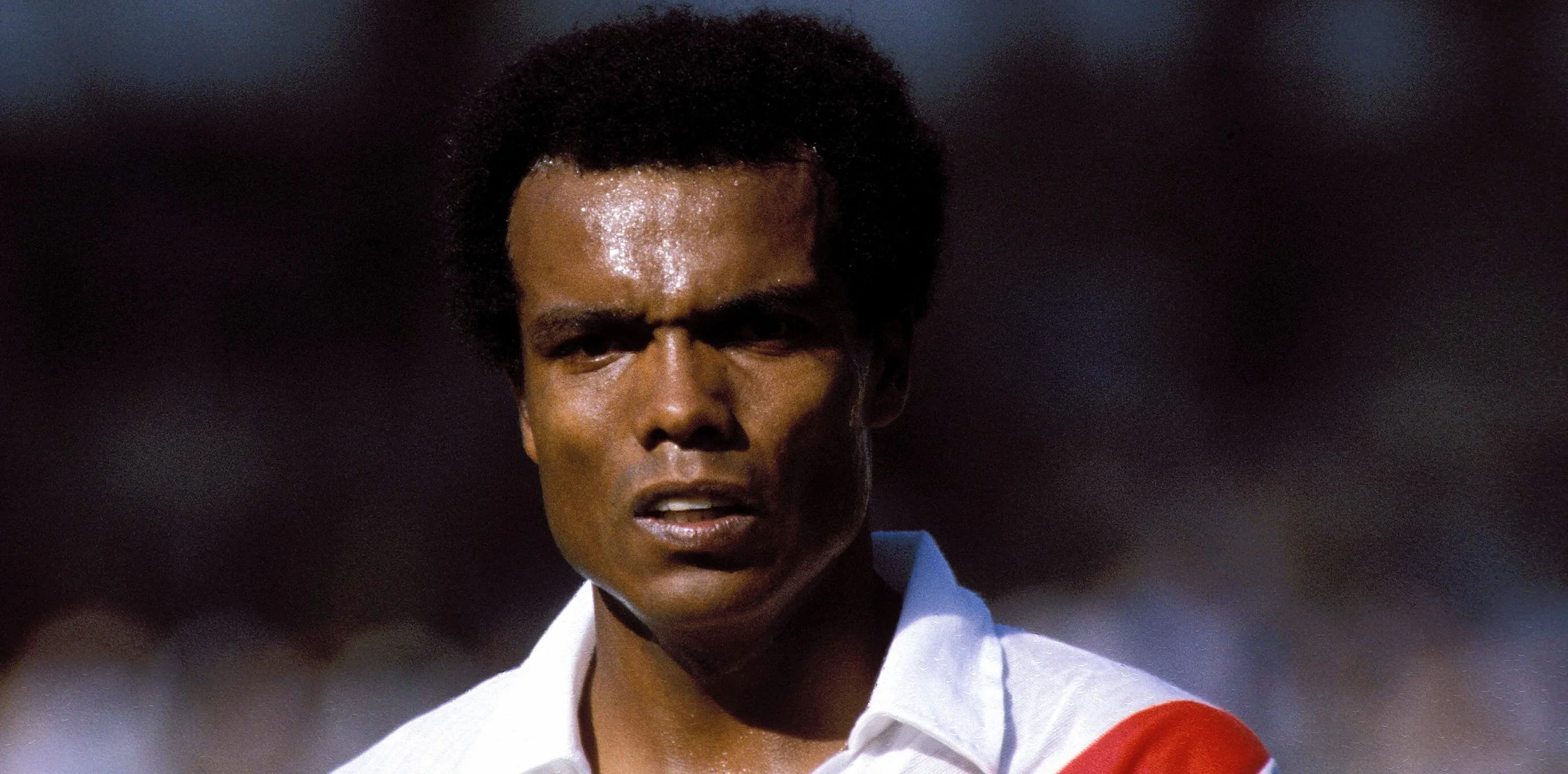
Teófilo Cubillas
 Peru
Peruassociation football player•association football coach
Also known as: El Nene, Nene Inca
Birthday
March 8, 1949
Birth Sign
Pisces
Birthplace
Lima, Peru
Age
77 years old
Height
5 ft 8 in (173 cm)
About
Teófilo Cubillas is a Peruvian former professional footballer and coach, widely considered the greatest player his country has ever produced. Born March 8, 1949, in Lima, he operated as an attacking midfielder with a devastating shot and a knack for free kicks. His nickname, "El Nene" (The Kid), stuck from his teenage years at Alianza Lima. In 1970, Pelé pointed to him as his natural successor during the World Cup in Mexico, a moment that defined his global reputation. As of 2026, Cubillas remains an active ambassador for the sport, attending the 2026 World Cup as a FIFA-invited legend and running his own online merchandise store.
His international career includes 81 caps and 26 goals for Peru, with 10 goals across three World Cups (1970, 1978, 1982). He led Peru to the 1975 Copa América title and the quarter-finals of the 1978 World Cup, where he won the Silver Boot. At club level, he scored 165 goals for Alianza Lima and 65 for the Fort Lauderdale Strikers. In 2004, Pelé named him to the FIFA 100 list of the greatest living footballers. An IFFHS poll ranked him the best Peruvian player ever and among the top 50 players of the 20th century.
Early Life & Background
Teófilo Juan Cubillas Arizaga grew up in Puente Piedra, a working-class district on the northern edge of Lima. The streets there were his first football school, where he developed the close control and powerful left foot that would later define his career. He joined Alianza Lima's youth setup as a teenager, and his talent was so obvious that he made his first-team debut in 1966 at just 17. The club's fans quickly dubbed him "El Nene" for his youthful appearance and boyish enthusiasm on the pitch.
In those early years, Cubillas balanced his football with school, but the game always came first. He spent hours practicing free kicks, a skill that would become his signature. By 1968, he had helped Alianza Lima win the Peruvian league title, and his reputation as a goal-scoring midfielder began to spread beyond Lima. His breakthrough on the international stage came during qualification for the 1970 World Cup, where his performances for Peru caught the attention of scouts and fans across South America. At 21, he was ready to announce himself to the world.
Career Growth
Cubillas's first World Cup in Mexico in 1970 was a revelation. He scored five goals, including a brace against Morocco and a memorable strike against Bulgaria, as Peru reached the quarter-finals. It was there that Pelé famously declared him his successor, a label that followed him for the rest of his career. In 1972, he was named South American Footballer of the Year, cementing his status among the continent's elite.
A brief and disappointing spell at Swiss club Basel in 1973–74 sent him back to Alianza Lima, but he rebounded in 1975 by leading Peru to the Copa América title, their last major international trophy. That same year he moved to FC Porto in Portugal, where he became a beloved figure, dazzling with his technique and vision. He scored 65 goals in 108 appearances for the club, and his legacy there endures to this day. At the 1978 World Cup in Argentina, he scored five goals again, including a famous free kick against Scotland, and won the Silver Boot as the tournament's second-highest scorer. He is one of only three players in history to score five or more goals in two separate World Cups.
After Porto, Cubillas joined the Fort Lauderdale Strikers in the NASL in 1979, where he became the club's all-time top scorer with 65 goals. He played his third World Cup in 1982, though Peru exited in the first round. He returned to Alianza Lima in 1984 and finished his career with South Melbourne in Australia in 1988. After retiring, he moved into coaching, managing the Peruvian national team and several clubs, including Alianza Lima. In 2026, he was inducted into the International Football Hall of Fame and attended the World Cup in North America as a FIFA-invited legend.
Career Timeline
Public Image & Style
Cubillas is remembered as a humble genius, a player whose elegance and precision set him apart. The Argentine press has called him "Nene Inca" and "sucesor de Pelé," reflecting the high esteem in which he is held across South America. He is a national treasure in Peru, where fans revere him as the embodiment of the golden era of Peruvian football. His public persona is warm and approachable; he engages with supporters on Instagram under the handle @nenecubillas10 and makes regular appearances at World Cups and football events. His free kick against Scotland in 1978 remains one of the most iconic goals in World Cup history, and fans still debate the sheer power and curl of that strike. For many, he represents a lost era of football, where creativity and flair were prized as much as results.
Fame & Fandom (iFAMOUS Rankings)
A single goal against Bulgaria in 1970 launched Teófilo Cubillas into a stratosphere where few Peruvian athletes ever tread. He is currently the 14th most famous person from Peru, a ranking that has held steady through cycles of shifting global attention. This stature places him firmly within the iFANN Global Fame Rankings, which track cultural gravity across media, search, and consumption signals worldwide. Fans revere him not as a distant icon but as "El Nene," a moniker that bridges the gap between a teenage prodigy and a national legend. While the Peruvian national team's supporters are collectively known as *La Bicolor*, there is no formal, organized fan club bearing his name; instead, the reverence flows through social media handles like @nenecubillas10 and general national pride. His legacy is defined by the 1970 World Cup, where he scored five goals in four matches to propel Peru into the second round for the first time in history. That tournament remains the central pillar of his mythology, often cited alongside Pelé to cement his status as the continent's golden boy. The narrative of his brilliance persists without needing specific fan rituals or inside jokes; the sheer magnitude of his achievements serves as the cultural mythos. Even decades later, the story of a young talent from Puente Piedra dazzling the world remains the singular incident that defines Peruvian football.
Interesting Facts and Legends
Cubillas stands alone as one of only three players in World Cup history to score five or more goals in two separate tournaments, joining Just Fontaine and Eusébio on this exclusive list. He accumulated 10 goals across 13 matches in three different World Cups, tying him for 10th place on the all-time scorers list. His 1978 free kick against Scotland is widely regarded as one of the most iconic moments in tournament history. In 2026, he was inducted into the International Football Hall of Fame alongside fellow Peruvian Gerónimo Barbadillo. He also served as the top scorer for the Fort Lauderdale Strikers during his time in the now-defunct NASL. A story fans still retell involves his performance at the 1970 World Cup in Mexico, where at just 20 years old, he scored five goals in four matches to lead Peru into the second round for the first time ever. This campaign earned him the nickname "Peruvian Pele" and solidified his reputation as a global star before he even turned 21. In 1972, he was named South American Footballer of the Year, validating his status as the continent's top talent. He runs an online merchandise store promoted on his Instagram account.
Notable Quotes
“It is an immense pride to continue being recognized as a legend.”
“Football gave me everything, and I gave everything to football.”
Family & Personal Life
Cubillas was born in Puente Piedra, a district of Lima, though details about his parents and siblings are not widely documented. He has been married for many decades, though his wife's name is not publicly reported. The couple has at least one son, Teófilo Cubillas Jr., who also became a professional footballer and played for Alianza Lima. Cubillas has spoken about the importance of family, but he keeps his personal life private. He currently lives in Peru, where he remains a beloved national figure.
Notable Connections
Teófilo Cubillas is closely associated with Pelé, who famously called him his successor during the 1970 World Cup. He was also a contemporary and compatriot of Gerónimo Barbadillo, with whom he was inducted into the International Football Hall of Fame in 2026. At FC Porto, he is remembered alongside the club's greats, and Porto defender Pepe has publicly honored him. His legacy is intertwined with the golden era of Peruvian football, and he remains a national hero in Peru.
Relationships & Dating History
Cubillas has kept his personal life largely out of the public eye. He has been married to his wife for many decades, though her name is not widely reported in English-language sources. The couple has at least one son, Teófilo Cubillas Jr., who followed his father into professional football and played for Alianza Lima. There is no public record of any other marriages, divorces, or high-profile romantic relationships. As of 2026, Cubillas is believed to be married, and he has spoken publicly about the importance of family in his life, though he rarely shares details. His long and stable marriage stands in contrast to the often turbulent personal lives of modern football stars, and it has contributed to his reputation as a grounded and private individual.
- MarriedCurrentCubillas has been married for decades, but his wife's name is not publicly reported.
Salary, Net Worth In 2026
$5 Million
iFANN Editorial Team estimate
Per iFANN's editorial analysis, Teófilo Cubillas's net worth is estimated at $5 Million as of 2026. This figure reflects a career built on modest salaries that were substantial for their time, particularly during his tenure with Porto and the Fort Lauderdale Strikers in the NASL. After retiring, he expanded his income streams through coaching roles with the Peruvian national team and Alianza Lima. In recent years, he has launched an online merchandise store, promoted through his Instagram account, which provides a steady stream of revenue. His financial standing has grown slowly but steadily, supported by appearance fees at football events and his ongoing status as a legend of the game. No exact figures from credible financial sources are publicly available, so this estimate reflects the general range for a player of his era and stature.
Awards Won (3)
Cubillas won the South American Footballer of the Year in 1972 and the FIFA World Cup Silver Boot in 1978. He was named to the FIFA 100 list in 2004 and selected by an IFFHS poll as the best Peruvian player ever. In 2026, he was inducted into the International Football Hall of Fame.
2026 · Inductee
Lifetime achievement
1978 · Second-highest scorer
1978 FIFA World Cup
Known For
1970 FIFA World Cup
1970 · Peru national team
1975 Copa América
1975 · Peru national team
1978 FIFA World Cup
1978 · Peru national team
Alianza Lima
1966 · Attacking midfielder
FC Porto
1975 · Attacking midfielder
Keywords
Sources
Quick Facts
- Profession
- association football player, association football coach
- Born
- March 8, 1949
- Birthplace
- Lima, Peru
- Gender
- Male
- Birth Sign
- Pisces
- Height
- 5 ft 8 in (173 cm)
- Position
- Attacking midfielder
- National Team Caps
- 81
- National Team Goals
- 26
- World Cup Goals
- 10
Personal Details
- Full Name
- Teófilo Juan Cubillas Arizaga
- Height
- 5 ft 8 in (173 cm)
- Children
- Teófilo Cubillas Jr. (son)
Frequently Asked Questions
Is Teófilo Cubillas still alive?
How many goals did Teófilo Cubillas score for Peru?
Who is the best Peruvian footballer of all time?
What did Pelé say about Teófilo Cubillas?
Which clubs did Teófilo Cubillas play for?
Social Media
Similar People
Join the community
fans discussing