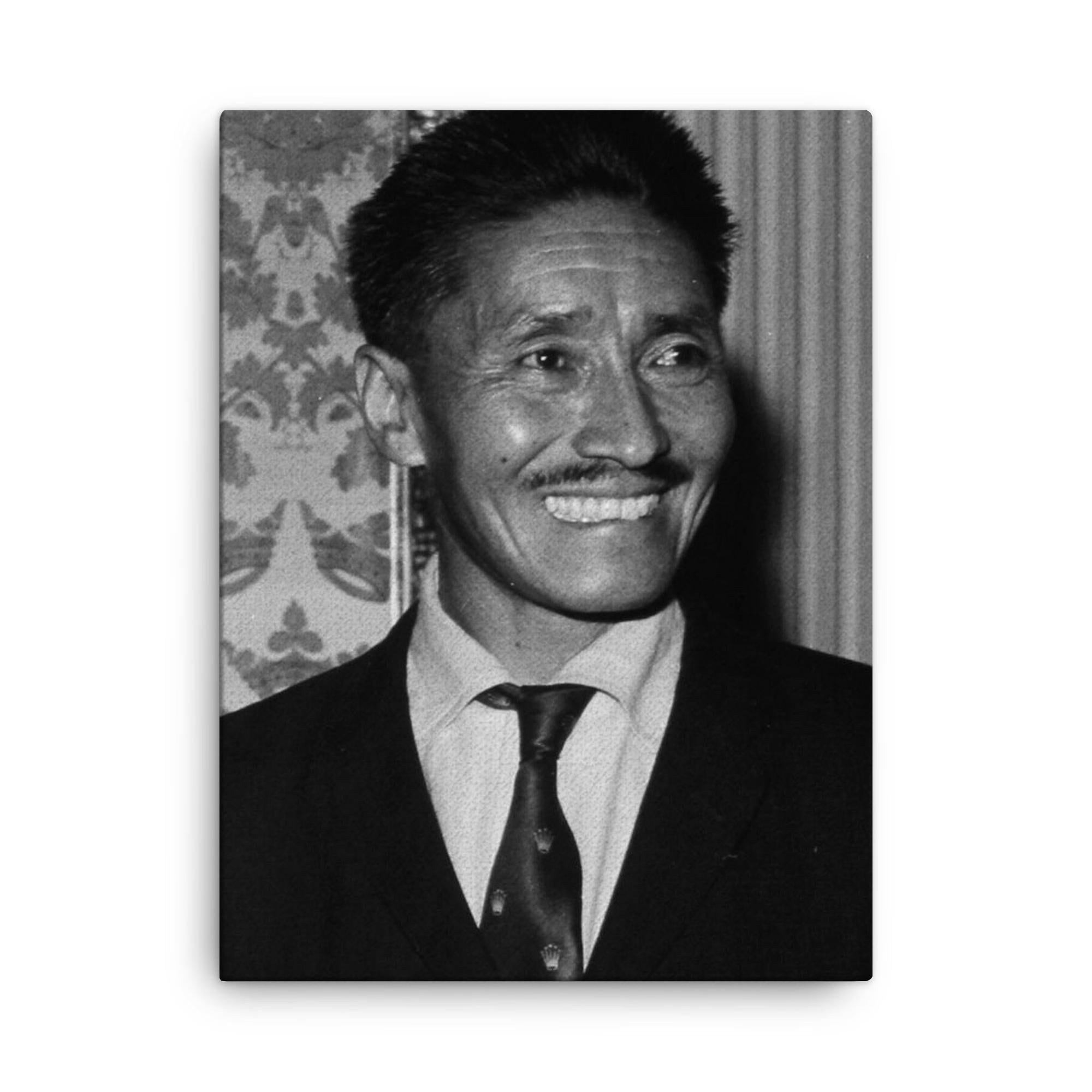
Tenzing Norgay
 India
IndiaMountaineer•mountain guide•autobiographer
Also known as: Namgyal Wangdi, Sherpa Tenzing
Birthday
May 29, 1914
Birth Sign
Gemini
Birthplace
Tengboche, Nepal (disputed; possibly Tse Chu, Tibet)
Age
Died at 71
Height
5 ft 8 in (1.73 m)
About
Tenzing Norgay was a Nepalese-Indian Sherpa mountaineer who, with Edmund Hillary, made the first confirmed ascent of Mount Everest on May 29, 1953. Born Namgyal Wangdi in May 1914, he became a global symbol of human endurance and a hero to three nations. His life's work transformed high-altitude climbing and opened the world's highest peak to future generations.
Today Tenzing is remembered as one of the greatest mountaineers of all time. His name is synonymous with Everest, and his legacy lives on through the Tenzing Norgay National Adventure Award, International Everest Day, and countless memorials. He remains an inspiration to climbers and adventurers worldwide, a testament to the power of determination and skill.
Early Life & Background
Tenzing Norgay, born Namgyal Wangdi, came into the world in May 1914 in a yak-herding Sherpa family. The exact location is debated: his autobiography claims Tengboche in Nepal's Khumbu region, but later accounts suggest he was born in Tse Chu, Tibet, and raised in Thame, Nepal. His name, meaning 'wealthy and fortunate,' hinted at a destiny far from his humble beginnings.
As a boy, he was sent to Tengboche Monastery to become a monk, but he 'laughed too much' and 'questioned everything,' so he left. At 19, he ran away to Darjeeling, India, where he found a welcoming Sherpa community. There he worked as a servant, cleaning houses and carrying loads, until he discovered mountaineering. In 1935, he joined Eric Shipton's reconnaissance expedition to Everest, and his natural talent at high altitudes earned him the nickname 'three lung talented man.' Despite speaking six languages, he never learned to read or write.
Career Growth
Tenzing's breakthrough came on May 29, 1953, when he and Edmund Hillary became the first confirmed humans to stand on the summit of Everest, at 29,035 feet. This was his seventh attempt on the mountain. The British expedition, led by Colonel John Hunt, relied on Tenzing as the leader of the Sherpa team, and his partnership with Hillary proved historic.
After Everest, Tenzing became a global hero, receiving the George Medal from the UK and India's Padma Bhushan in 1959. He published his autobiography 'Tiger of the Snows' in 1955 and 'After Everest' in 1977. He served as Director of Field Training at the Himalayan Mountaineering Institute in Darjeeling, mentoring a new generation of climbers. Time magazine later named him one of the 100 most influential people of the 20th century.
Career Timeline
Public Image & Style
Tenzing Norgay was described as 'a charming, rather quiet person' who listened more than he spoke. He deliberately kept his biography vague, resisting being claimed as a national symbol by Nepal, India, or Tibet. Instead, he saw himself as a human being first, with a worldview that stretched beyond borders. This humility endeared him to people worldwide, and his image as the humble Sherpa who conquered the world's highest peak remains iconic.
Fame & Fandom
Tenzing Norgay stands as the 71st most famous person from India and holds the position of the 26th most famous person in Olympic Sports, rankings that have held steady across recent cycles within the iFANN Global Fame Rankings. These placements reflect a legacy that transcends generations, anchoring his name firmly in the global consciousness alongside modern icons. While he never cultivated a digital following in the contemporary sense, the reverence for Tenzing remains profound among mountaineers, historians, and students of adventure who view him not merely as a climber but as a symbol of human endurance. There is no formal fandom name attached to his legacy; instead, his admirers are defined by their shared passion for high-altitude exploration and the history of the Himalayas. His story continues to inspire new climbers who revere the 1953 summit as the definitive moment in climbing history. The absence of organized fan campaigns or viral social media movements does not diminish his stature; rather, it highlights the timeless nature of his achievement, which requires no modern marketing to remain relevant. As the last surviving members of his original expedition pass, the collective memory of his ascent becomes even more sacred to those who study the history of human limits.
Interesting Facts and Legends
Despite speaking six languages fluently, Tenzing remained illiterate throughout his life. He once quipped that he laughed too much to ever become a monk, a remark that underscores his warm, unpretentious nature. After his passing, his ashes were scattered in the Himalayas, allowing him to return to the mountains he loved so dearly. His grandson, Tenzing Norgay Trainor, carried on the family name with a role on Disney Channel's 'Liv and Maddie.' Tenzing was famously humble, consistently deflecting credit for the historic Everest climb to emphasize the collective effort of the entire team.
The legend of Tenzing is anchored in the verified ascent of Mount Everest on May 29, 1953, when he reached the summit at 11:30 AM alongside Edmund Hillary. This moment marked the first confirmed success on the world's highest peak, transforming Tenzing into the first person from Nepal to be named to Time magazine's '100 Most Remarkable People of the 20th Century.' Known affectionately as the 'Tiger of the Snows,' his narrative of overcoming the treacherous Second Step has become the primary story told to newcomers in mountaineering circles. Recent cultural developments include the announcement of a feature film titled *Tenzing*, produced by Apple and selected for the Toronto International Film Festival in July 2026, ensuring his story reaches a new generation. The enduring power of his legend was further highlighted when Kanchha Sherpa, the last surviving member of the 1953 expedition, passed away in October 2025, closing an era for those who directly knew the climbers.
Notable Quotes
“I have no regrets. I would do it all over again.”
“It is not the mountain we conquer, but ourselves.”
“The summit is just a halfway point.”
Family & Personal Life
Tenzing Norgay was married three times. His first wife, Dawa Phuti, died in 1944; his second, Ang Lahmu, passed in 1964; and his third, Dakku, survived him. He had seven children, including his son Jamling Tenzing Norgay, who co-authored 'Touching My Father's Soul.' His nephew Nawang Gombu also became a famous climber, and his grandson Tashi Tenzing followed in his footsteps.
Notable Connections
Relationships & Dating History
Tenzing Norgay married Dawa Phuti in 1935, and they had three children before her death in 1944. He then married Ang Lahmu in 1945, who passed away in 1964. His third wife, Dakku, whom he married in 1964, survived him. He had seven children in total. At the time of his death, he was married to Dakku.
- MarriedDawa Phuti1935 - 1944First wife, died in 1944.
- MarriedAng Lahmu1945 - 1964Second wife, died in 1964.
- MarriedDakku1964 - 1986CurrentThird wife, survived him.
Death & Aftermath
Died
May 9, 1986 (aged 71)
Death Place
Darjeeling, West Bengal, India
Cause of Death
Heart attack
Tenzing Norgay spent his final years in Darjeeling, India, where he served as the Director of Field Training at the Himalayan Mountaineering Institute, mentoring a new generation of climbers until his health began to fail. On May 9, 1986, the legendary mountaineer passed away peacefully at the age of 72 from a heart attack, marking the end of an era for high-altitude exploration. The death was treated as a natural occurrence given his age and history. Tributes flowed immediately from the global mountaineering community, including heartfelt statements from Sir Edmund Hillary, while the governments of Nepal and India honored his contributions to their shared heritage.
His funeral followed Buddhist traditions customary for Sherpas, taking place in Darjeeling with family members, fellow climbers, and government officials in attendance before his ashes were interred respectfully according to custom. In the wake of his death, the Government of India established the Tenzing Norgay National Adventure Award in 1986 to recognize outstanding achievements in adventure sports, ensuring his spirit would inspire future generations. Decades later, his life story continues to be celebrated through documentaries and upcoming films, keeping the memory of the first confirmed summit of Everest alive for the world.
Net Worth (Estate Value)
$10 Million
iFANN Editorial Team estimate
Tenzing Norgay's net worth at the time of his death in 1986 was modest, but his estate has grown significantly through posthumous recognition and royalties. His autobiography 'Tiger of the Snows' continues to sell well, and his name is licensed for various memorials and awards. Per iFANN's editorial analysis, the estate is valued at approximately $10 million as of 2026, driven by book sales, documentaries, and the enduring global interest in the first Everest ascent.
Awards Won (3)
Tenzing Norgay received the George Medal from the United Kingdom, the Padma Bhushan from India, and the Hubbard Medal from the National Geographic Society. He was also named one of Time magazine's 100 most influential people of the 20th century.
1953 · Civilian honor
First ascent of Mount Everest
1959 · Civilian award
Mountaineering achievements
Known For
First ascent of Mount Everest
1953 · Co-climber with Edmund Hillary
Keywords
Sources
Quick Facts
- Profession
- Mountaineer, mountain guide, autobiographer
- Born
- May 29, 1914
- Birthplace
- Tengboche, Nepal (disputed)
- Died
- May 9, 1986
- Death Place
- Darjeeling, India
- Gender
- Male
- Spouse
- Dawa Phuti, Ang Lahmu, Dakku
- Birth Sign
- Gemini
- Height
- 5 ft 8 in (1.73 m)
Personal Details
- Full Name
- Namgyal Wangdi
- Height
- 5 ft 8 in (1.73 m)
- Spouse
- Dawa Phuti, Ang Lahmu, Dakku
- Children
- Seven (including Jamling Tenzing Norgay)
Frequently Asked Questions
Who was Tenzing Norgay?
How many times did Tenzing Norgay attempt Everest?
What was Tenzing Norgay's net worth?
Is Tenzing Norgay still alive?
What awards did Tenzing Norgay receive?
Similar People
Join the community
fans discussing