 France
“Kiarostami has made a film that is both a tragedy and a comedy, asking the ultimate question and leaving us with the answer we must find ourselves.”
Roger Ebert
Chicago Sun-Times
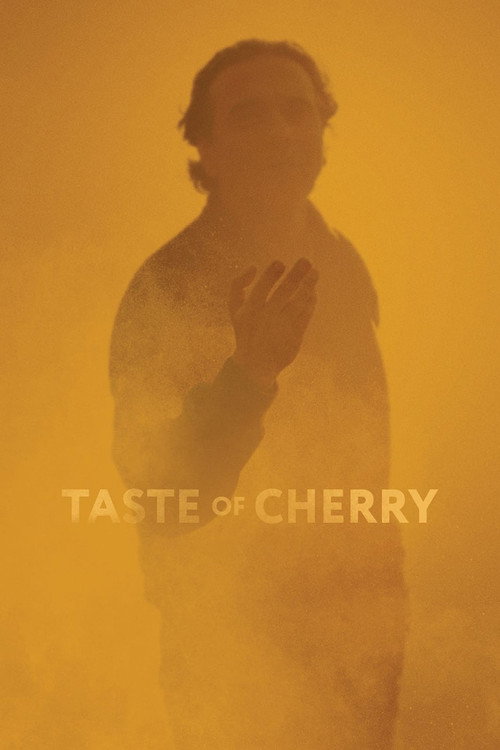
Mr. Badii drives a beige sedan through the dusty streets of Tehran with a grim objective: finding a volunteer to bury him after he commits suicide. Abbas Kiarostami directs this stark drama, which stars Homayoun Ershadi as the protagonist seeking companionship in death. The film operates on a micro-budget of just $120,000, yet it captures the vast emotional landscape of modern Iran without relying on expensive effects or elaborate sets. Released in 1997, this production features a sparse cast including Abdolrahman Bagheri and Safar Ali Moradi, who bring quiet intensity to their brief encounters with Badii.
The movie balances heavy themes of depression and nihilism with moments of unexpected humor and philosophical debate. Critics have noted its unique approach to storytelling, earning it a solid rating of 7.7 out of 10 from audiences who appreciate its unflinching look at human existence. While the box office returns were modest, the film's impact resonated far beyond its financial performance. It stands as a prime example of Kiarostami's ability to turn a simple premise into a profound meditation on life and death.
Stream
Availability and pricing can change. Confirm on the provider's site before purchasing.
The narrative unfolds over a single day in the sweltering summer of 1997. Mr. Badii navigates the chaotic traffic of Tehran, stopping to speak with various individuals he picks up along his route. His first encounter is with Mr. Bagheri, an Afghan taxi driver. Badii explains his plan with calm detachment, describing the grave he has already dug beneath a cherry tree on a hill overlooking the city. Bagheri reacts with horror and moral outrage, refusing the offer and lecturing Badii on the sanctity of life and religious prohibitions against suicide. This exchange highlights the cultural and generational divide between the despairing protagonist and the hopeful, religious youth.
Badii continues his search, picking up a soldier named Safar Ali Moradi returning from a military base. The soldier initially dismisses the request but becomes increasingly agitated as Badii persists. Their conversation shifts to the nature of duty, the futility of war, and the absurdity of human existence. Unlike the Afghan driver, the soldier seems more intrigued by the intellectual challenge of the proposition, though he ultimately rejects it, citing his own sense of purpose and the value of life despite its hardships. Later, Badii meets Mir Hossein Noori, a young seminarian studying Islamic theology. This encounter serves as the film's most intense theological debate. The seminarian argues passionately for the divine order and the hope found in faith, attempting to dissuade Badii from his path with scripture. Badii counters with a nihilistic worldview, suggesting that if God exists, he must be indifferent to human suffering, rendering the concept of salvation moot.
As the day wears on, Badii encounters Elham Imani, a French photographer working in Iran. She listens intently to his story without immediate judgment, introducing a perspective of artistic observation. She considers the offer but ultimately declines, leaving Badii alone with his thoughts again. He then returns to the construction site where he had hired Afshin Khorshid Bakhtiari to dig the grave. The worker is skeptical and fearful, questioning Badii's sanity. Despite the hesitation, there is a moment of connection, a fleeting recognition of shared humanity in the face of mortality. The film builds tension not through action, but through the accumulation of these failed connections. Each rejection chips away at Badii's resolve, yet also deepens the mystery of his true intentions.
Night falls, casting long shadows over the dusty landscape. Badii returns to the grave, waiting for the promised burial. The camera lingers on the vast, empty landscape as the stars begin to emerge above the cherry tree. The silence is heavy, filled with unspoken questions left unanswered by the passengers. The narrative refuses to provide a clear resolution, instead leaving the viewer in a state of suspension. The credits roll over a black screen, inviting the audience to reflect on the journey they have witnessed and the choices they might make if faced with similar despair.
Taste of Cherry | Modern Trailer
Trailer for "Taste of Cherry"
Critical Consensus
A profound meditation on life and death delivered with minimalist style. The film eschews melodrama for a quiet, contemplative approach that challenges viewers to confront existential fears. Through philosophical dialogues, it explores the human condition with honesty and grace, culminating in an ambiguous yet deeply moving conclusion that celebrates resilience.
“Kiarostami has made a film that is both a tragedy and a comedy, asking the ultimate question and leaving us with the answer we must find ourselves.”
Roger Ebert
Chicago Sun-Times
“A masterpiece of restraint, 'Taste of Cherry' speaks volumes through its silence and sparse dialogue, offering a profound reflection on the human experience.”
A.O. Scott
The New York Times
“Kiarostami's film is a stunning achievement, a work of art that transcends cultural boundaries and speaks to the universal human condition with clarity and depth.”
Peter Bradshaw
The Guardian
Homayoun Ershadi
Mr. Badii
Abdolrahman Bagheri
Mr. Bagheri
Safar Ali Moradi
Soldier
Mir Hossein Noori
Seminarian
Elham Imani
Photographer
Afshin Khorshid Bakhtiari
Worker
Director
Abbas Kiarostami
Writer
Abbas Kiarostami
Cinematographer
Homayun Payvar
Producers
Abbas Kiarostami, Alain Depardieu
Palme d'Or (1997)
Best Film: Won
Independent Spirit Awards (1998)
Best Foreign Film: Nominated
Los Angeles Film Critics Association Awards (1998)
Best Foreign Language Film: Won
National Society of Film Critics Awards (1998)
Best Foreign Language Film: Won
Berlin International Film Festival (1998)
Honorary Golden Bear: Won
Join the community
fans discussing