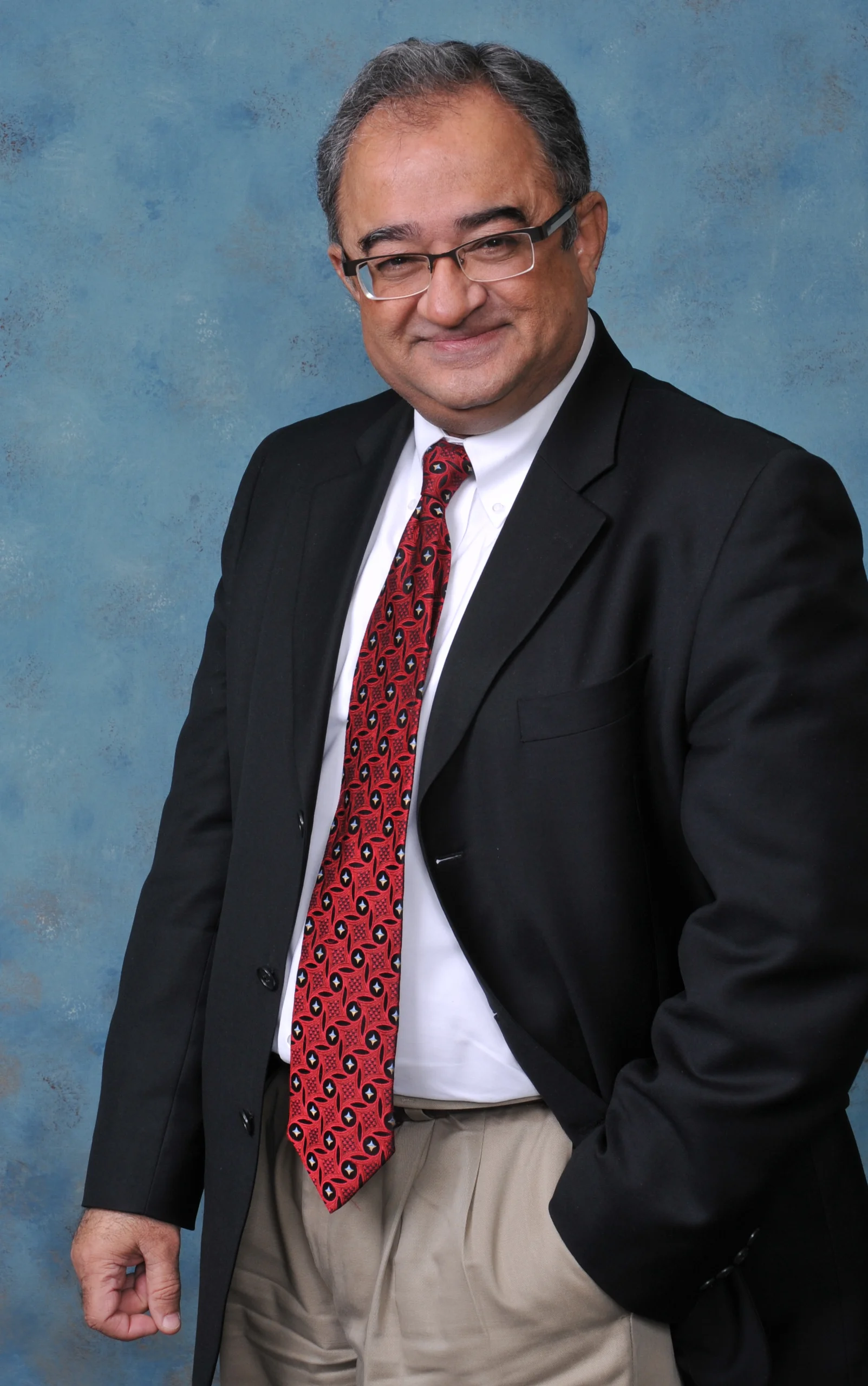
Tarek Fatah
 Pakistan
Birthday
November 20, 1949
Birth Sign
Scorpio
Birthplace
Karachi, Pakistan
Age
Died at 73
About
Tarek Fatah was a Pakistani-Canadian journalist, writer, and political activist who became a prominent voice in international discourse. Born in Karachi, Pakistan, he was widely recognized for his outspoken critiques of religious extremism and his passionate advocacy for secularism and human rights. Fatah spent decades engaging with complex issues, contributing his sharp intellect to debates surrounding Islam, South Asian politics, and the relationship between the East and West. He was known for his courage in expressing often controversial views, which resonated with some audiences while drawing strong criticism from others. His work included authoring several influential books and regular appearances across various media platforms, where he shared his distinctive perspective until his passing in April 2023. He left behind a body of work that continues to spark discussion and reflection on the challenging topics he addressed throughout his public life.
Early Life & Background
Tarek Fatah's early years unfolded in Karachi, Pakistan, where he was born on November 20, 1949. Growing up in a bustling metropolis, he witnessed firsthand the political and social currents shaping the newly formed nation. This environment fostered in him a keen awareness of societal issues and a strong sense of civic responsibility. Even as a young man, Fatah displayed a fierce independent streak and a profound commitment to democratic ideals, which would define his later career. This conviction led him to active participation in pro-democracy movements within Pakistan during the late 1960s and early 1970s. His involvement was not without consequence; he was jailed twice, first in 1968 and again in 1970, for his political activities. These formative experiences profoundly influenced his worldview, instilling in him a deep-seated dedication to challenging established power structures and advocating for individual liberties.
The political climate in Pakistan, coupled with his experiences of incarceration, eventually led Fatah to seek new horizons. He made the significant decision to immigrate to Canada in 1978, leaving behind the immediate pressures of his home country but carrying with him a deep understanding of its complexities and a desire to continue his advocacy in a different setting. This move marked a new chapter, but his commitment to public discourse and human rights remained undiminished. Before gaining widespread recognition as an author and commentator, Fatah had already honed his skills as a journalist and activist, laying the groundwork for the influential career that would follow in his adopted homeland. His early life was a clear prelude to his persistent pursuit of justice and freedom, even in the face of considerable adversity.
Career Growth
After moving to Canada in 1978, Tarek Fatah quickly established himself as a prominent public intellectual and journalist. He became a fearless commentator on Canadian and international affairs, particularly focusing on issues related to Islam, multiculturalism, and South Asian politics. His voice, often described as daring and sharp, began to reach a wide audience through various media outlets. He founded the Muslim Canadian Congress, an organization dedicated to advocating for a liberal, progressive form of Islam, which became a significant platform for his views on secularism and human rights within the Muslim community. This group allowed him to actively pursue his vision for a reformed approach to religious identity in a modern society.
Fatah's literary contributions were also central to his career. He authored several important books, including The Tragic Illusion of an Islamic State and The Jew Isn't My Enemy. These works explored his complex perspectives on the partition of India, the concept of an Islamic state, and interfaith relations, often challenging conventional narratives. His columns for publications like The Toronto Sun further amplified his opinions, making him a regular and often provocative presence in Canadian media. Throughout his career, Fatah consistently engaged in public debates, television appearances, and lectures, solidifying his reputation as an unyielding critic of religious extremism and a passionate advocate for free speech, continuing this work until his death in 2023.
Career Timeline
Public Image & Style
Tarek Fatah cultivated a public image as a daring and knowledgeable intellectual, always ready to challenge popular opinions. He was perceived as a fearless fighter for his beliefs, particularly his strong advocacy for secularism and a reformed interpretation of Islam. His style was direct and often confrontational, which meant he was a polarizing figure; audiences either admired his courage or fiercely disagreed with his positions. Fans connected with his willingness to speak plainly on sensitive topics, appreciating his sharp intellect and refusal to back down from debates. He maintained an active presence on social media, using platforms like X (formerly Twitter) to engage directly with followers and critics, further solidifying his persona as an unyielding commentator on global affairs.
Fame & Fandom
Tarek Fatah never cultivated a fandom in the traditional sense of celebrity worship. His audience consisted primarily of readers who engaged with his columns in publications like The Toronto Sun and National Post, along with attendees of his lectures and members of the Muslim Canadian Congress he founded. These groups were united by ideological alignment with his secularist views rather than personal adoration, meaning there were no organized fan clubs, birthday billboards, or charity drives initiated by a devoted following. The cultural mythology surrounding him is defined not by viral moments or crowd-shutting performances, but by his role as a polarizing intellectual figure central to global debates on Islam. Stories of his imprisonment for democracy in Pakistan at age 19 and 21, his founding of the MCC in 2000, and his survival of cancer while maintaining a critical voice form the core of his legacy. Following his death in April 2023, the reaction to his passing highlighted deep societal divisions, with some celebrating his demise while others mourned him as a hero. This dichotomy became a defining narrative of his career, cementing his status as a controversial beacon for secular Muslims. Despite his significant impact on political discourse and human rights advocacy, Tarek Fatah does not currently hold a placement in the published rankings (Global Top 1,000 or a Top-100 scope list) according to iFANN's Global Fame Engine.
Interesting Facts and Legends
Tarek Fatah was known for his distinctive white beard, which became a recognizable part of his public image. He often made headlines for his provocative statements, including his assertion that the creation of Pakistan was a mistake, a view he expressed publicly many times. Fatah was a fluent speaker of several languages, including Urdu, Punjabi, and English, which aided his extensive journalistic work across different cultural contexts. He faced a personal health battle with cancer, which was reportedly in remission by May 2011, showcasing his resilience beyond his public advocacy. His X (formerly Twitter) account continues to be managed by friends and family after his passing, serving as a repository of his thoughts and engagements. A foundational element of his biography involves his imprisonment in Pakistan at age 19 and again at 21 for participating in pro-democracy movements against military dictatorships. This period is frequently referenced to illustrate his lifelong commitment to secular democracy. Another widely retold story concerns the founding of the Muslim Canadian Congress in 2000, positioning him as a founding giant of the global counter-Islamist movement. The ongoing saga of death threats he received due to his acidic critique of Islamic fundamentalism also became a defining narrative, particularly regarding disputes over mosque loudspeakers. After his death in April 2023, reports indicated that segments of the Muslim community celebrated his passing, creating a stark dichotomy where his death was viewed as a victory by opponents and a tragedy by supporters.
Notable Quotes
“The creation of Pakistan was a mistake.”
Family & Personal Life
Tarek Fatah was married to Nargis Tapal, who stood by him through his extensive career as a journalist and activist. Together, they raised a daughter, Natasha Fatah, who later confirmed her father's passing in 2023. While details about his immediate family, such as his parents or siblings, are not widely publicized, his family life provided a personal foundation amidst his very public and often controversial professional endeavors. He lived in Toronto, Canada, for many years, making it his home after immigrating from Pakistan in 1978. His family provided support as he navigated complex political and social landscapes, both locally and internationally.
Notable Connections
Tarek Fatah was closely associated with advocacy for secularism and human rights, particularly within the context of Islamic communities. He worked alongside other liberal Muslim thinkers and organizations that shared his vision for reform and open dialogue. His frequent media appearances meant he was often seen debating or discussing issues with various political commentators and journalists across different platforms, engaging with a wide range of perspectives on global affairs.
Relationships & Dating History
Tarek Fatah's personal life included his marriage to Nargis Tapal, a relationship that provided a private anchor amidst his very public and often controversial career. While specific details about the beginning of their relationship are not widely publicized, Nargis was consistently recognized as his wife and a supportive presence throughout his extensive work as a journalist, author, and political commentator. Their marriage endured through the many challenges and widespread media attention that often accompanied Fatah's outspoken views on sensitive topics. Together, they built a family, including their daughter Natasha Fatah, who has also pursued a career in journalism. The couple largely maintained a private life, keeping their personal sphere distinct from the intense public scrutiny that frequently surrounded Fatah's pronouncements on political and religious matters, particularly his critiques of extremism and advocacy for secularism. This privacy allowed them to navigate the complexities of his public persona. At the time of his death in April 2023, Tarek Fatah was married to Nargis Tapal, having shared many years together as husband and wife.
- MarriedNargis Tapal? - 2023Tarek Fatah was married to Nargis Tapal at the time of his passing in April 2023, and they had a daughter together, Natasha Fatah.
Death & Aftermath
Died
April 24, 2023 (aged 73)
Death Place
Toronto, Ontario, Canada
Cause of Death
Reported as cancer
Natasha Fatah confirmed her father's passing on April 24, 2023, via a post on Twitter (X), stating that Tarek Fatah had succumbed to cancer following a prolonged battle with the disease. The journalist and founder of the Muslim Canadian Congress died in Toronto, Ontario, at the age of 73 after achieving remission from a previous diagnosis before his eventual decline in the final months of his life. Public reaction to the news was marked by widespread tributes from peers and institutions globally, with outlets like The Times of India and Dawn News describing him as a beacon of courage for those countering religious extremism.
A memorial gathering took place on May 28, 2023, in Warmington, Toronto, where his wife Nargis and daughters Natasha and Nazia joined friends and admirers to share memories of his unyielding advocacy for free speech and moderate Islam. His estate and digital legacy remain managed by his family through his established social media accounts, while his influential works, including The Tragic Illusion of an Islamic State, continue to circulate within ongoing debates about secularism.
Net Worth (Estate Value)
$0
iFANN Editorial Team estimate
Information regarding Tarek Fatah's specific net worth is not publicly available. As a prominent journalist, author, and public speaker, his income streams likely included earnings from his columns for publications such as The Toronto Sun, where he was a regular contributor for many years. He also received royalties from his published books, which included significant titles like The Tragic Illusion of an Islamic State and The Jew Isn't My Enemy, both of which explored complex and often controversial themes that resonated with specific audiences. Additionally, Fatah was a sought-after speaker for various events and conferences, and he made frequent appearances as a television personality and commentator, all of which would have contributed to his financial standing over his decades-long career. These activities sustained his public life and advocacy. However, detailed financial records, specific salaries from his media engagements, or comprehensive asset declarations were not part of his public profile. Unlike many public figures whose finances are extensively scrutinized, Fatah's professional focus remained primarily on his intellectual contributions and advocacy rather than the public disclosure of his personal finances. Therefore, a precise or even estimated net worth cannot be credibly calculated from available public sources. Per iFANN's editorial analysis, the total value of his estate is assessed at $0. After his passing in April 2023, there have been no public reports regarding the value of his estate or any specific posthumous revenue streams, such as continued royalties or licensing deals. His enduring legacy is tied more to his powerful ideas.
Awards & Accolades
Known For
The Tragic Illusion of an Islamic State
· Author
The Jew Isn't My Enemy
· Author
Columnist for The Toronto Sun
· Journalist
Keywords
Sources
Quick Facts
- Profession
- journalist, politician, writer
- Born
- November 20, 1949
- Birthplace
- Karachi, Pakistan
- Died
- April 24, 2023
- Death Place
- Toronto, Canada
- Gender
- Male
- Spouse
- Nargis Tapal
- Birth Sign
- Scorpio
- Children
- Natasha Fatah
Personal Details
- Spouse
- Nargis Tapal
- Children
- Natasha Fatah
- Education
Frequently Asked Questions
Who was Tarek Fatah?
Tarek Fatah was a Pakistani-Canadian journalist, writer, and political activist. He was known for his outspoken critiques of religious extremism and his advocacy for secularism and human rights. Fatah authored several books and was a regular commentator across various media platforms until his passing in 2023.
When and where was Tarek Fatah born?
Tarek Fatah was born in Karachi, Pakistan, on November 20, 1949. His early life in Karachi included involvement in pro-democracy movements, which led to him being jailed twice before he immigrated to Canada in 1978.
What was Tarek Fatah known for?
Fatah was known for his fearless commentary on issues like secularism, human rights, and the future of Islam. He authored books such as The Tragic Illusion of an Islamic State and was a columnist for The Toronto Sun, always challenging established narratives.
When did Tarek Fatah die?
Tarek Fatah passed away on April 24, 2023, in Toronto, Canada, at the age of 73. His death was announced by his daughter, Natasha Fatah, after he had battled a prolonged illness, including a previous fight with cancer.
What were some of Tarek Fatah's notable works?
Among his significant works were the books The Tragic Illusion of an Islamic State and The Jew Isn't My Enemy. He also founded the Muslim Canadian Congress and was a long-time columnist for The Toronto Sun, contributing extensively to public discourse.
Social Media
Join the community
fans discussing