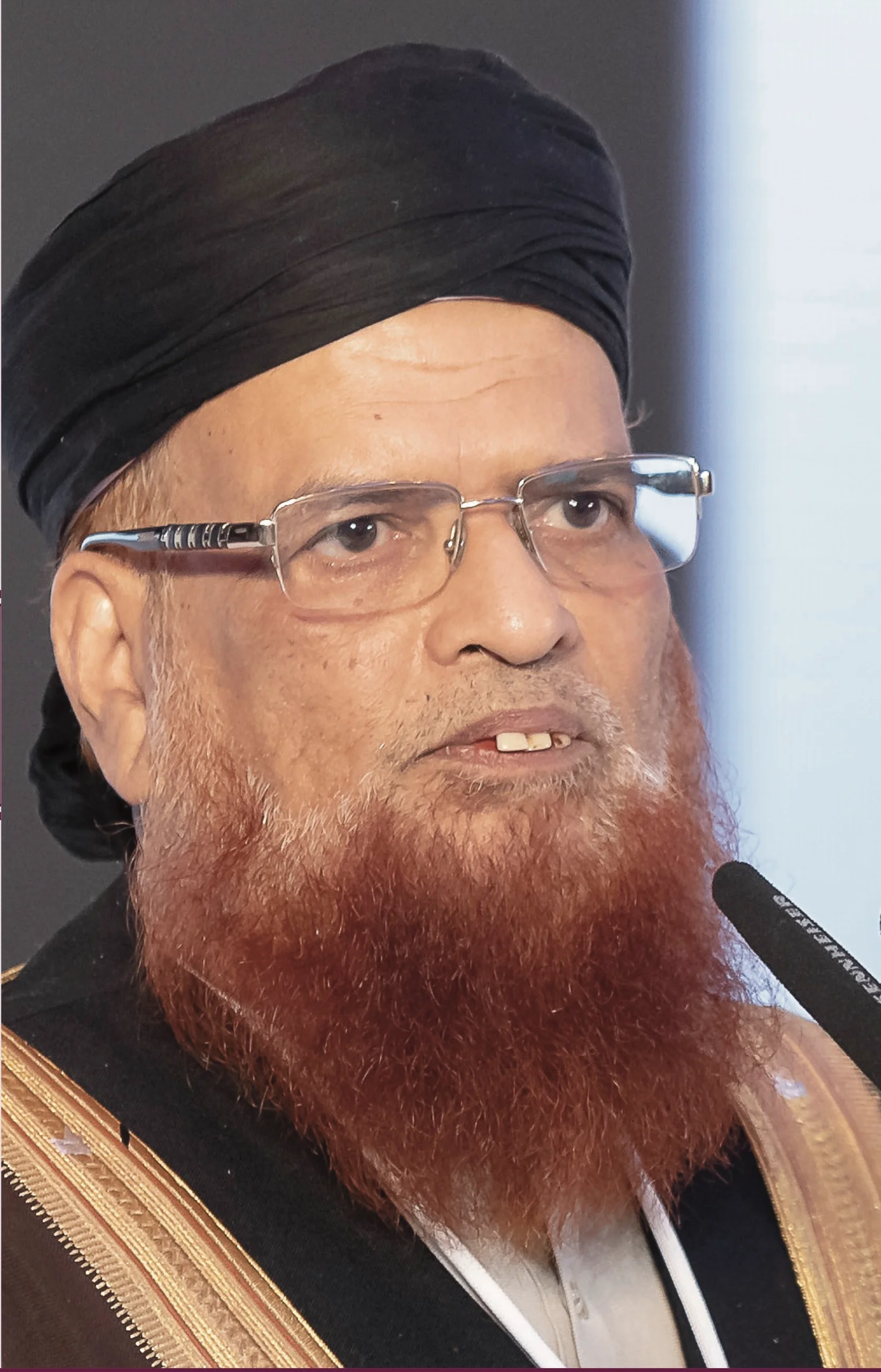
Taqi Usmani
 Pakistan
Also known as: Mufti Taqi Usmani, Muhammad Taqi Usmani
Birthday
October 3, 1943
Birth Sign
Libra
Birthplace
Deoband, India
Age
83 years old
About
Muhammad Taqi Usmani is a Pakistani Islamic jurist, scholar, and mufti, widely regarded as one of the most influential voices in contemporary Islamic law and economics. Born in Deoband, India, he moved to Pakistan in 1948 and has since become a leading intellectual of the Deobandi school. His authority spans Qur'anic exegesis, Hadith, jurisprudence, and Islamic finance, with his fatwas and writings shaping institutions and debates worldwide.
Usmani's career includes a long tenure on the Shariat Appellate Bench of Pakistan's Supreme Court, from 1982 to 2002, and his role as a pioneer of Islamic banking. He established Meezan Bank, the first Islamic bank in Pakistan, and has chaired the Shariah boards of major financial bodies, including the State Bank of Pakistan and AAOIFI. In 2020, he was named the most influential Muslim personality in the world by The Royal Islamic Strategic Studies Centre.
As of 2026, Usmani remains an active scholar and public figure, chairing Wifaq ul Madaris Al-Arabia, the largest federation of Islamic seminaries in Pakistan. He continues to issue fatwas and teach, drawing audiences online and offline. His 143 books, including the six-volume commentary on Sahih Muslim, Takmilah Fath al-Mulhim, and An Introduction to Islamic Finance, are standard references in their fields.
Early Life & Background
Muhammad Taqi Usmani was born on October 3, 1943, in Deoband, a town in British India's Uttar Pradesh. His father, Shafi Usmani, was the Grand Mufti of Darul Uloom Deoband, one of the most prestigious Islamic seminaries in the world, and a prominent scholar in his own right. The family moved to Pakistan in 1948, following the partition of India, settling in Karachi.
Usmani began his religious education at Darul Uloom Karachi, where he studied under his father and other leading scholars. He completed his Dars-i-Nizami curriculum, specializing in fiqh and usul al-fiqh, and later earned degrees from the University of Karachi and the University of the Punjab. His academic excellence was evident early: at just 17, he wrote his first book, Islam and Birth Control, a treatise that sparked discussion and showcased his command of Islamic sources.
In 1960, at 17, he began teaching at Darul Uloom Karachi, a position he held for decades. He also took on editorial roles, becoming editor of the Urdu magazine Al-Balagh in 1967 and the English Al-Balagh International in 1976. These early years established him as a rising scholar, but his major public roles were still ahead.
Career Growth
Usmani's public career took off in the late 1970s when he joined Pakistan's Council of Islamic Ideology (1977-1981), where he helped shape legislation on Islamic finance and banking. He then served as a judge on the Federal Shariat Court (1981-1982) and the Shariat Appellate Bench of the Supreme Court (1982-2002), where he ruled on key cases involving riba (interest) and Islamic law.
His most lasting impact came in Islamic banking. In the 1990s, he helped establish Meezan Bank, Pakistan's first fully Islamic bank, and chaired its Shariah board. He also served as chairman of the Shariah Board of the State Bank of Pakistan and the Accounting and Auditing Organization for Islamic Financial Institutions (AAOIFI), setting global standards for Islamic finance.
In 1998, he published An Introduction to Islamic Finance, a book that became a standard text in the field. His scholarly output is enormous: he authored 143 books, including the six-volume commentary on Sahih Muslim, Takmilah Fath al-Mulhim, and supervised the compilation of the Hadith encyclopedia Al-Mudawwanah al-Jāmiʿah and the English translation of Ma'ariful Qur'an.
In 2020, he was recognized as the world's most influential Muslim personality. In June 2026, he issued a fatwa declaring cryptocurrency transactions impermissible, a ruling that sent ripples through global markets and drew attention from regulators. He also urged Muslim unity against US-Israeli aggression in March 2026, and in December 2025, he criticized lifetime immunity for Pakistan's Army Chief.
Career Timeline
Public Image & Style
Usmani is known for his quiet, scholarly demeanor and his authoritative, meticulously argued fatwas. He is seen as a bridge between traditional Islamic scholarship and modern finance, respected by both Deobandi traditionalists and international financial institutions. His public image is that of a jurist who prioritizes evidence and precedent over populism.
He maintains a strong online presence, with an official website and an active Instagram account where he shares short teachings, and his lectures are widely circulated on YouTube. Fans and followers often refer to him as 'Mufti Taqi Usmani' and seek his counsel on everything from financial transactions to personal matters. His fatwa on cryptocurrency in 2026 was widely discussed on social media, with many praising his clarity and others debating his reasoning.
His persona is one of intellectual rigor and moral authority, and he is often consulted on issues of Islamic finance, halal income, and contemporary ethical dilemmas.
Fame & Fandom (iFAMOUS Rankings)
Muhammad Taqi Usmani commands a following defined by scholarly reverence rather than the organized fervor typical of pop culture celebrities. There is no formal fandom name documented for his supporters; instead, his audience consists of students, adherents of the Deobandi school, and Muslims globally who consult his rulings on jurisprudence and finance. Interaction with this audience occurs through digital channels distributing his lectures as educational resources, not entertainment, and through a deep respect for his authority as the intellectual head of his tradition. Unlike figures whose legacies are built on viral stunts or chart performance, Usmani's impact stems from religious decrees that shape economic and political consciousness across millions of lives. Regarding his standing in global metrics, iFANN has evaluated his profile but currently does not place him within the published Global Top 1,000 rankings or any Top-100 scope list. This absence of a numeric placement reflects the unique nature of his influence, which operates outside standard celebrity consumption signals. While he maintains a significant presence in Islamic banking and legal scholarship, the specific ranking systems used to measure broad public fame do not currently assign him a position. His reach is profound yet specialized, rooted in the weight of his fatwas and decades of teaching rather than the fluctuating metrics of mainstream popularity.
Interesting Facts and Legends
Usmani authored his first book, Islam and Birth Control, at age 17, a work that sparked immediate debate and demonstrated his early brilliance. He has served as the editor of Al-Balagh since 1967, maintaining this role for over five decades. In 2020, The Royal Islamic Strategic Studies Centre named him the most influential Muslim personality in an annual ranking. Fluent in Arabic, English, and Urdu, he addresses diverse global audiences with ease. A defining moment in his recent career occurred when he issued a definitive fatwa declaring cryptocurrency transactions impermissible under Shariah law. This decree, stating that crypto tokens do not qualify as wealth, triggered intense market reactions and led to direct discussions between the Mufti and Pakistan's Virtual Assets Regulatory Authority. For many in the community, the phrase "Trading Is Haram" became a shorthand reference to his stance, marking a pivotal intersection of modern finance and traditional law. Additionally, his call for Muslim unity against US-Israeli aggression reinforced his status as a unifying voice for political and religious solidarity among believers worldwide.
Notable Quotes
“Cryptocurrency is not wealth in the sight of Shariah.”
“The Quran is not a book to be read; it is a book to be lived.”
“Islamic finance is not just about avoiding interest; it is about justice.”
Family & Personal Life
Usmani's father, Shafi Usmani, was the Grand Mufti of Darul Uloom Deoband, a towering figure in Islamic scholarship. His brother, Rafi Usmani, is also a prominent Islamic scholar and former president of Darul Uloom Karachi. The family moved to Pakistan in 1948, settling in Karachi, where Usmani grew up in a deeply scholarly household. He is married, but details about his wife and children are not publicly documented. The Usmani family's legacy in Islamic scholarship continues through its members.
Notable Connections
Mufti Taqi Usmani is associated with the Deobandi school of Islamic thought, and his father Shafi Usmani was a Grand Mufti. He is a contemporary of scholars like Muhammad Rafi Usmani and has influenced a generation of Islamic finance experts. His work has been cited by institutions like AAOIFI and the State Bank of Pakistan.
Relationships & Dating History
Public information about Mufti Taqi Usmani's personal relationships is scarce, as he has kept his family life private. He is known to be married, but details about his wife and children are not widely documented. His family background is notable: his father, Shafi Usmani, was a Grand Mufti, and his brother, Rafi Usmani, is also a prominent Islamic scholar.
As of 2026, Usmani is believed to be married, but no further information is available about his spouse or the duration of their marriage.
Salary, Net Worth In 2026
$5 Million
iFANN Editorial Team estimate
Per iFANN's editorial analysis, Muhammad Taqi Usmani's net worth is estimated at $5 Million as of 2026. This figure reflects his long career as a scholar, judge, and author, rather than any business ventures. His income sources include book royalties from his 143 published works, speaking fees, and his roles as chairman of various Shariah boards, including those of Meezan Bank and the State Bank of Pakistan. His financial standing grew steadily over the years, particularly after the success of his book An Introduction to Islamic Finance and the global expansion of Islamic banking. While he has never been a wealthy businessman, his influence has translated into a comfortable living, with earnings from his scholarly work and advisory positions. It is important to note that Usmani's net worth is modest compared to many public figures, reflecting his focus on scholarship over wealth accumulation. He has also been known to decline lavish offers and maintain a simple lifestyle, consistent with his religious teachings.
Awards Won (3)
Usmani's honors reflect his global influence. In 2019, he received Pakistan's Sitara-i-Imtiaz, a civilian award for excellence. Jordan's King Abdullah II conferred upon him the Order of Independence in 2010, recognizing his contributions to Islamic scholarship. In 2022, American International Theism University awarded him an honorary Doctor of Letters.
2019 · Civilian Award
Lifetime achievement in Islamic scholarship
2010 · National Order
Islamic scholarship and interfaith dialogue
Known For
Takmilah Fath al-Mulhim
2000 · Author
An Introduction to Islamic Finance
1998 · Author
Meezan Bank
1997 · Founder and Shariah Board Chairman
Shariat Appellate Bench of Supreme Court of Pakistan
1982 · Judge
Fatwa on Cryptocurrency
2026 · Issuer
Keywords
Sources
Quick Facts
- Profession
- Islamic jurist, scholar, mufti
- Born
- October 3, 1943
- Birthplace
- Deoband, India
- Gender
- Male
- Birth Sign
- Libra
- Education
- Darul Uloom Karachi, University of Karachi, University of the Punjab
- Number of Books
- 143
- Known For
- Islamic banking, fatwas, Qur'anic commentary
Personal Details
- Full Name
- Muhammad Taqi Usmani
- Education
- Darul Uloom Karachi, University of Karachi, University of the Punjab
Frequently Asked Questions
Who is Mufti Taqi Usmani?
What is Taqi Usmani's net worth in 2026?
Is Taqi Usmani still alive in 2026?
What is Taqi Usmani's stance on cryptocurrency?
What are Taqi Usmani's most famous books?
Similar People
Join the community
fans discussing