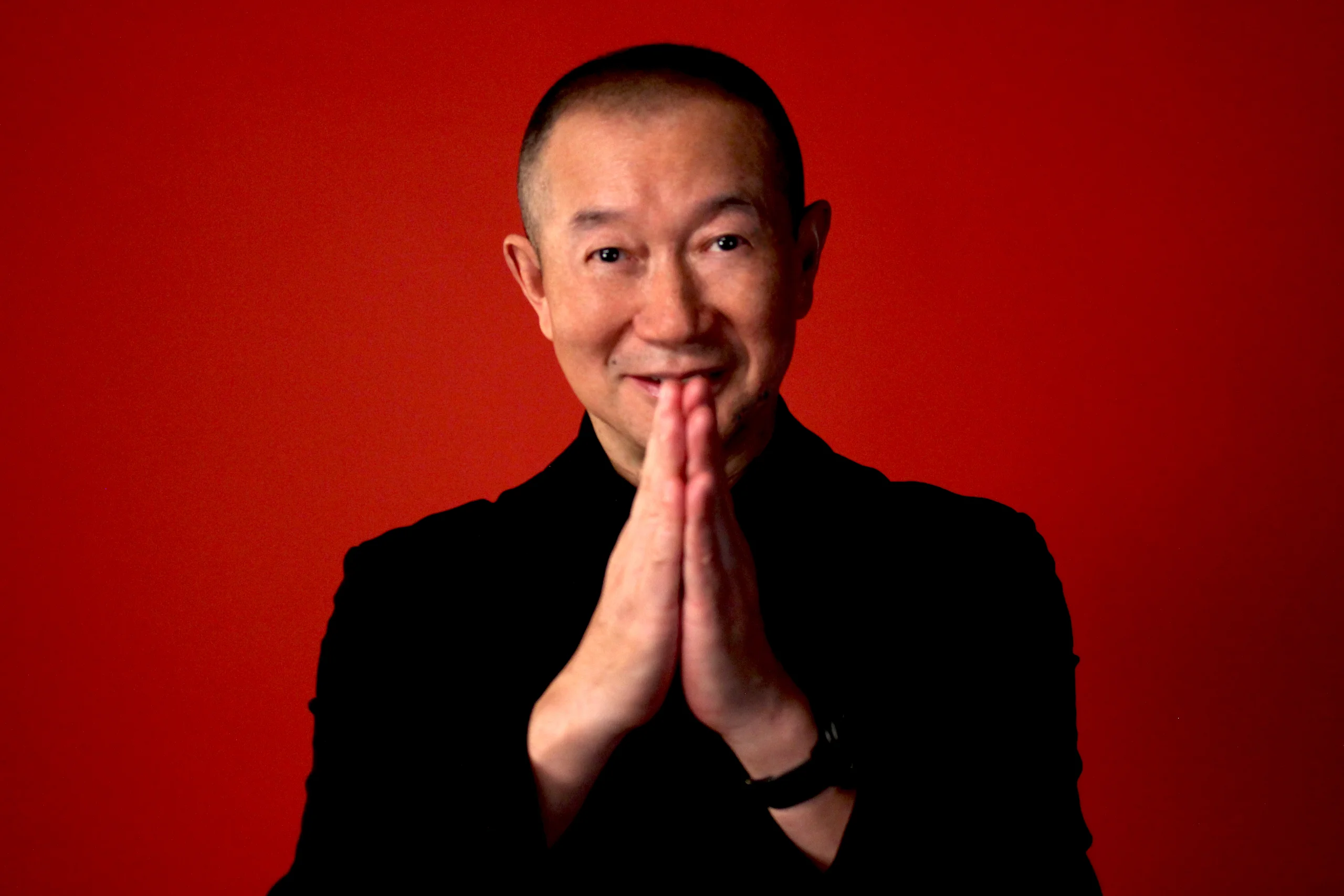
Tan Dun
 China
ChinaAlso known as: Dun Tan
Birthday
August 18, 1957
Birth Sign
Leo
Birthplace
Changsha, Hunan, China
Age
69 years old
About
Tan Dun is a Chinese-born American composer and conductor whose work has reshaped contemporary classical music. He is best known for his Oscar and Grammy winning score for Crouching Tiger, Hidden Dragon (2000), as well as for operas like Marco Polo and his signature 'organic music' that uses paper, water, and stone as instruments. As of 2026, he serves as Dean of the Bard College Conservatory of Music and UNESCO Goodwill Ambassador, and he remains one of the most active and inventive figures in the classical world, premiering new pieces and conducting major orchestras internationally.
His music is a bridge between Eastern and Western traditions, drawing on his upbringing in Hunan and his deep study of both Chinese ritual and Western orchestral practice. Fans and critics alike know him for his theatrical, immersive performances and his ability to make ancient sounds feel utterly modern.
Early Life & Background
Born in 1957 in Changsha, Hunan, Tan Dun grew up during the Cultural Revolution, a time when traditional music was suppressed. As a teenager, he was sent to the countryside for re-education, working in rice paddies and listening to the folk songs and ritual music of the local people. Those organic sounds, water, stone, paper, became the foundation of his later 'organic music' aesthetic.
After the Cultural Revolution ended, Tan Dun enrolled at the Central Conservatory of Music in Beijing, where he studied composition with the generation of composers who would later define China's new music scene. In 1986, he moved to New York to study at Columbia University, earning his Doctor of Musical Arts degree in 1993. That move placed him at the heart of the avant-garde, where he absorbed everything from John Cage to minimalism while staying rooted in his Chinese heritage.
His early works, like Nine Songs and Orchestral Theatre, already showed his interest in ritual and theatricality, but it was his opera Marco Polo (1996) that first put him on the global map, winning the Grawemeyer Award for its bold fusion of East and West.
Career Growth
Tan Dun's breakthrough came in 2000 when he composed the score for Ang Lee's Crouching Tiger, Hidden Dragon. The music, which blended lush strings with percussion and vocals, earned him both an Academy Award and a Grammy, a rare double for a film composer. He followed that with the score for Zhang Yimou's Hero (2002), further cementing his reputation in cinema.
Beyond film, Tan Dun has built a remarkable career in concert music. His opera Marco Polo won the Grawemeyer Award in 1996. In 2013, he became a UNESCO Goodwill Ambassador, and in 2019 he was named Dean of the Bard College Conservatory of Music. His recent projects include Choral Concerto: Nine, a companion piece to Beethoven's Ninth Symphony, which had its UK premiere with the London Philharmonic Orchestra in March 2026. His opera TEA: A Mirror of Soul was staged in Hungary for the first time in April 2026, and he presented new works at Asia Society in New York that same month.
He has also served as Artistic Ambassador of the Melbourne Symphony Orchestra and Honorary Artistic Director of the China National Symphony, and he continues to conduct orchestras worldwide.
Career Timeline
Public Image & Style
Tan Dun is seen as a visionary who breaks down walls between musical worlds. His conducting style is energetic, fast tempos, crisp rhythms, and a theatrical presence that turns concerts into events. Media outlets like the Kennedy Center call him 'a leading figure of contemporary classical music,' and his concerts draw both classical purists and adventurous newcomers. His use of organic materials and multimedia sets him apart, and his role as a UNESCO Goodwill Ambassador adds to his global stature. Fans appreciate his ability to make ancient Chinese sounds feel fresh and his willingness to experiment with everything from film scores to operas.
Fame & Fandom
Tan Dun holds no current placement in the iFANN Global Top 1,000 rankings. While his work commands respect across concert halls and film studios, the iFANN Global Fame Engine has evaluated his profile without assigning him a specific numeric rank or scope list position as of August 2026. This absence of a ranked slot reflects the specialized nature of his audience rather than a lack of impact; he operates within the high-stakes world of contemporary classical music where fame is measured by critical acclaim and institutional prestige rather than mass-market chart dominance.
His fanbase does not carry a formal name. Unlike pop stars who mobilize armies for birthday campaigns, Tan Dun's supporters are typically described as enthusiasts, students, or critics who follow his career through official channels like his Instagram handle @tan_dun or streaming profiles on Spotify. These digital spaces host professional updates and educational content framed by his roles as a UNESCO Goodwill Ambassador and Dean of the Bard College Conservatory of Music, but they do not exhibit the metrics of an organized fandom driving viral trends or charity drives. The most legendary moments associated with him remain grounded in verified artistic milestones rather than crowd-disrupting folklore. His 2000 Academy Award win for Crouching Tiger, Hidden Dragon stands as the cornerstone of his international reputation, cemented by a Grammy and a Grawemeyer Award. Recent performances, such as his March 2026 conducting of the London Philharmonic Orchestra at the Royal Festival Hall, have been hailed as monumental events where he paired his Choral Concerto: Nine with Beethoven's Ninth Symphony. These occasions feature dramatic inhalations, Mongolian throat singing, and water percussion, creating a sensory experience that defines his legacy as a bridge between Eastern and Western traditions.
Interesting Facts and Legends
Tan Dun studied the viola d'amore, an unusual baroque instrument, during his formative training years. He frequently describes the orchestra itself as his primary instrument, a sentiment he shared during a feature with the Chicago Symphony. His composition Choral Concerto: Nine was explicitly inspired by Beethoven's Ninth Symphony and designed to be performed alongside it. Reviews of his 2026 London performances highlighted dramatic inhalations, the use of Mongolian throat singing, and a full battery of drums. He has also pioneered works involving water and paper percussion, creating scores where performers splash and rustle as integral parts of the music.
A story fans still retell involves the premiere of his Water Concerto, where the performance utilized actual water as an instrument, blurring the line between conductor and natural force. Another iconic moment centers on his opera TEA: A Mirror of Soul, which celebrated its 40th anniversary season with Hall Opera® and remains a defining work of his career. His recent collaboration performing alongside Beethoven's Ninth Symphony in London was described as a high-stakes pairing that pushed the boundaries of what a classical program could achieve.
Notable Quotes
“The orchestra is my instrument.”
“Music is a mirror of the soul.”
“I try to find the sound of nature in every piece.”
Family & Personal Life
Details about Tan Dun's family are scarce. He was born in Changsha, Hunan, and grew up during the Cultural Revolution, a period that separated him from much of his family. He has not publicly shared information about his parents or siblings. He is based in New York City, where he has lived since his Columbia days, but little is known about his personal household.
Notable Connections
Tan Dun's most famous collaboration is with director Ang Lee on Crouching Tiger, Hidden Dragon, which brought him worldwide fame. He also scored Zhang Yimou's Hero. More recently, he has worked closely with the London Philharmonic Orchestra, who premiered his Choral Concerto: Nine in 2026. He has also served as Artistic Ambassador for the Melbourne Symphony Orchestra and Honorary Artistic Director of the China National Symphony.
Relationships & Dating History
Tan Dun has kept his personal life remarkably private. Public records and interviews contain no confirmed details about his romantic relationships, marriages, or family. He has been based in New York City for decades, but no partner or spouse has been named in credible sources. As of 2026, his relationship status is unknown.
Salary, Net Worth In 2026
$10 Million
iFANN Editorial Team estimate
iFANN currently estimates Tan Dun's net worth in 2026 at $10 million. His income flows from multiple streams: composition commissions for operas and orchestral works, conducting fees from leading international orchestras, royalties from his film scores and concert works, and his salary as Dean of the Bard College Conservatory of Music. His Oscar and Grammy wins have also boosted his earning power, and he remains in high demand for premieres and festivals worldwide.
Awards Won (6)
Tan Dun has won some of the highest honors in music and film. His score for Crouching Tiger, Hidden Dragon earned him both an Academy Award and a Grammy in 2000. His opera Marco Polo won the Grawemeyer Award in 1996. He has also received the Bach Prize, the Shostakovich Award, and Italy's Golden Lion Award.
2000 · Best Original Score
Crouching Tiger, Hidden Dragon
2000 · Best Score Soundtrack
Crouching Tiger, Hidden Dragon
Known For
Crouching Tiger, Hidden Dragon
2000 · Composer
Marco Polo
1996 · Composer
Hero
2002 · Composer
Choral Concerto: Nine
2026 · Composer
Keywords
Sources
Quick Facts
- Profession
- Composer, conductor
- Born
- August 18, 1957
- Birthplace
- Changsha, Hunan, China
- Gender
- Male
- Birth Sign
- Leo
- Education
- Central Conservatory of Music; Columbia University (DMA)
- Notable Awards
- Oscar, Grammy, Grawemeyer Award
Personal Details
- Education
- Central Conservatory of Music, Beijing; Columbia University (DMA, 1993)
Filmography
5
Total
4
Film
1
TV
Frequently Asked Questions
How old is Tan Dun?
What is Tan Dun famous for?
Is Tan Dun married?
What is Tan Dun's net worth in 2026?
Where does Tan Dun live?
Social Media
Similar People

Join the community
fans discussing