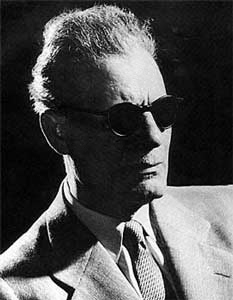
Taha Hussein
 Egypt
EgyptBirthday
+1889-11-14
Birth Sign
Scorpio
Birthplace
Minya Governorate
Age
Died at 83
About
Taha Hussein, born November 15, 1889, in the Minya Governorate of Egypt, was a towering figure in 20th-century Arabic letters. A blind intellectual who defied immense odds, he became a prolific writer, linguist, and translator, earning the sobriquet "The Dean of Arabic Literature." His work helped shape the Arab Renaissance, pushing Egyptian and Arabic literature into the modern era. Over his lifetime, he was nominated for the Nobel Prize in Literature twenty-one times, a testament to his global impact. Hussein's career spanned academia, journalism, and public service. He earned a doctorate from the Sorbonne in Paris, then returned to Egypt to teach at Cairo University, where he later served as dean of the Faculty of Arts. He also held the position of Minister of Education, during which he championed free education for all. His most famous work, the autobiography "Al-Ayyam" (The Days), chronicles his childhood blindness and rise to intellectual prominence, and remains a landmark of modern Arabic literature. He also wrote influential critical works like "On Pre-Islamic Poetry," which sparked controversy for its historical analysis, and translated classics from Greek and French into Arabic. Hussein passed away on October 28, 1973, at the age of 83, leaving behind a legacy that continues to inspire writers and thinkers across the Arab world. His life and work remain a powerful example of how determination and intellect can overcome even the most profound obstacles.
Fame & Fandom
Taha Hussein commanded a global intellectual presence that spanned the mid-twentieth century, leaving an imprint on Arabic letters and educational reform that persists through academic study rather than modern pop culture metrics. According to the iFANN Global Fame Rankings, he is currently the 39th most famous person in Egypt, a position holding steady from the previous cycle, while simultaneously ranking as the 56th most famous person from Egypt within the same dataset. These placements reflect a legacy measured by enduring influence across media coverage, search trends, and consumption signals worldwide, rather than fleeting viral moments. The audience surrounding his name lacks a formal collective moniker; there is no documented fandom name for Taha Hussein, as his admirers are primarily scholars, students of the University of Cairo, and readers of the Nahda movement who revere his contributions without organizing under a specific banner. Unlike contemporary celebrities whose fanbases engage in chart pushes or birthday campaigns, the reverence for Hussein manifests through institutional preservation, including the Taha Hussein Museum in Cairo and the continued study of his works in school curricula. His following operates through academic discourse and literary appreciation, maintaining his status as a foundational figure in Arab literature without the structured rituals typical of modern celebrity culture.
Interesting Facts and Legends
Taha Hussein lost his sight at age three due to an eye infection exacerbated by traditional medical ignorance, yet he memorized the entire Quran and became the first blind student to earn a doctorate from the Sorbonne in Paris. In 1926, he published On Pre-Islamic Poetry, a work that applied Western philological methods to question the authenticity of pre-Islamic poems, sparking a massive controversy where conservative leaders accused him of attacking Islamic heritage and leading to his temporary dismissal from the Ministry of Education. This event cemented his reputation as a crusader for free thought during a clash between tradition and modernism in the Arab world. His autobiography, Al-Ayyam (The Days), revolutionized Arabic literature by shifting from formal chronicles to intimate psychological storytelling, becoming a foundational text for newcomers to his work. He died on October 28, 1973, in Cairo at the age of 85, prompting national mourning described by The New York Times as marking the end of an era for Egyptian intellectuals. A story often retold in Egypt involves his miraculous rise from poverty and blindness to become known as the Dean of Arabic Literature, symbolizing the power of education and willpower. In May 2026, an unknown novelette by Hussein was republished after a century, highlighting ongoing scholarly interest in rediscovering his lesser-known writings.
Death & Aftermath
Died
+1973-10-28 (aged 83)
Death Place
Cairo, Egypt
Cause of Death
Natural causes and complications from old age
Taha Hussein died on October 28, 1973, in Cairo, Egypt, at the age of 84. His passing resulted from natural causes associated with advanced age and long-standing health issues, specifically complications related to his lifelong blindness and general frailty. He spent his final days in relative privacy within the city where he had resided for most of his life after returning from France, having largely retired from active public service years prior. The reaction to his death was one of national mourning across Egypt and the broader Arab world. Tributes poured in from government officials, literary peers, and educational institutions, leading the Egyptian government to declare a period of national mourning while state media highlighted his contributions to the Arab Renaissance.
Gatherings of intellectuals, students, and former colleagues occurred at universities and cultural centers to honor his legacy, and his seminal autobiography The Days saw renewed interest and sales surges throughout the Middle East following the news. His funeral took place shortly after his death in Cairo, serving as a grand public event attended by thousands of mourners including high-ranking government officials, university rectors, and prominent writers. The procession moved through the streets of the city before he was buried in the Al-Rawda Cemetery, a resting place often reserved for distinguished Egyptians. The services included recitations from the Quran and speeches eulogizing his life as a pioneer who overcame poverty and blindness to become a leading voice in Arabic literature.
Posthumously, his legacy has been extensively cultivated through various honors and dedications established by the Supreme Council of Culture and his alma maters. In 1976, the Taha Hussein Prize was created to honor outstanding literary works, while Ain Shams University and the University of Alexandria named faculties and libraries in his honor. A major film adaptation of his autobiography titled The Days directed by Youssef Chahine solidified his story for new generations.
Awards & Accolades
Keywords
Quick Facts
- Profession
- linguist, translator, writer
- Born
- +1889-11-14
- Birthplace
- Minya Governorate
- Died
- +1973-10-28
- Death Place
- Cairo
- Gender
- Male
- Spouse
- Sūzān Ṭāhā Ḥusayn
- Birth Sign
- Scorpio
Personal Details
- Spouse
- Sūzān Ṭāhā Ḥusayn
Join the community
fans discussing