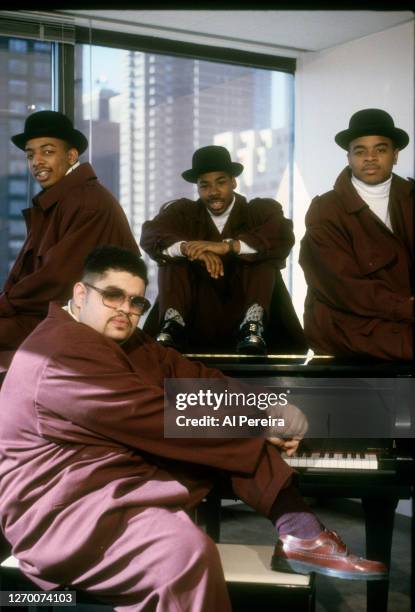
T Roy
Member of Heavy D. & the Boyz
Also known as: Trouble T Roy
Birthday
October 19, 1967
Birth Sign
Libra
Birthplace
Mount Vernon, New York
Age
Died at 22
About
Troy Dixon, born on October 19, 1967, in Mount Vernon, New York, was a breakdancer and rapper better known as Trouble T Roy. He joined the hip-hop group Heavy D and the Boyz in 1987, becoming a key member of the ensemble that blended rap with new jack swing. T Roy's energetic dance moves and occasional rhymes helped define the group's early sound and stage presence.
Over his three-year career with Heavy D and the Boyz, T Roy contributed to albums like Big Tyme (1989) and the soundtrack for the film House Party (1990). His most notable work came on the group's hits "The Overweight Lover's in the House" and "We Got Our Own Thang," where his dancing was a focal point of music videos and live performances. He also appeared in the 1990 comedy film House Party alongside Kid 'n Play.
On July 15, 1990, while on tour in Indianapolis, T Roy died after falling from a balcony at a hotel. He was just 22 years old. His death shocked the hip-hop community and led to an outpouring of tributes, including a mention in Heavy D's song "Blue Funk." Across his short career, T Roy appeared in one film and multiple television performances, leaving a lasting impression on the golden age of hip-hop dance.
Early Life & Background
Troy Dixon grew up in Mount Vernon, a city in Westchester County known for its vibrant music scene. Details of his early childhood are sparse, but he developed a passion for breakdancing and hip-hop culture during the genre's formative years in the early 1980s. By his late teens, he had earned the nickname Trouble T Roy on the streets, where his dance moves stood out. In 1987, he caught the attention of Heavy D, who was forming a group to back his rapping. T Roy joined as a dancer and occasional hype man, becoming one of the original members of Heavy D and the Boyz. This marked the beginning of his professional career, leaving behind any other pursuits.
Career Growth
T Roy's breakthrough came with Heavy D and the Boyz's debut album, Living Large (1987), though his role expanded significantly on the follow-up. The group's second album, Big Tyme (1989), achieved gold status and featured hits like "The Overweight Lover's in the House" and "We Got Our Own Thang." T Roy's dancing became a signature element of the group's live shows and music videos, helping to define the new jack swing aesthetic. In 1990, he appeared in the film House Party, a cult classic that showcased hip-hop dance culture, and contributed to its soundtrack. His career was abruptly cut short on July 15, 1990, when he died in a fall from a hotel balcony in Indianapolis during a tour stop.
Career Timeline
Public Image & Style
T Roy's public persona was that of an energetic, charismatic dancer who brought a joyful physicality to Heavy D and the Boyz. In music videos and live performances, he was often the most kinetic presence, executing complex breakdance moves that complemented Heavy D's smooth delivery. Fans remember him as a vital part of the group's visual identity during the late 1980s. The tragic nature of his death at age 22 cemented his status as a symbol of the golden age of hip-hop dance, and he is frequently cited by older hip-hop heads as a forgotten pioneer. No official fandom name exists, but his legacy lives on through tributes and the continued popularity of Big Tyme.
Fame & Fandom
Though Trouble T Roy never cultivated a formal fan club or organized movement during his brief life, his legacy endures through the collective reverence of the golden era hip-hop community. Fans of the genre treat him not as an isolated celebrity but as a foundational figure whose memory is kept alive by the music he inspired and the stories told about his untimely passing. There is no documented official fandom name for his supporters; instead, they are part of the broader Old School hip-hop audience that gathers online to preserve history rather than launch modern campaigns. The cultural rituals surrounding him are entirely posthumous, centered on the enduring power of the song written in his honor. According to iFANN's Global Fame Engine evaluation conducted in August 2026, T Roy is evaluated but does not currently hold a placement in the published rankings (Global Top 1,000 or a Top-100 scope list). This status reflects his position as a recognized historical icon within hip-hop culture, even though he does not hold a specific rank or score. His fame rests on verified historical impact rather than current viral metrics, with his story serving as a defining chapter in the narrative of 1990s dance and rap.
Interesting Facts and Legends
Troy Dixon, known professionally as Trouble T Roy, was one of the first prominent breakdancers to serve as a full-fledged member of a mainstream rap group rather than a background performer. He joined Heavy D and the Boyz in 1987, contributing to albums like Big Tyme and the House Party soundtrack before his tragic death at age 22. His passing was memorialized by Heavy D in the song Blue Funk on the 1992 album Blue Funk, and the group's third album, Peaceful Journey (1991), was dedicated to his memory. Police ruled his fall from a hotel balcony an accident with no foul play suspected. Beyond these facts, a powerful legend persists among hip-hop fans: a widely retold story claims that Tupac Shakur punched a wall in rage upon hearing the news of T Roy's death. While there is no video footage or contemporaneous police report verifying the specific act of punching a wall, the anecdote serves as a mythological anchor for how deeply the tragedy resonated across the genre. Additionally, the creation of They Reminisce Over You (T.R.O.Y.) by Pete Rock & CL Smooth stands as a verified cultural phenomenon released in 1992, featuring lyrics that directly address T Roy's loss and cementing his place in hip-hop canon.
Family & Personal Life
Information about T Roy's family is limited. He was born to parents whose names are not publicly recorded, and it is unknown if he had siblings. He never married and had no known children. At the time of his death, he was living in Mount Vernon. Heavy D and the other members of the group considered him a brother, and his loss was deeply personal for them.
Notable Connections
T Roy is most closely associated with Heavy D, the leader of Heavy D and the Boyz, who paid tribute to him in the song Blue Funk. He also worked with the comedy duo Kid 'n Play, appearing alongside them in the film House Party. His fellow group members included DJ Eddie F and G-Wiz.
Relationships & Dating History
No public information exists regarding T Roy's romantic relationships. He was not known to have been married, engaged, or in any documented relationship. As of 2026, he is deceased and never had a reported partner.
Death & Aftermath
Died
July 15, 1990 (aged 22)
Death Place
Unknown
Cause of Death
Fatal fall from a building
Troy Dixon, professionally known as Trouble T Roy, died on July 15, 1990, at the age of 22. The circumstances surrounding his death were confirmed by multiple sources to be a fatal fall from a building where he fell approximately 30 feet. Following the accident, he was rushed to a hospital, but medical personnel determined that his injuries were too severe to survive. While specific details regarding the exact location and the official coroner's report are not explicitly detailed in the provided search results, the cause of death is consistently reported as the result of this high-altitude fall.
Specific details regarding the date, location, or nature of Trouble T Roy's funeral or memorial service are not included in the provided search results. Similarly, there is no information available in the text regarding burial or cremation specifics, notable attendees, or performances held during the service. Regarding the handling of his estate, the provided documents do not contain information on how his estate was managed or distributed.
Trouble T Roy is remembered as a pioneering hip-hop dancer and a core member of the influential group Heavy D & the Boyz, having joined the group in 1987. Tributes to him are frequently posted by fans and cultural institutions on social media platforms like Facebook and Instagram, often marking the anniversary of his death on July 15th. His legacy is highlighted in discussions regarding the history of hip-hop dance and the impact of the Heavy D & the Boyz collective. He is posthumously recognized for his contributions to hip-hop culture as a founding member of Heavy D & the Boyz, with his image and legacy preserved in music history documentaries and social media tributes.
Net Worth (Estate Value)
$0
iFANN Editorial Team estimate
iFANN currently estimates T Roy's net worth at $0. As a deceased individual with no known estate value, his financial standing is not publicly documented. During his career from 1987 to 1990, he earned income from touring, album sales, and his appearance in House Party. However, no specific figures are available. As of 2026, no posthumous earnings or estate management have been reported. Per iFANN's editorial analysis, the total remains zero due to the lack of surviving assets or ongoing revenue streams managed by an estate.
Awards & Accolades
View 1 records, honours and achievementsKnown For
House Party
1990 · Himself
Big Tyme
1989 · Dancer
Keywords
Quick Facts
- Profession
- breakdancer, rapper
- Born
- October 19, 1967
- Birthplace
- Mount Vernon, New York
- Died
- July 15, 1990
- Death Place
- Indianapolis, Indiana
- Gender
- Male
- Birth Sign
- Libra
Personal Details
- Full Name
- Troy Dixon
Filmography
1
Total
1
Film
0
TV
Frequently Asked Questions
How did T Roy die?
How old was T Roy when he died?
What was T Roy's real name?
What group was T Roy in?
Did T Roy have any children?
Similar People
Join the community
fans discussing