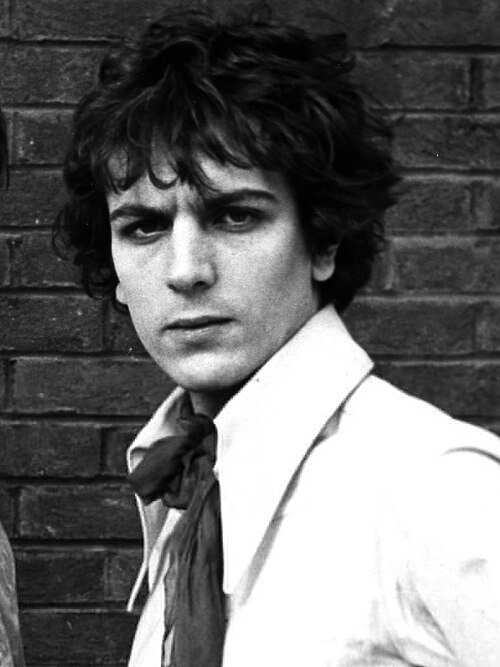
Syd Barrett
 United Kingdom
Member of Pink Floyd
Also known as: Roger Keith Barrett
Birthday
January 6, 1946
Birth Sign
Capricorn
Birthplace
Cambridge, England
Age
Died at 60
Height
5 ft 9 in (175 cm)
About
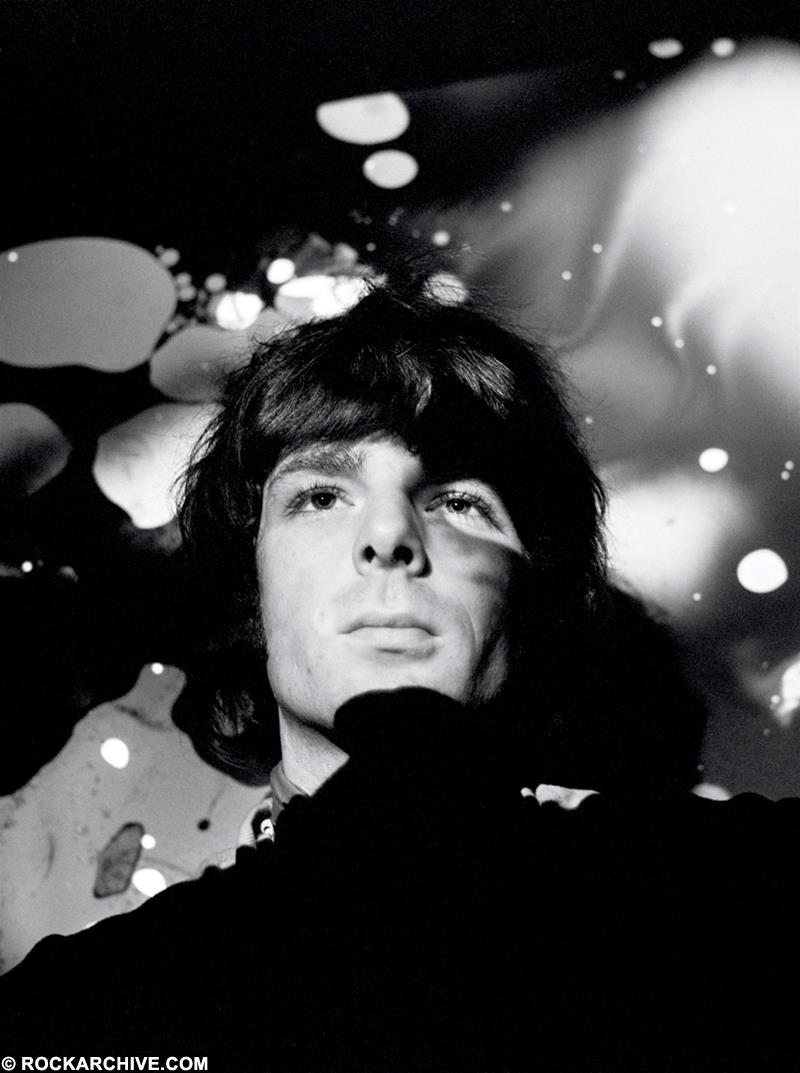
Roger Keith "Syd" Barrett (6 January 1946 – 7 July 2006) was an English singer, guitarist and songwriter who co-founded the rock band Pink Floyd in 1965. Until his departure in 1968, he was Pink Floyd's frontman and primary songwriter, known for his whimsical style of psychedelia and stream-of-consciousness writing. As a guitarist, he was influential for his free-form playing and for employing effects such as dissonance, distortion, echo and feedback.
Barrett was musically active for just over ten years. With Pink Floyd, he recorded the first three singles, their debut album, The Piper at the Gates of Dawn (1967), part of their second album, A Saucerful of Secrets (1968), and several songs that were not released until later. He and the band parted in April 1968 amid speculation of mental illness and his use of psychedelic drugs, beginning a brief solo career the following year with the single "Octopus", followed by albums The Madcap Laughs (1970) and Barrett (1970), recorded with the help of Pink Floyd and the Soft Machine.
In 1974, Barrett left the music industry, retired from public life and guarded his privacy until his death. He continued painting and dedicated himself to gardening. Pink Floyd recorded several tributes and homages, including the 1975 song suite "Shine On You Crazy Diamond" and parts of the 1979 rock opera The Wall. In 1988, EMI released an album of unreleased tracks and outtakes, Opel, with Barrett's approval. In 1996, Barrett was inducted into the Rock and Roll Hall of Fame as a member of Pink Floyd. He died of pancreatic cancer in 2006.
Early Life & Background
Roger Keith Barrett was born on 6 January 1946 in Cambridge, the fourth of five children. His father, Arthur Max Barrett, was a prominent pathologist who performed autopsies; young Syd sometimes visited the mortuary, a macabre detail that would later colour his surreal imagination. His mother, Winifred "Gyp" Barrett, raised the children after Arthur died of cancer in 1961, when Syd was 15. That loss struck him hard and shaped his inward turn.
Barrett showed early artistic flair, taking up the ukulele at age 10 and the banjo at 12. He attended the Cambridgeshire College of Arts and Technology (now Anglia Ruskin University) from 1962 to 1964, studying art. It was there he adopted the nickname "Syd" from a local drummer named Sid Barrett. His musical diet leaned on American blues and rock and roll, particularly Bo Diddley and Chuck Berry. In 1965, while still an art student, he met Roger Waters, Nick Mason, and Richard Wright in London. Waters and Mason played in a band called The Tea Set; Barrett joined, and the group soon renamed themselves Pink Floyd, after two blues musicians in Barrett's record collection, Pink Anderson and Floyd Council.
Career Growth
Barrett became Pink Floyd's principal songwriter, lead guitarist, and frontman. His whimsical, surreal lyrics and innovative guitar work, using echo, feedback, and dissonance, defined the band's early psychedelic sound. The first three singles, "Arnold Layne" (1967), "See Emily Play" (1967), and "Apples and Oranges" (1967), were all Barrett compositions. The debut album The Piper at the Gates of Dawn (1967) was a landmark of psychedelic rock; Barrett wrote or co-wrote every track except one.
His heavy use of LSD and deteriorating mental health led to erratic behaviour. By early 1968, David Gilmour had replaced him; Barrett officially left in April 1968, contributing only "Jugband Blues" to the second album A Saucerful of Secrets (1968). He launched a brief solo career, releasing The Madcap Laughs (1970) and Barrett (1970), both recorded with help from former bandmates and members of the Soft Machine. A third album of unreleased material, Opel, came out with his approval in 1988. In 1974, Barrett left the music industry entirely, retreating to his mother's home in Cambridge, where he lived as a recluse, focusing on painting and gardening. He never performed publicly again.
Career Timeline
Public Image & Style
Barrett's public persona was that of a whimsical, wide-eyed psychedelic genius, the "crazy diamond" who burned bright and then vanished. In the 1960s he favoured colourful clothing and a cherubic look, which contrasted with the dark turn of his mental decline. The media has often portrayed him as a tragic figure, a victim of the music industry and drug abuse. Fans, sometimes called "Sydheads," pore over his lyrics and debate the nature of his illness. Official social media accounts are archival and respectful, focusing on his art rather than his personal struggles.
Fame & Fandom (iFAMOUS Rankings)
Syd Barrett's legacy is kept alive not by organized campaigns or a formal fandom name, but by the deep reverence of 'Barrett devotees' who treat his brief career as a sacred text. These fans gather on anniversaries like July 7 to share obscure anecdotes and rare recordings, preserving the mythos of a man who chose isolation over fame. Their efforts include digital archiving and tribute concerts, such as the major event planned for October 2026 and the cultural celebrations marking his 80th birthday in Cambridge earlier that year. While early performances at the UFO Club created an immediate cult following among London's underground scene, the modern audience focuses on the tragedy of his decline rather than active pop-star worship. Regarding his global standing, iFANN has evaluated this figure extensively. Syd Barrett is currently EVALUATED_UNRANKED according to the August 2026 data from the iFANN Global Fame Engine; he does not hold a placement in the published rankings or any Top-100 scope list.
Interesting Facts and Legends
Roger Keith Barrett was the son of a pathologist who performed autopsies, and young Syd frequently visited the mortuary during his childhood. A talented painter, he continued creating abstract works after leaving music, with some pieces selling for tens of thousands of pounds. The bandmates he left behind penned the 26-minute epic "Shine On You Crazy Diamond" as a tribute to him. He legally reverted to Roger Keith Barrett in the 1980s and lived modestly on a £100-a-week royalty payment from Pink Floyd, which he donated to charity while remaining unaware of his own fame. Legends surrounding his time with the band often focus on his psychological disintegration in 1968, attributed to heavy LSD use and bipolar disorder. A haunting story retells a final meeting where he stared blankly at his former bandmates, asking for a guitar and claiming their new music sounded "old." Another iconic moment occurred at the UFO Club in late 1966, where his chaotic playing and unpredictable antics, like removing his shoes, mesmerized audiences while launching the Underground movement. Although some tales of crowds fainting are likely embellished folklore, his inability to perform reliably led to his firing, cementing the narrative of a genius lost to his own mind.
Notable Quotes
“I'm not a rock star. I'm a painter.”
“It's a very strange thing, but I think I'm more famous now than when I was in the band.”
“I'm not mad. I'm just different.”
Family & Personal Life
Syd Barrett was the fourth of five children born to Arthur Max Barrett, a pathologist, and Winifred "Gyp" Barrett. His father died of cancer in 1961, a profound loss. He had three older siblings and one younger. Barrett never married and had no known children. He lived with his mother in Cambridge for many years after leaving music. His estate is managed by his sister, Rosemary Breen.
Notable Connections
Barrett was closely associated with his Pink Floyd bandmates Roger Waters, David Gilmour, Nick Mason, and Richard Wright. Members of the Soft Machine, particularly Kevin Ayers and Robert Wyatt, played on his solo albums. His producers included Peter Jenner and Norman Smith.
Relationships & Dating History
Syd Barrett had several relationships but never married. In the mid-1960s, he dated Cambridge art student Lindsay Corner, who influenced his early songwriting. From 1966 to 1967, he was with Jenny Spires, the inspiration for "See Emily Play" (the name was changed on manager Peter Jenner's advice). During Pink Floyd's first US tour in 1967-68, he had a brief relationship with American woman Gayla Pinion. In the late 1960s, he dated a woman named Iona. A more significant relationship was with Libby Gausden (1969-1970), who was present during the recording of The Madcap Laughs. In the early 1970s, he dated a woman named Dolly. Barrett died a bachelor; he had no children.
- DatedLindsay Corner1965 - 1966Cambridge art student and one of Barrett's first serious girlfriends.
- DatedJenny Spires1966 - 1967Subject of 'See Emily Play'; split due to his drug use and mental state.
- DatedGayla Pinion1967 - 1968Met during Pink Floyd's first US tour; brief and tumultuous.
- DatedIona1968 - 1969Brief relationship during his solo career period.
- DatedLibby Gausden1969 - 1970Present during recording of The Madcap Laughs.
- DatedDolly1971 - 1972Relationship during his final years in the music industry.
Death & Aftermath
Died
July 7, 2006 (aged 60)
Death Place
Cambridge, England
Cause of Death
Pancreatic cancer
Roger Keith Barrett passed away on July 7, 2006, at his home in Cambridge, England, following a confirmed diagnosis of pancreatic cancer. The official cause of death was established through standard medical certification rather than any public autopsy or legal inquest, bringing an end to decades of speculation regarding his mental health and drug use that had often overshadowed the actual medical reality. Tributes poured in immediately from the music community, with former bandmates Roger Waters describing him as a gentle soul who had been stuck for decades, while David Gilmour expressed deep sorrow over losing a friend he had not seen in many years. Public reaction included significant surges in streaming and sales of his solo work and Pink Floyd's early catalog, alongside moments of silence during concerts and online memorials where fans shared stories of his influence.
Barrett's funeral was held privately in Cambridge shortly after his passing, attended by close family members and a small circle of friends including Roger Waters and Richard Wright. He was cremated, and his ashes were scattered in accordance with family wishes, though the specific location has never been officially disclosed. In the posthumous era, his legacy has been preserved through reissues like The Madcap Laughs and the 2013 documentary Syd Barrett: The Man Who Died Twice , while the estate remains managed discreetly.
Net Worth (Estate Value)
$15 Million
iFANN Editorial Team estimate
At the time of his passing in 2006, Syd Barrett's net worth stood at an estimated $1-2 million. He lived simply on a £100-a-week royalty payment and gave much of it away to charity. Per iFANN's editorial analysis, the estate is now valued at an estimated $15 Million as of 2026. Managed by his sister Rosemary Breen, the estate generates revenue through streaming and sales of his solo albums and Pink Floyd compositions, posthumous reissues and box sets, licensing of his image and music for documentaries and films, and official merchandise.
Awards Won (1)
Syd Barrett did not win any major individual awards. He was inducted into the Rock and Roll Hall of Fame in 1996 as a member of Pink Floyd.
1996 · Performer
Pink Floyd
Known For
The Madcap Laughs
1970 · Solo album
Barrett
1970 · Solo album
Opel
1988 · Compilation album
Keywords
Quick Facts
- Profession
- guitarist, singer, songwriter
- Born
- January 6, 1946
- Birthplace
- Cambridge, England
- Died
- July 7, 2006
- Death Place
- Cambridge, England
- Gender
- Male
- Birth Sign
- Capricorn
Personal Details
- Full Name
- Roger Keith Barrett
- Height
- 5 ft 9 in (175 cm)
- Education
- Cambridgeshire College of Arts and Technology
Frequently Asked Questions
What happened to Syd Barrett?
Was Syd Barrett married?
How did Syd Barrett die?
What was Syd Barrett's net worth?
Why did Syd Barrett leave Pink Floyd?
Similar People
Join the community
fans discussing