
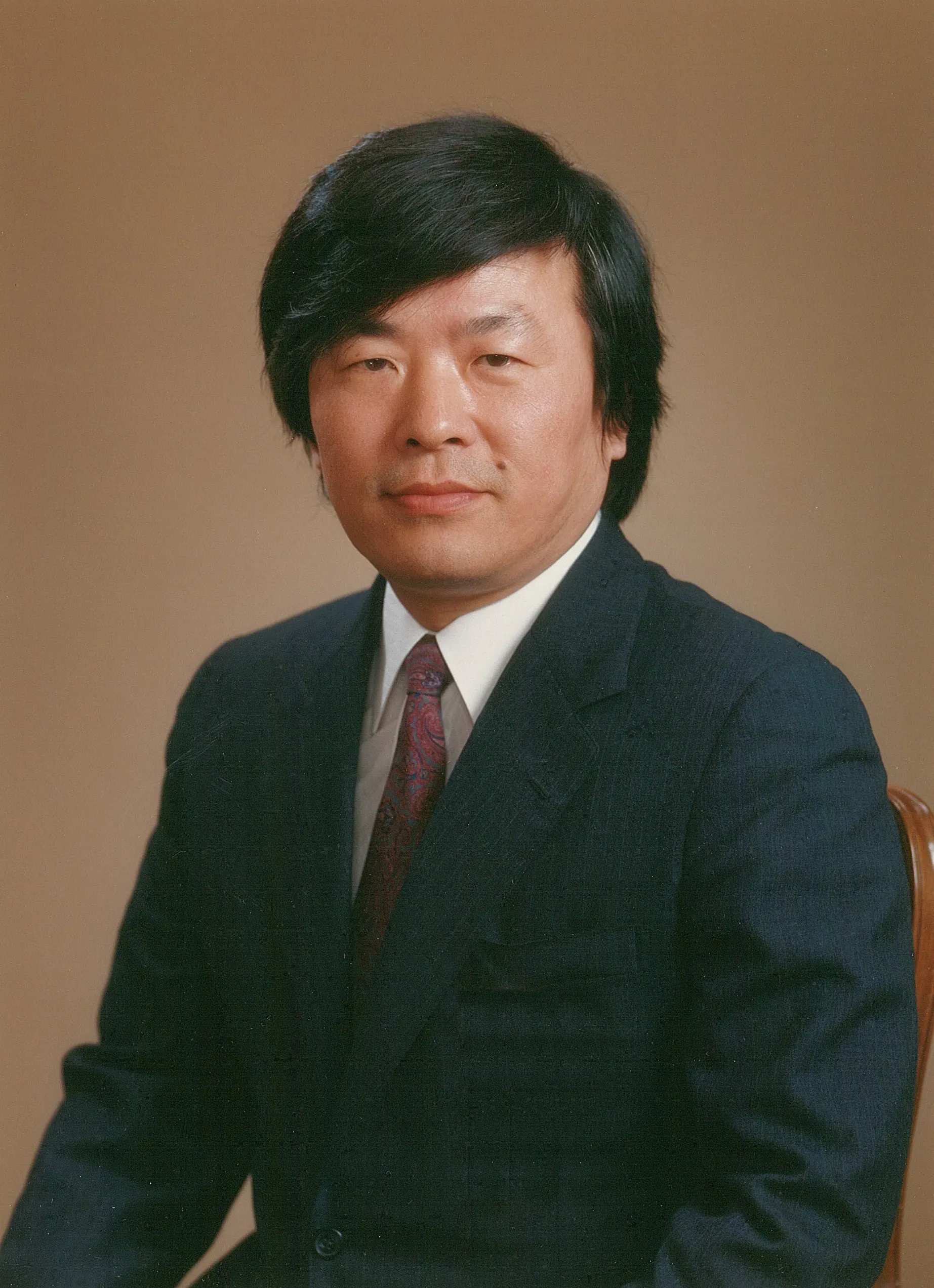
Susumu Tonegawa
 Japan
molecular biologist•immunologist•neuroscientist
Also known as: 利根川進, Tonegava Szuszumu
Birthday
September 5, 1939
Birth Sign
Virgo
Birthplace
Nagoya, Japan
Age
Died at 86
About
Susumu Tonegawa was a preeminent Japanese molecular biologist, immunologist, and neuroscientist who fundamentally reshaped the understanding of the immune system and the biological basis of memory. Born on September 5, 1939, in Nagoya, Japan, he became the first Japanese citizen to receive the Nobel Prize in Physiology or Medicine in 1987. His death occurred on July 11, 2026, at the age of 86, marking the end of a career that uniquely bridged two distinct fields of biology. He is best known for discovering the genetic mechanism behind antibody diversity, known as V(D)J recombination, which explained how the immune system generates millions of different antibodies from a limited set of genes. Later in his career, he shifted his focus to neuroscience, where he studied the physical basis of memory and the neural circuits involved in learning.
Early Life & Background
Susumu Tonegawa was born on September 5, 1939, in Nagoya, Aichi Prefecture, Japan, during a period of significant transformation in post-war Japan. His father worked as a teacher, and Tonegawa grew up with a deep curiosity about how living organisms functioned at a fundamental level. From an early age, he displayed a profound interest in science, particularly regarding the molecular mechanisms of life. He attended high school in Kyoto before enrolling at Kyoto University, where he completed his Bachelor of Science degree in chemistry in 1963. His undergraduate studies provided the essential foundation for his future investigations into the genetic control of cellular processes.
Seeking to advance his research capabilities, Tonegawa moved to the United States in the mid-1960s to study at the Salk Institute for Biological Studies in La Jolla, California. There, he worked under the mentorship of Renato Dulbecco, a future Nobel laureate himself. This period exposed him to cutting-edge techniques in viral genetics and DNA research that would define his early career. He subsequently traveled to Paris to complete his Ph.D. at the Institut Pasteur in 1968, focusing his doctoral work on RNA tumor viruses. These formative years were characterized by rigorous training in molecular biology and a developing interest in the genetic control of cellular processes, setting the stage for his later revolutionary discoveries.
Career Growth
Tonegawa's professional journey is defined by two major phases that bridged distinct biological disciplines. After completing his postdoctoral training, he joined the Basel Institute for Immunology in Switzerland in 1971. It was here, between 1976 and 1980, that he achieved his most celebrated breakthrough. At a time when the scientific consensus held that each antibody was encoded by a unique gene, Tonegawa proposed and proved the gene rearrangement hypothesis. Using DNA sequencing techniques, he demonstrated that the genes coding for antibodies are assembled from separate segments during B cell development. This mechanism, known as V(D)J recombination, solved a decades-old puzzle regarding how a limited number of genes could generate millions of different antibodies.
This discovery earned him the Nobel Prize in Physiology or Medicine in 1987, which he received as the sole recipient, a rare honor. Following this success, he returned to the United States and joined the Massachusetts Institute of Technology (MIT) in 1981 as a professor of biology. In a move that surprised many peers, Tonegawa shifted his focus entirely from immunology to neuroscience in the mid-1990s. In 1994, he established the Center for Learning and Memory at MIT, now known as the Picower Institute for Learning and Memory, serving as its director until his death. His lab developed innovative mouse models to map the neural circuits involved in learning and memory, identifying specific neurons responsible for fear conditioning and spatial memory. His work provided critical insights into conditions like Alzheimer's disease and schizophrenia, cementing his status as a titan of modern biology.
Career Timeline
Public Image & Style
As a scientist, Tonegawa was portrayed as a quiet, intense, and fearless intellectual. Media descriptions emphasized his pioneering spirit and his willingness to abandon a secure position in immunology to tackle the unsolved mysteries of the brain. He was known for his rigorous approach and lack of interest in public acclaim. Unlike pop culture stars, he did not appear on fashion magazine covers but was featured prominently in major scientific journals like Nature and Science. His image in the public consciousness was that of a visionary who let his data speak for itself, maintaining a low profile while revolutionizing our understanding of the immune system and the brain. He received keys to cities such as Nagoya and Cambridge, Massachusetts, in recognition of his contributions.
Fame & Fandom (iFAMOUS Rankings)
The community surrounding Susumu Tonegawa has been defined not by chanting crowds or merchandise drops, but by a profound, global reverence within the scientific world. His legacy is carried by researchers and students who view his work as foundational scripture rather than pop culture content; there is no formal fan club name, nor are there organized rituals like birthday billboards or chart pushes. Instead, the support manifests in academic tributes and the enduring citation of his papers long after his passing. The narrative that binds this audience together is the story of a mind that solved an impossible biological puzzle, turning him into an intellectual giant whose death in July 2026 marked the end of an era for molecular biology.
While the general public may only know the Nobel Prize, the dedicated circle knows the intricate details of his transition from immunology to neuroscience at MIT, treating his later work on memory with the same intensity as his earlier genetic discoveries. This unique following tracks his impact through peer-reviewed journals and institutional history rather than social media trends. Despite this quiet dedication, his reach remains vast and measurable across the globe. He stands as the 91st most famous person from Japan, a position he held in August 2026. These placements appear in the iFANN Global Fame Rankings, a system that monitors attention across international media and scholarly consumption signals worldwide. He was not featured on the August 2026 iFAMOUS Rankings flagship list.
Interesting Facts and Legends
Susumu Tonegawa holds the distinction of being the only solo recipient of the 1987 Nobel Prize in Physiology or Medicine, a rarity that underscores the singular nature of his discovery. His decision to leave the highly successful field of immunology to start over in neuroscience in the 1990s was considered risky and unusual, as most scientists tend to stick to one niche. Another notable fact is his direct impact on the understanding of Fragile X syndrome, a leading genetic cause of autism and intellectual disability; he served as a scientific advisor to the FRAXA Research Foundation. Additionally, he was a former board member of the Okinawa Institute of Science and Technology (OIST), helping to shape its founding years. Unlike many public figures, he maintained an exceptionally private personal life, rarely seeking media attention or public acclaim despite his monumental contributions to science. He also received the Order of Culture from the Emperor of Japan in 1987.
Notable Quotes
“The genetic rearrangement of antibody genes is a remarkable solution to the problem of diversity.”
“We are just beginning to understand the complexity of the brain.”
Family & Personal Life
Susumu Tonegawa was the son of a teacher and grew up in Nagoya, Japan. Despite his fame, he kept his family life largely out of the public eye. Details regarding siblings or other close relatives are absent from all available records, including obituaries and institutional statements. He remained focused on his scientific pursuits throughout his life. As of his death on July 11, 2026, he is reported to have been unmarried and without publicly acknowledged children. The lack of a spouse or partner is consistent with his reputation as a man dedicated almost exclusively to his research and the advancement of science. His Virgo birth sign reflects the meticulous nature often associated with his scientific methodology.
Notable Connections
Renato Dulbecco, James Watson, Bruce Alberts, Kazutoshi Mori
Relationships & Dating History
Susumu Tonegawa maintained an exceptionally private personal life throughout his existence. There are no publicly documented romantic relationships, marriages, or divorces in credible sources. He remained focused on his scientific pursuits from his early education through his final days. While some biographical sketches mention his family background, details regarding a spouse or children are absent from all available records, including obituaries and institutional statements. As of his death on July 11, 2026, he is reported to have been unmarried and without publicly acknowledged children. The lack of a spouse or partner is consistent with his reputation as a man dedicated almost exclusively to his research and the advancement of science.
Death & Aftermath
Died
July 11, 2026 (aged 86)
Death Place
Cambridge, Massachusetts, United States
Cause of Death
Natural causes
Susumu Tonegawa died peacefully on July 11, 2026, at the age of 86 in Cambridge, Massachusetts. The circumstances surrounding his passing were peaceful, occurring while he was still actively leading the RIKEN-MIT Center for Neural Circuit Genetics. Although the specific medical cause was not officially detailed in public records beyond general reports of natural causes related to old age, his death marked a significant moment for the global scientific community. Tributes poured in from major institutions, including MIT, which described him as a visionary scientist and true pioneer who had fundamentally reshaped two distinct fields of biology.
The reaction extended beyond academia to major publications like Nature and The New York Times, which published extensive obituaries highlighting his dual legacy in immunology and neuroscience. The American Association of Immunologists honored him as a Distinguished Fellow, acknowledging his contributions that spanned decades. While details regarding a formal funeral or memorial service were not widely disclosed, leaving burial arrangements unconfirmed, the scientific world observed moments of silence and dedicated special journal issues to his work. His passing left a void in both immunology and neuroscience, yet his foundational mouse models for memory research continue to be instrumental in drug discovery for conditions like schizophrenia and Alzheimer's disease.
Net Worth (Estate Value)
$1 Million
iFANN Editorial Team estimate
Specific net worth figures for Susumu Tonegawa are not publicly disclosed or tracked by financial outlets, as he was a university professor and researcher rather than a commercial entrepreneur or celebrity. Research by the iFANN Editorial Team puts his estate value at around $1 million. While exact figures are unavailable, as a tenured professor at MIT and a Nobel laureate, his income would have been substantial, likely ranging between $500,000 and $1 million annually during his active career, supplemented by lecture fees and book royalties. Upon his death in 2026, there were no reports of a massive commercial estate. His wealth was primarily tied to his academic salary, pension, and perhaps real estate holdings in Japan and the US. No detailed breakdown of assets or business ventures exists in public records. Posthumous earnings include modest royalties from his books and papers, but there are no major commercial licensing deals or posthumous releases generating significant revenue.
Awards Won (5)
Susumu Tonegawa won every major award associated with his field, including the Nobel Prize in Physiology or Medicine in 1987 and the Lasker Award for Basic Medical Research the same year. He also received the Gairdner Foundation International Award in 1984 and the Japan Academy Prize in 1987. His honors include membership in the National Academy of Sciences, the Royal Society, and the French Academy of Sciences, as well as the Order of Culture awarded by the Emperor of Japan.
1987 · Physiology or Medicine
Discovery of the principle for generation of antibody diversity
1987 · Basic Medical Research
Contributions to immunology
Known For
V(D)J Recombination Discovery
1980 · Scientific Breakthrough
Memory Engram Research
1994 · Neuroscience Pioneer
Keywords
Sources
Quick Facts
- Profession
- molecular biologist, immunologist, neuroscientist
- Born
- September 5, 1939
- Birthplace
- Nagoya, Japan
- Died
- July 11, 2026
- Gender
- Male
- Birth Sign
- Virgo
Personal Details
- Full Name
- Susumu Tonegawa
- Children
- Education
- Year: 1963 · Degree: Bachelor of Science in Chemistry · Institution: Kyoto University · Year: 1968 · Degree: Ph.D. in Molecular Biology · Institution: Institut Pasteur
Frequently Asked Questions
What did Susumu Tonegawa discover?
When did Susumu Tonegawa die?
Did Susumu Tonegawa have children?
Why did Susumu Tonegawa switch from immunology to neuroscience?
Where was Susumu Tonegawa born?
Similar People
Join the community
fans discussing