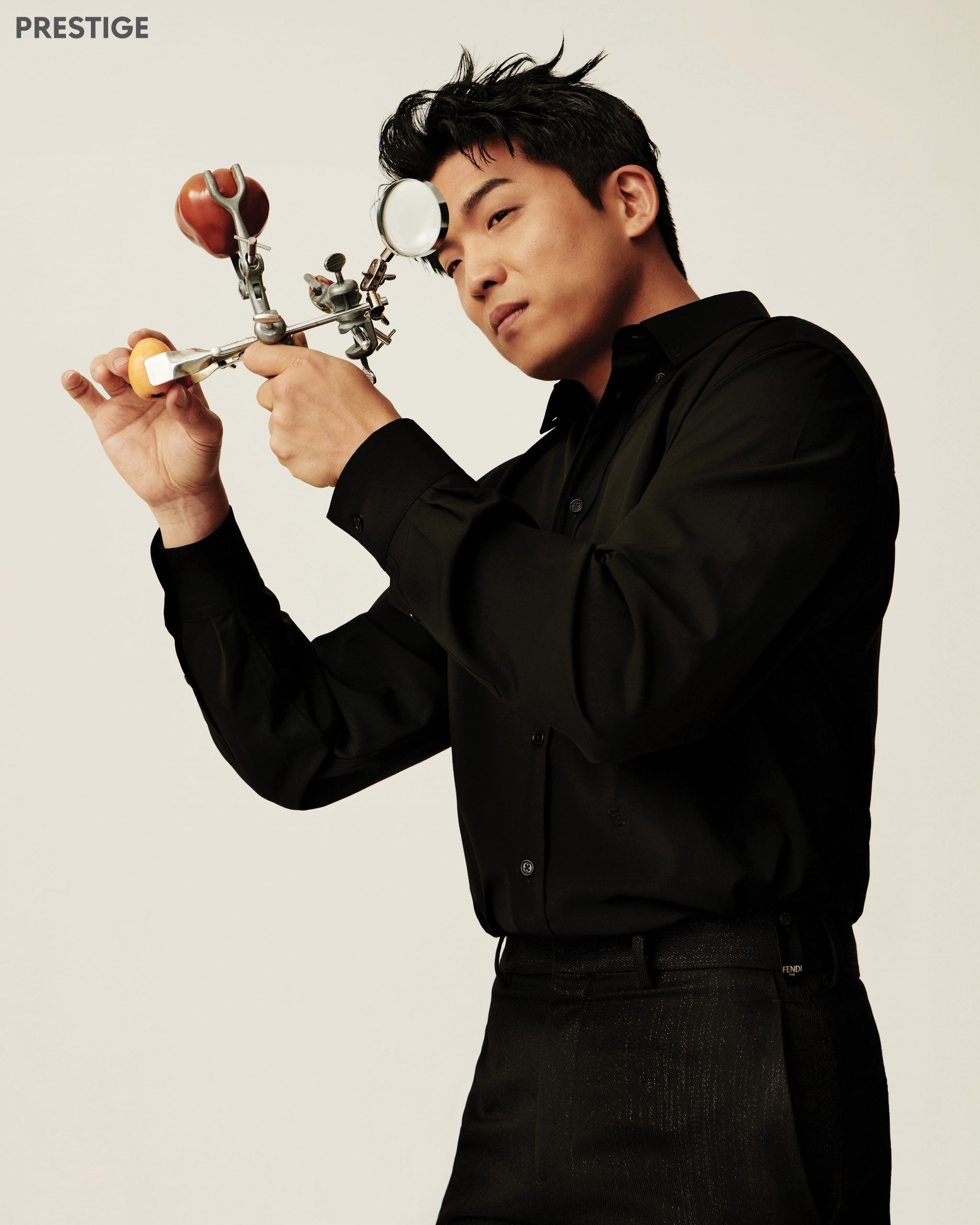
Sung Jae-gi
 South Korea
human rights defender•entrepreneur•autobiographer
Also known as: Seong Jae-ki, Seong Jae-gi, Sung Jai-ki, Seong Jai-ki, Sung Jae-ki
Birthday
September 11, 1967
Birth Sign
Virgo
Birthplace
Daegu, South Korea
Age
Died at 45
About
Sung Jae-gi was a South Korean men's rights activist, entrepreneur, and author who became the most visible figure in his country's masculinist movement. He led several organizations that campaigned against what they perceived as institutional bias favoring women, including the Association of Anti-Feminism and Male Liberation and the Association for the Abolition of the Ministry of Women. His life ended in suicide on July 26, 2013, an event that sparked intense national debate regarding gender politics, mental health, and the pressures of activism in South Korea. Before entering the public sphere as an activist, Sung worked as a businessman and founded a shelter for homeless men, male victims of violent crime, teenage runaways, and gay and transgender men. This humanitarian work preceded his rise as a political figurehead. Unlike traditional celebrities, his career milestones were measured by the visibility of his campaigns and the controversies they generated rather than commercial products or artistic releases. He authored books detailing his philosophy and experiences, positioning himself as an autobiographer and thought leader within his niche. More than a decade later, his name remains the reference point for every debate about men's rights in South Korea, and the arguments his death set off have not gone away.
Early Life & Background
Born on September 11, 1967, in Daegu, Sung Jae-gi grew up in a South Korea transforming itself through rapid industrialization. Public records on his childhood, family, and schooling are thin; he entered public life as a businessman rather than a political figure, and the businesses came first. Before entering the public sphere as an activist, Sung worked as a businessman and founded various ventures. His most consequential pre-activist venture was a shelter that took in homeless men, men who had survived violent crime, teenage runaways, and gay and transgender men, groups he argued were routinely ignored by a welfare system built around women and families. Running that shelter shaped the argument he would carry into politics: that men, and particularly marginal men, were being failed by institutions that claimed to protect the vulnerable. It also put him in contact with the constituencies he would later organize. He wrote books laying out his views, positioning himself as an autobiographer and thinker rather than a party politician, and built an online presence that let him reach followers directly, without a broadcaster or newspaper in between. That combination of a service organization, a publishing habit, and a website gave him the infrastructure to launch a movement. By the late 2000s he had shifted from running shelters to running campaigns, and the confrontational style that defined his public career was already in place before any of his organizations became household names.
Career Growth
Sung Jae-gi's public career began in earnest with the Association of Anti-Feminism and Male Liberation, a group dedicated to opposing feminist policies. He followed it with the Association for the Abolition of the Ministry of Women, which campaigned to dissolve the government body handling gender policy. The demand was deliberately maximalist, and it drew the media attention he wanted. Man of Korea became his central vehicle. Through its website he published statements, organized events, and coordinated supporters, and it was on that site that he posted his final message in July 2013. His books extended the same arguments into print. Unlike an entertainer, his milestones were measured in campaigns launched, interviews given, and controversies generated rather than in releases or sales. He was a fixture in Korean media debates on gender through the early 2010s, appearing as the counterpoint to feminist voices and drawing crowds to protests that opponents and supporters alike covered closely. No commercial body of work survived him, but the political vocabulary he pushed into the mainstream, especially the call to abolish the Ministry of Women, outlived the groups that coined it.
Career Timeline
Public Image & Style
Sung Jae-gi's public image was confrontation itself. He wore the label anti-feminist openly when that was a costly thing to do in South Korean media, and he gave interviews in the same blunt register he used in his writing. There was no performance of moderation, no attempt to soften the abolition demand into something more palatable. The result was a figure who could not be ignored and could not be agreed with by everyone: supporters heard a man saying out loud what they believed privately, and critics heard a provocateur whose organizations existed mainly to generate outrage. His online voice matched. Man of Korea functioned as a direct channel, letting him publish without an editor or a broadcaster in the way, and he used it that way to the end. After his death the image hardened into symbol: for one side a martyr, for the other a cautionary tale about where grievance politics leads. Neither reading has faded, and the polarisation he cultivated in life carried straight into how his death is remembered. He was viewed by supporters as a brave defender of neglected rights and by critics as a radical agitator.
Fame & Fandom (iFAMOUS Rankings)
Fame in the iFANN sense never attached to Sung Jae-gi, and the numbers say so plainly. As of the October 2026 rankings, iFANN's Global Fame Engine has evaluated his profile and found no placement in the published lists, whether the Global Top 1,000 or any Top-100 scope ranking. He is not on the August 2026 iFAMOUS Rankings flagship list either. That reflects the shape of his influence: concentrated, regional, and political rather than the broad worldwide attention the rankings measure across signals like Wikipedia readership and global search interest. His Korean-language Wikipedia traffic still runs well ahead of every other language, which is exactly the pattern you would expect for a figure whose story never really traveled. What he had instead of a fandom was a constituency. There was no fan club, no fandom name, no organized streaming or birthday projects, because the people who followed him were bound by a political position rather than by affection for a performer. That seriousness is the closest thing his following has to a culture, and it has held: more than a decade on, the arguments he started still pull people into the same divided camps, with new readers finding him through the men's rights debates he helped define.
Interesting Facts and Legends
Before he was an activist, Sung Jae-gi ran a shelter that housed homeless men, male victims of violent crime, teenage runaways, and gay and transgender men, a detail that gets lost in the arguments about his politics. He was an author as well as an organizer, publishing books that laid out his philosophy and his own life story. One detail fans of the case still retell: associates claimed he had learned safety techniques the day before and that a lifeguard was on the bridge, a story that has never been confirmed and that the official ruling rejects. The jump from the Mapo Bridge happened at roughly 10:30 in the morning, and his body was found four days later near Seogang Bridge. While some accounts suggest the jump may have been staged with a lifeguard present, the prevailing narrative remains that it was a desperate act driven by debt and despair. His legacy is cultural and political rather than financial, and he holds no Guinness World Records or national honors from the South Korean government. In fact, his relationship with the state was adversarial due to his calls to abolish the Ministry of Women.
Family & Personal Life
Sung Jae-gi's birth family, including his parents and any siblings, is not documented in the available sources; he kept his early life in Daegu largely separate from the public career that followed. Where he lived in his final years is likewise not recorded in detail, though his organizing was based in Seoul and his final message was posted through the Man of Korea website he ran from the city. He held no real estate portfolio that has been publicly tracked, and his financial situation at the time of his death was marked by severe distress rather than accumulated wealth. The specific details of his daily domestic life remain obscure, with public records focusing almost exclusively on his professional and political activities. There is no record of pets or other household members beyond his spouse. His personal history prior to his marriage is similarly unrecorded, leaving a gap in the biographical narrative regarding his formative years outside of his business and activist endeavors.
Notable Connections
Park Eun-kyong, his wife, is the only person consistently named alongside him in public records. The rest of his circle was institutional: the colleagues who ran Man of Korea with him and the members of the Association of Anti-Feminism and Male Liberation and the Association for the Abolition of the Ministry of Women. After his death these groups either continued under new leadership or dissolved, and no individual successor became widely known.
Relationships & Dating History
Sung Jae-gi's public romantic history consists of one relationship: his marriage to Park Eun-kyong. The two were married until his death in 2013, and there is no record of divorce, separation, or any other publicly known partner before or during the marriage. Details of how they met, when they married, and how long they had been together are not documented in the available sources, and neither is the question of children. At the time of his death, he was married to Park Eun-kyong, and that status has not changed in any public record since. Park Eun-kyong has not spoken publicly about the events of July 2013, and she has stayed out of the public eye in the years since, so the marriage remains largely private despite the intense scrutiny applied to everything else in his life. There is no record of children born to the couple, leaving their family structure limited to the two spouses.
- MarriedPark Eun-kyong? - 2013Remained married to Sung Jae-gi until his death in July 2013; no public record of how they met or whether they had children.
Death & Aftermath
Died
July 26, 2013 (aged 45)
Death Place
Seoul, South Korea
Cause of Death
Suicide by jumping from Mapo Bridge
Sung Jae-gi spent his last weeks doing what he had done for years: posting. On July 25, 2013, the Man of Korea website carried a message from its founder announcing that he intended to end his life, framing the decision against debts reported to reach 100 million won. The next morning, around 10:30 AM, he jumped from the Mapo Bridge in Seoul into the Han River. He was 45. His body was recovered four days later, on July 30, near Seogang Bridge. The death was officially ruled a suicide by drowning resulting from the fall. A competing account surfaced almost immediately. Associates and some outlets claimed Sung had practiced safety techniques the day before and that a lifeguard was present on the bridge, suggesting the jump may have been staged or accidental. The claim never displaced the official ruling, and the great majority of records treat the death as a confirmed suicide. No investigation or legal proceeding overturned that conclusion. Reaction was sharp and divided. Supporters gathered at a memorial altar in Yeouido, bowing before his portrait in quiet mourning rather than the celebratory rituals of a celebrity fanbase. Critics saw the death as the logical end of a confrontational career. The incident pushed gender politics, the role of the Ministry of Gender Equality and Family, and the mental health of activists into the national conversation for months. His wife, Park Eun-kyong, has kept out of public view since. A decade on, his name still opens every serious discussion of the South Korean men's rights movement, though no foundation, annual memorial, or posthumous publication has been established in his name.
Net Worth (Estate Value)
$20 Thousand
iFANN Editorial Team estimate
There is no fortune to report. Sung Jae-gi died in July 2013 with debts reported to reach 100 million won, roughly $90,000 to $100,000 at the exchange rates of the time, and that figure came from his own final message on the Man of Korea website. The iFANN Editorial Team's review of what is publicly known about his finances puts the estate's value at approximately $20,000 in 2026, a figure that reflects the absence of assets rather than any documented holdings. His income in life came from business ventures and from the shelter he ran, not from anything that generates residuals. He was an author, but his books were political arguments rather than commercial properties, and there is no record of royalties continuing to flow after his death. He held no brand partnerships, no licensing deals, and no real estate portfolio that has been publicly tracked. Nothing resembling the posthumous revenue streams that keep deceased entertainers on earnings lists applies here: no music catalog, no film residuals, no merchandise, no estate-managed business. The organizations he founded did not become financial engines either. Man of Korea and the associations he led either continued under new leadership or dissolved, and none of them is known to hold assets tied to his name. No estate dispute, catalog sale, or legal settlement has been reported in the years since. The financial story of Sung Jae-gi is short and grim: a man who spent his last months under crushing debt and left behind no estate worth managing.
Awards & Accolades
Known For
Man of Korea
2000s · Founder and leader
Association for the Abolition of the Ministry of Women
2000s · Founder and leader
Association of Anti-Feminism and Male Liberation
2000s · Founder and leader
Shelter for homeless and marginalized men
2000s · Founder and operator
Keywords
Sources
Quick Facts
- Profession
- human rights defender, entrepreneur, autobiographer
- Born
- September 11, 1967
- Birthplace
- Daegu, South Korea
- Died
- July 26, 2013
- Death Place
- Seoul, South Korea
- Cause of Death
- Suicide by jumping from Mapo Bridge
- Gender
- Male
- Spouse
- Park Eun-kyong
- Birth Sign
- Virgo
- Age at Death
- 45
Personal Details
- Full Name
- Sung Jae-gi
- Spouse
- Park Eun-kyong
Frequently Asked Questions
Who was Sung Jae-gi?
How did Sung Jae-gi die?
Why did Sung Jae-gi take his own life?
Was Sung Jae-gi married?
Is Sung Jae-gi still alive in 2026?
Social Media
Join the community
fans discussing