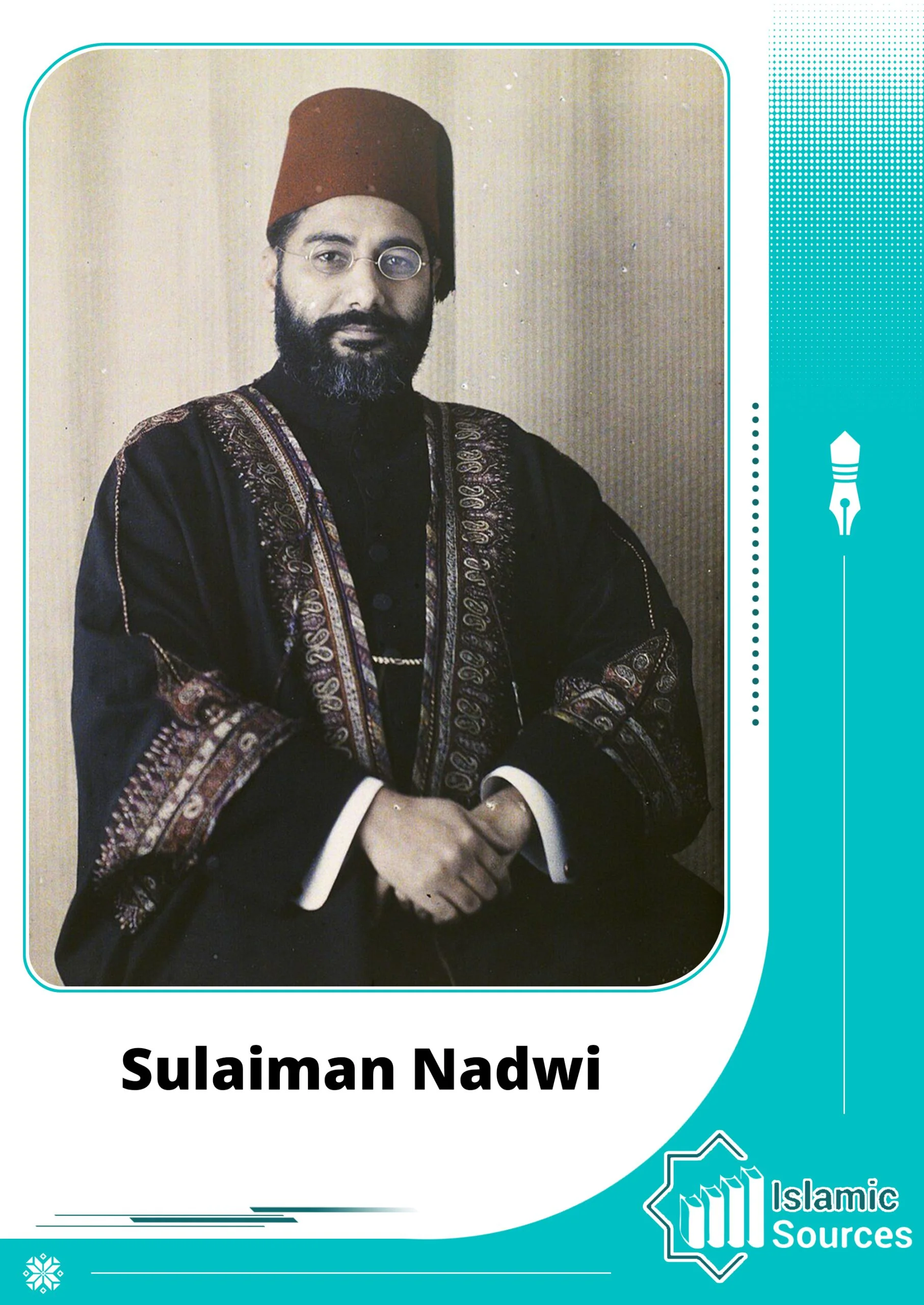
Sulaiman Nadvi
 Pakistan
Islamic scholar•historian•biographer•writer
Also known as: Sayyid Sulaiman Nadvi, Allama Syed Sulaiman Nadvi, Seyyid Süleyman Nedvî
Birthday
November 22, 1884
Birth Sign
Sagittarius
Birthplace
Desna, Patna district, Bihar, British India
Age
Died at 69
About
Sulaiman Nadvi was a British Indian and later Pakistani Islamic scholar, historian, biographer, and litterateur. He is best known as the co-author of Sirat-un-Nabi, a monumental multi-volume biography of the Prophet Muhammad, and as the founder-editor of the influential Urdu journal Ma'arif. His work bridged traditional Islamic learning with modern historical methods, making him a pivotal figure in 20th-century Islamic scholarship.
Nadvi's influence extended beyond his writings. He co-founded Darul Musannefin (Shibli Academy) in Azamgarh, served on the founding committee of Jamia Millia Islamia University, and later held academic posts in Pakistan. His legacy endures through his books, which remain in print across South Asia, and through the continued publication of Ma'arif journal.
Early Life & Background
Sulaiman Nadvi was born Syed Sulaiman on 22 November 1884 in Desna village, Patna district, Bihar, British India. His father, Hakeem Sayyed Abdul Hasan, was a physician (hakim), and the family claimed descent from the Islamic saint Ghaus-e-Azam. He received his early education in his hometown, studying Arabic, Persian, Urdu, and Islamic sciences under local scholars.
He then enrolled at Darul Uloom Nadwatul Ulama in Lucknow, where he became a distinguished student of the legendary scholar Allama Shibli Nomani. Under Nomani's mentorship, Nadvi developed his historical method and scholarly interests, becoming one of Nomani's closest collaborators. This formative period shaped his future contributions to Islamic historiography.
Career Growth
Nadvi's career was defined by his scholarly output and institutional work. In 1914, he co-founded Darul Musannefin (House of Writers), also known as the Shibli Academy, in Azamgarh, India. In 1921, he founded and edited the monthly journal Ma'arif, which became one of the most respected Urdu scholarly periodicals.
In 1923, he began publishing Sirat-un-Nabi, the multi-volume biography of the Prophet Muhammad, co-authored with his teacher Shibli Nomani. After Nomani's death, Nadvi completed the remaining volumes. He also served on the founding committee of Jamia Millia Islamia University in Delhi. His other notable works include Khutbat-e-Madras, Hazrat Ayesha Siddiqa, and Islam Aur Mustashriqeen.
After the partition of India in 1947, he migrated to Pakistan and settled in Karachi. In 1950, he was appointed to Pakistan's advisory body on Islamic ideology and served as a professor and later dean at the University of the Punjab in Lahore.
Career Timeline
Public Image & Style
Nadvi is portrayed in Islamic and academic circles as a meticulous historian, a reformist scholar, and a bridge between traditional Islamic learning and modern historical methods. His scholarly tone is rigorous, analytical, and grounded in classical Islamic sources. He has no formal fandom name, but his readership includes students of Islamic history, Urdu literature scholars, and religious seminaries across South Asia. His works are frequently cited in academic and religious discourse, and his journal Ma'arif continues to serve as a platform for Urdu scholarship.
Fame & Fandom
Sulaiman Nadvi never had a fanbase that gathered in stadiums or shouted chants, yet his readership remains as devoted today as it was in the mid-20th century. Students of Islamic history and scholars of Urdu literature treat his biographies not as mere books but as foundational texts, gathering around the legacy of *Darul Musannefin* to study his words rather than waving signs at concerts. There is no formal moniker for this audience; they are simply those who seek the rigorous historical synthesis he offered between tradition and modernity. His influence flows through academic institutions and religious seminaries across South Asia, where his works are cited with reverence rather than consumed as pop culture. iFANN has evaluated his global standing and determined that Sulaiman Nadvi currently holds no placement in the published Global Top 1,000 rankings or any specific Top-100 scope list. He remains an EVALUATED_UNRANKED figure within the system's current architecture, reflecting a legacy built on enduring scholarship rather than viral metrics or commercial chart dominance. While modern celebrities chase fleeting attention spans, Nadvi's impact is measured by the sustained sales of titles like *Hazrat Ayesha Siddiqa*, which have accumulated over 17,000 ratings on major literary platforms. This quiet, persistent engagement defines his fame: a deep resonance among intellectuals rather than a broad, noisy applause from the masses. The absence of a ranked position does not diminish his stature; it simply marks him as a scholar whose reach is defined by depth of study rather than breadth of celebrity status.
Interesting Facts and Legends
Born on November 22, 1884, and passing away exactly on his 69th birthday in 1953, Nadvi's life bookended the first half of the 20th century with precise symmetry. He adopted the surname 'Nadvi' from the prestigious Nadwatul Ulama seminary, signaling his deep roots in traditional learning. Goodreads lists 52 books under his name, a prolific output that includes *Seerat-un-Nabi*, co-authored with Shibli Nomani. This monumental biography of the Prophet Muhammad stands as his most verified contribution, often retold as the story of a scholar dedicating his life to completing his mentor's unfinished work. His son, Syed Salman Hussaini Nadwi, followed in his footsteps to become a prominent educator, reinforcing the family's reputation for Islamic scholarship. It is important to distinguish him from Abdul Qavi Desnavi, a different literary critic honored with a Google Doodle in 2017, despite the similar names. The narrative surrounding Nadvi focuses on his intellectual awe-inspiring ability to synthesize vast historical data into readable Urdu prose, creating a legacy of scholarly reverence rather than sensational folklore.
Family & Personal Life
Sulaiman Nadvi was married and had at least one son, Syed Salman Hussaini Nadwi, who later became a prominent Islamic scholar and educator in his own right, delivering lectures in Pakistan as late as January 2018. His father, Hakeem Sayyed Abdul Hasan, was a traditional physician, and his family lineage was rooted in Islamic scholarship.
Notable Connections
Sulaiman Nadvi's closest professional association was with his teacher Allama Shibli Nomani, with whom he co-authored Sirat-un-Nabi. After Nomani's death, Nadvi completed the work. His son, Syed Salman Hussaini Nadwi, continued his scholarly legacy. Nadvi also moved in the same circles as contemporary Urdu scholars like Moulvi Abdul Haq and Qazi Abdul Wadood.
Relationships & Dating History
Sulaiman Nadvi was a conservative 19th–20th century Islamic scholar from British India, and no public records exist of any romantic relationships outside his marriage. He was married, consistent with the norms of his time and community, and had at least one son, Syed Salman Hussaini Nadwi. There are no records of any other marriages, engagements, or public romantic associations. Since he is deceased (died 1953), the latest reported status is that he was married at the time of his death.
- Married? - 1953Married at the time of his death; no further details are publicly recorded.
Death & Aftermath
Died
November 22, 1953 (aged 69)
Death Place
Unknown
Cause of Death
Natural causes
Decades after his passing, the scholarly community in Pakistan and India continues to treat Sulaiman Nadvi's works as living texts rather than archived history. His most popular book, Hazrat Ayesha Siddiqa: Her Life and Works, remains widely read by students of Islamic history, while institutions like Darul Musannefin actively propagate his Urdu heritage. This enduring reverence suggests a quiet, sustained mourning that outlasted the immediate political shifts of the mid-20th century. The scholar passed away on November 22, 1953, exactly sixty-nine years after his birth on the same date. He was 69 years old when his life ended, though no specific city or medical cause appears in the historical record.
The absence of legal inquiries or public controversy implies a natural death treated as a private family matter. Following his death, his estate consisted primarily of his literary works and intellectual property, managed through the continued publication of his extensive bibliography which includes 52 books. His son, Maulana Syed Salman Hussaini Nadwi, took up the mantle of preserving this legacy, delivering lectures that reviewed his father's impact on Islamic scholarship well into the 21st century. While details regarding the funeral service or burial site remain absent from available records, the institutional continuity of his work serves as the primary memorial.
Net Worth (Estate Value)
$1 Million
iFANN Editorial Team estimate
As a 20th-century scholar and writer in British India and later Pakistan, no credible records of Sulaiman Nadvi's personal net worth exist. He died in 1953, leaving no business ventures or commercial enterprises. His estate consists of his literary works and intellectual property. The ongoing value of his estate lies in the royalties and licensing of his books, which remain in print in Urdu, Arabic, Bengali, Hindi, and English translations. His works, such as Seerat-un-Nabi and Hazrat Ayesha Siddiqa, continue to be published by Islamic publishers across South Asia. No public figures exist for current estate value or management; his literary legacy is managed by publishers and academic institutions such as Darul Musannefin, which continues to operate. Per iFANN's editorial analysis, his estate is estimated at around $1 Million based on ongoing book sales and royalties as of 2026.
Awards & Accolades
View 5 records, honours and achievementsKnown For
Sirat-un-Nabi
1923 · Co-author
Ma'arif
1921 · Founder-editor
Keywords
Sources
Quick Facts
- Profession
- Islamic scholar, historian, biographer, writer
- Born
- +1884-11-22
- Birthplace
- Desna, Bihar, British India
- Died
- +1953-11-22
- Death Place
- Karachi, Pakistan
- Gender
- Male
- Birth Sign
- Sagittarius
- Education
- Darul Uloom Nadwatul Ulama
Personal Details
- Full Name
- Syed Sulaiman
- Children
- Syed Salman Hussaini Nadwi
- Education
- Darul Uloom Nadwatul Ulama, Lucknow
Frequently Asked Questions
Who was Sulaiman Nadvi?
What are Sulaiman Nadvi's most famous books?
How did Sulaiman Nadvi die?
What was Sulaiman Nadvi's relationship with Shibli Nomani?
Did Sulaiman Nadvi have children?
Join the community
fans discussing